
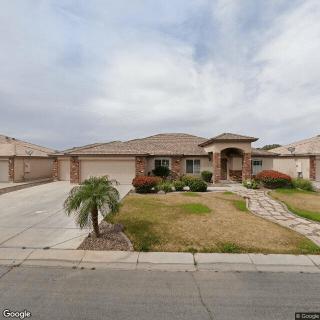
3629 East Thames Circle, San Tan Valley, AZ 85140
For more information about senior living options: (866) 208-4318
Overall Review of Supreme Adult Care Home
Pros
 Monique from Amada Senior Care helped find the right place for the reviewer’s grandfather in Arizona.
- Monique went above and beyond, spending time with the grandfather to understand his personality and what he wanted.
- Monique sent videos and photos of different places and was upfront about costs and what to expect.
- The grandfather is now settled in a great community that feels like home and has joined the weekly poker group.
- The reviewer would definitely reach out to Monique for help with elderly parents in the Phoenix area; Monique is the real deal and made the process easier.
- Monique and her team have done a phenomenal job understanding the family’s needs and delivering great home care for their aunt and uncle.
Review
Supreme Adult Care Home in San Tan Valley is best suited for families that want a warm, home-like atmosphere for an elder who benefits from meticulous placement support and real social engagement, especially when the search is happening from afar. The two reviews describe a scenario where an experienced placement advocate enters early, builds a clear picture of personality and preferences, and uses video tours and candid cost discussions to tighten the match. When the goal is to avoid long, uncertain hunting and to land a setting that feels like home, complete with regular social activity, the combination is compelling.
Those who may want to consider alternatives are families whose priorities center on direct, on-site medical oversight, highly specialized memory-care options, or structures with visible, in-house care staffing from day one. If a family does not need a concierge intermediary or prefers to evaluate options in person with limited external coordination, other communities that advertise explicit medical-to-resident ratios, clinical programming, or a more centralized care-management model could fit better. For memory care or highly clinical needs, a facility with a clearly documented, on-site care team may be preferable.
The main pros here cluster around the placement process and the social fabric the community supports. The advocate’s approach, understanding the elder’s personality, communicating openly about costs, and presenting a range of options with honest transparency, reduces the typical stress of finding a new home from a distance. The practical benefits are tangible: thoughtful introductions to communities, videos and photos that convey day-to-day life, and a placement that culminates in a home-like feeling. The emphasis on meaningful activities, evidenced by the grandfather joining a weekly poker group, signals a culture that prioritizes belonging and ongoing engagement, which often translates into better quality of life.
Yet the reviews reveal a gap that families should fill with direct inquiry. There is no explicit evidence here about on-site nursing coverage, staff-to-resident ratios, medical oversight, or the availability of specialized programs. The absence of these specifics means decision-makers must verify essential care capabilities themselves. In other words, the strength of the placement experience does not automatically guarantee that the day-to-day medical or custodial care will align with every elder’s clinical needs. This is not a fatal flaw, but it is a critical area for confirmatory conversations.
How the strong placement process offsets those unknowns rests on the enduring value of clarity and fit. When a distant family can trust a local advocate to do the homework, set realistic expectations, and present a transparent cost picture, the risk of a mismatched move drops significantly. The social environment, shared activities, routine events, and a sense of community, serves as a practical proxy for overall well-being, often more influential than glossy marketing. In this context, the emotional and logistical alignment achieved through a well-coordinated search becomes the decisive factor for many families.
For families leaning toward Supreme, the prudent next steps are concrete. Initiate contact with the facilitator early to articulate personality, routines, and care expectations. Schedule in-person tours that specifically address staffing patterns, medical capabilities, and inclusion of family in care planning. Request a written breakdown of all recurring costs and what is included or excluded, and seek opportunities for a trial stay or short-term visit to gauge daily life and social programming firsthand. If memory care or more intensive clinical needs are non-negotiable, pair this exploration with direct comparisons to alternatives that advertise robust on-site medical services. In short, harness the placement process, verify care capacity, and prioritize a home-like atmosphere with ongoing, engaging activities as your compass.
 5 resident community capacity
 Assisted Living
 Board and Care Home
 Cable or satellite TV
 Dining room
 Fully furnished
 Garden
 Housekeeping services
 Move-in coordination
 Outdoor space
 Telephone
 Wi-Fi/high-speed internet available
 24-hour supervision
 Activities of daily living assistance
 Assistance with bathing
 Assistance with dressing
 Assistance with transfers
 Diabetes diet
 Meal preparation and service
 Medication management
 Special dietary restrictions
 Transportation arrangement (medical)
 Transportation to doctors appointments





 A Detailed Exploration of Assisted Living Medicaid Waivers Across the United States
 Comprehensive Residential Support and Assisted Living Solutions for Individuals with Disabilities
 Comprehensive Supportive Living Arrangements for Adults with Disabilities