
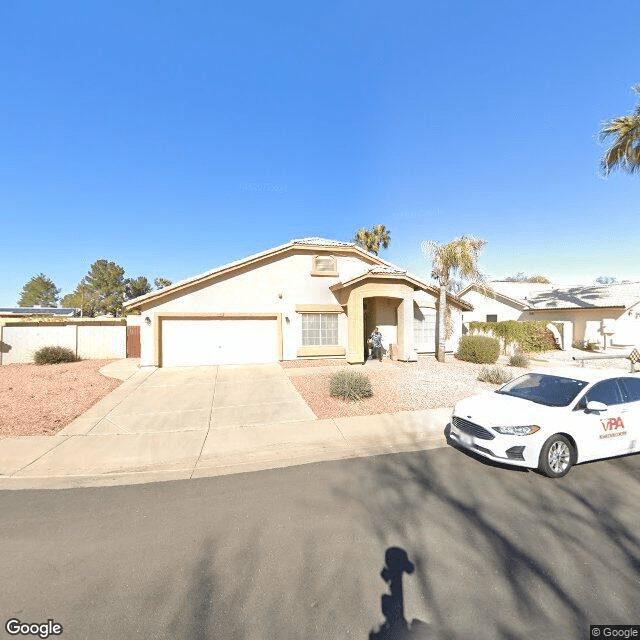
4302 E. Saint John Road, Phoenix, AZ 85032
To contact a resident: (602) 788-6259
For more information about senior living options: (866) 208-4318
The Guardian Angel Costs & Pricing
The Guardian Angel offers competitively priced accommodations for its residents, with monthly costs reflecting the varying standards of care in Maricopa County and across Arizona. For a semi-private room, The Guardian Angel charges $2,000, which is significantly lower than the county average of $2,801 and the state average of $2,820. In terms of private rooms, residents at The Guardian Angel pay $3,000 per month - again more affordable than the county's rate of $3,318 and the state's average of $3,345. These pricing structures position The Guardian Angel as an appealing option for families seeking quality care without straining their financial resources.
| Floor plans | The Guardian Angel | Maricopa County | Arizona |
|---|---|---|---|
| Semi-Private | $2,000 | $2,801 | $2,820 |
| Private | $3,000 | $3,318 | $3,345 |
Senior living communities with a similar price nearby
-
About the same

Home Instead - Fountain Hills, AZ
$1,945 to $3,525 / month15.2 miles away -
from -$139 / mo
Endeavor Senior In-Home - Mesa
$1,861 / month20.7 miles away -
About the same
Garcia's Assisted Living Home LLC
$2,000 / month16.7 miles away -
About the same
Martha Bonilla Care Loving Home
$2,000 to $2,200 / month20.8 miles away -
About the same
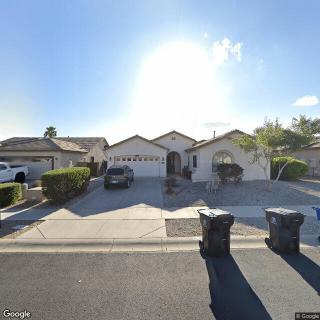
All Stars Assisted Living
$2,000 to $2,500 / month24.7 miles away
Overall Review of The Guardian Angel
Pros
 He likes the home very much.
- The staff are very friendly and willing to assist with anything necessary.
- The father is happy and is in a safe place.
- The lady was very nice and prepared blended meals for the mother.
- They are very kind people who really did try.
Cons
 The facility has no on-site medical staff.
- There is a general urine odor in the home.
- It is small and only accommodates six residents.
- The language barrier made care difficult for the mother.
- It was not the best place for the mother, leading to a move elsewhere.
Review
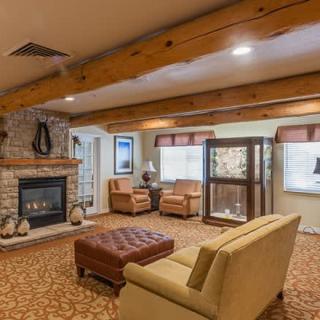
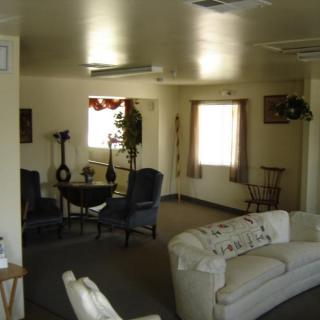
The Guardian Angel in Phoenix is best suited for families seeking an intimate, home-like senior living option where personal attention and resident safety take precedence over a full medical model. With space for only about six residents, this is a setting that operates like a small household rather than a clinical campus. It works well for seniors who are relatively stable, can manage basic daily tasks with light support, and whose families value easy access to caregivers who know the loved one on a first-name basis.
The strongest selling points are the people: friendly, approachable staff who are willing to assist with whatever is needed and a sense that residents are genuinely cared for. The small scale allows staff to tailor routines and respond to preferences in real time, fostering a calm, predictable day-to-day rhythm. Families typically experience visible peace of mind because a loved one appears safe and content, with caregivers who will go the extra mile to accommodate meals and comfort. In an environment this intimate, a resident’s happiness and sense of belonging can feel more certain than in larger facilities.
Yet the compromises are tangible and non-negotiable for certain care needs. There is no on-site medical staff, so any health issue requiring professional nursing or clinical oversight must be managed off-site or via external visits. The six-resident model also limits the breadth of services, activities, and quick escalation capacity during health fluctuations. A practical red flag noted in several cases is a pervasive odor linked to incontinence care, which underscores sanitation realities in a small, home-like setting and may be unacceptable to some families or residents, regardless of how agreeable the staff may be.
These dynamics reveal how the positives line up against the drawbacks. The warmth of the staff and the flexible, family-friendly approach can offset the absence of 24/7 clinical coverage for residents who are low to moderate in care needs and who arrive with an established care plan that relies on outside professionals. For families able to engage actively with care coordination, the intimate setting can deliver reliable daily attention and quick adjustments to routines. However, this respite hinges on realistic expectations: when health needs become more complex or when a crisis arises, the lack of an on-site medical team becomes a meaningful constraint, and the facility’s capacity to respond may lag compared with larger operators.
A crucial caveat centers on language and cultural fit. Reviews describe staff who are kind and capable in day-to-day tasks, yet language differences between residents and caregivers created real stress and a crisis in one case, necessitating relocation. This underscores a fundamental decision point: if a loved one relies on clear communication, especially during emotional or cognitive challenges, the Guardian Angel must be evaluated for language alignment and the facility’s ability to coordinate translation or multilingual support. Families should probe whether language compatibility is workable and whether crisis intervention plans, prescriptions, and medical appointments can be managed smoothly given the staff’s linguistic profile.
In practical terms, this community is a solid fit for seniors who want a warm, low-key home environment, where staff know residents well and can address routine needs with flexibility. It is less suitable for those who require regular on-site nursing, complex medical management, or robust language support. Prospective movers should verify the availability of nursing on call, confirm how emergencies are handled, and assess whether the resident’s communication needs can be met consistently. If medical oversight, broader activity programming, and multilingual care are priorities, alternatives, larger assisted living communities with on-site nurses or specialized memory-care settings, deserve careful consideration. The Guardian Angel offers genuine warmth and safety, but the decision hinges on aligning health requirements and language needs with the facility’s intimate, non-clinical strengths.
 Board and Care Home
 Activities on-site
 Bath tubs
 Beautician on-site
 Indoor common areas
 Outdoor common areas
 Private
 Private bathrooms
 Respite or short term stays offered
 Wheelchair accessible showers
 Phoenix Sky Harbor International (15 miles away)
 Diabetic care
 High acuity care
 Meals provided
 A Comprehensive Exploration of Common Misunderstandings about Powers of Attorney
 Senior Move Management: Understanding the Role, Value, and Associated Costs
 Weight Training for Seniors: Building Strength and Vitality