
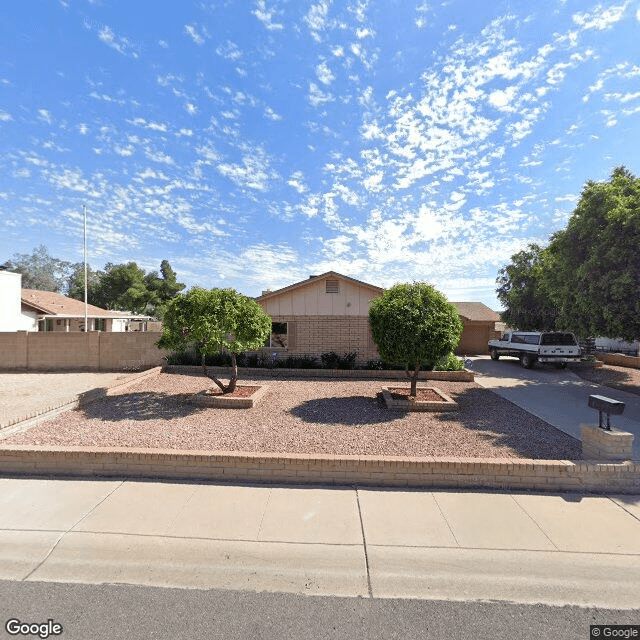
2927 West Redfield, Phoenix, AZ 85053
For more information about senior living options: (866) 208-4318
Fisher Family Home Costs & Pricing
The Fisher Family Home offers competitive pricing for its accommodations, with monthly costs notably lower than the average rates in Maricopa County and the broader state of Arizona. For a semi-private room, residents at Fisher Family Home pay $2,500 per month, which is approximately 11% less than the county average of $2,801 and about 12% lower than the state average of $2,820. Similarly, the private room rate at Fisher Family Home is set at $3,000 per month, providing a significant savings compared to Maricopa County's typical charge of $3,318 and the state's average of $3,345. These favorable pricing structures reflect Fisher Family Home's commitment to delivering affordable and quality care within a supportive environment.
| Floor plans | Fisher Family Home | Maricopa County | Arizona |
|---|---|---|---|
| Semi-Private | $2,500 | $2,801 | $2,820 |
| Private | $3,000 | $3,318 | $3,345 |
Assisted Living communities with a similar price nearby
-
from +$300 / mo
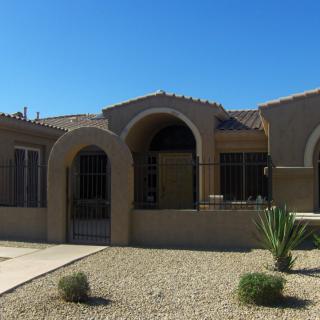
Pinnacle Peak Assisted Living
$2,800 to $3,100 / month13.4 miles away -
from +$125 / mo

The Eldercare Home Of Tempe
$2,625 to $3,412 / month20.6 miles away -
from +$400 / mo
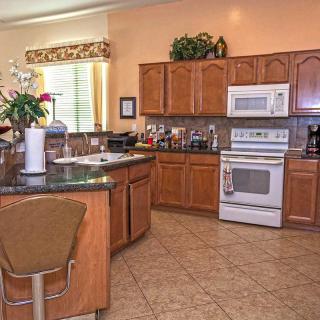
Royal Paradise Care
$2,900 to $3,800 / month13.3 miles away -
from +$350 / mo
Covenant Care Assisted Living Home
$2,850 to $3,705 / month16.7 miles away -
About the same
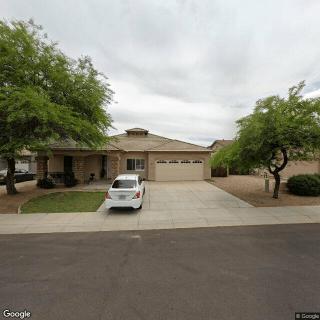
Anc Assisted Living Homes I
$2,500 to $3,500 / month19.3 miles away
Overall Review of Fisher Family Home
Pros
 Fisher Family Homes provided loving care for her until her death.
- The staff at Fisher Family Homes demonstrated compassion and competence.
- The mother spent the last three years of her life with Fisher Family Homes, receiving wonderful care.
- Fisher Family Homes is a second-generation elder care provider that loves what they do.
- The reviewers highly recommend Fisher Family Homes for a loved one’s care.
Review
This community is best suited for families seeking intimate, dementia-focused care in a small, family-operated setting in Phoenix. It serves residents who are navigating the advanced stages of dementia, including vascular dementia, and who value hands-on, compassionate attention from people who feel like extended family. The consistent thread in the feedback is a deep commitment to loving, individualized care that prioritizes comfort, stability, and gentle daily routines during the final years of life. Prospective residents who want a home atmosphere with genuine care from caregivers who stay closely connected to each resident’s history will find Fisher Family Home a natural, reassuring fit.
Those who may want to consider alternatives are families needing higher-acuity medical oversight, 24/7 on-site nursing, or a more hospital-like environment with formal memory-care programming. For residents requiring frequent physician interventions, complex wound care, or robust clinical services, a larger assisted living or specialized memory-care community with dedicated clinical staff may be more appropriate. Additionally, families seeking a broader slate of structured activities, on-site therapies, or more expansive social programming might opt for facilities with bigger campuses and more formal activity calendars.
The strongest pro in these reviews is the evident compassion paired with competence. The care delivered is described as extraordinarily loving and capable, with caregivers deeply invested in the resident’s well-being. Because the setting is a second-generation elder-care operation, there is an implicit continuity and familiarity that translates into fewer transitions and more predictable routines. For families wrestling with dementia’s day-to-day unpredictability, this intimate, hands-on approach helps maintain dignity, reduce agitation, and support meaningful engagement in daily life, which are hard to achieve in more impersonal environments.
This same intimate model also yields meaningful advantages in safety and emotional security. With caregivers who know the resident’s history, symptoms, and preferences, there is a heightened ability to respond quickly to changes in cognition or behavior. The reviews repeatedly emphasize that the staff’s dedication translates into reliable supervision, patient monitoring, and a comforting presence during a challenging illness trajectory. For families seeking reassurance that their loved one is not merely housed but truly cared for, Fisher Family Home demonstrates how a small, dedicated team can outperform larger, more anonymous settings in the areas that matter most to dementia care.
However, the absence of explicit notes about medical staffing, on-site professionals, and a formal clinical program means potential gaps should be explored before committing. Since the feedback is uniformly laudatory but limited in scope, prospective residents should verify the availability of on-call medical support, medication management practices, and the ability to coordinate with outside specialists as the resident’s needs evolve. It is prudent to inquire about daily activity options, cognitive enrichment opportunities, and how care plans are documented and communicated to families. Visiting in person to observe routines and ask direct questions will clarify how this model fits the specific care trajectory required.
In practical terms, Fisher Family Home stands out as a compelling option for dementia-focused care in Phoenix when warmth, personal attention, and steady caregiver relationships are non-negotiable. For families prioritizing a homelike environment where staff know the resident’s story and preferences intimately, this community delivers with convincing credibility. If the priority leans more toward clinical intensity or expansive programming, alternatives deserve comparison. A careful tour, direct conversations with caregivers, and a review of care coordination processes will reveal whether this intimate setting aligns with the resident’s medical needs, safety expectations, and the family’s desire for a stable, affection-forward caregiving partnership.
 10 resident community capacity
 Assisted Living
 Board and Care Home
 Respite Care
 Cable or satellite TV
 Dining room
 Fully furnished
 Garden
 Housekeeping services
 Move-in coordination
 Outdoor space
 Private
 Telephone
 Wheelchair accessible showers
 Wi-Fi/high-speed internet available
 Phoenix Sky Harbor International (14 miles away)
 24-hour supervision
 Activities of daily living assistance
 Ambulatory care
 Assistance with bathing
 Assistance with dressing
 Assistance with transfers
 Diabetes diet
 Diabetic care
 High acuity care
 Incontinence care
 Meal preparation and service
 Medication management
 Special dietary restrictions
 Transportation arrangement (medical)
 Transportation to doctors appointments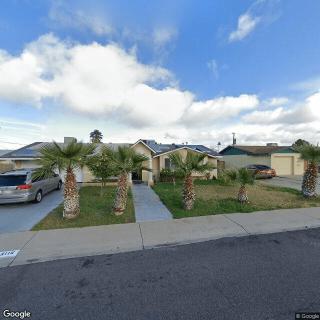


 A Detailed Exploration of Assisted Living Medicaid Waivers Across the United States
 Comprehensive Residential Support and Assisted Living Solutions for Individuals with Disabilities
 Comprehensive Supportive Living Arrangements for Adults with Disabilities