
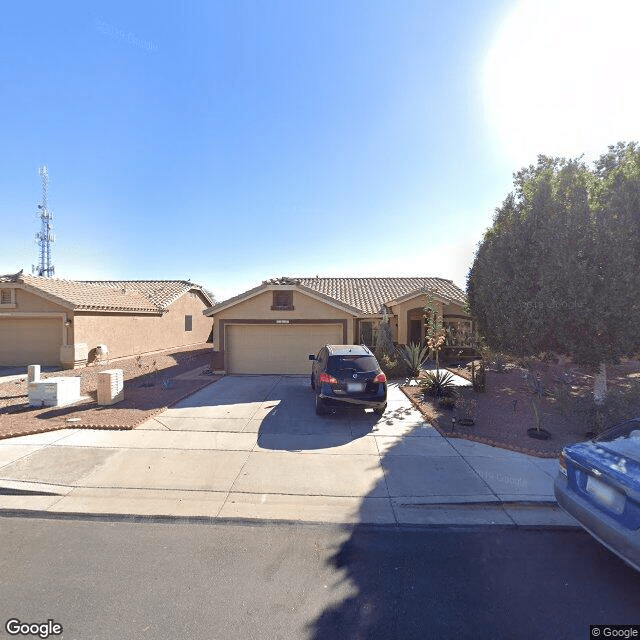
11121 East Dragoon Avenue, Mesa, AZ 85208
For more information about senior living options: (866) 208-4318
Petrisor Assisted Living Costs & Pricing
Petrisor Assisted Living offers competitive pricing for its residents, particularly in comparison to both Maricopa County and the broader state of Arizona. For a semi-private room, residents at Petrisor can expect to pay $2,000 per month, which is significantly lower than the county average of $2,801 and the state average of $2,820. The private room option at Petrisor is also attractively priced at $2,500 per month, making it more affordable than the county average of $3,318 and the state average of $3,345. This positioning not only highlights Petrisor's commitment to providing quality assisted living services but also makes it an appealing choice for families seeking cost-effective care options in a supportive environment.
| Floor plans | Petrisor Assisted Living | Maricopa County | Arizona |
|---|---|---|---|
| Semi-Private | $2,000 | $2,801 | $2,820 |
| Private | $2,500 | $3,318 | $3,345 |
Assisted Living communities with a similar price nearby
-
About the same

Angel's Adult Group Home
$2,000 to $3,000 / month23.6 miles away -
About the same
Divine Mercy Assisted Living Home
$2,005 to $3,110 / month17.7 miles away -
from +$255 / mo

Windsor Luxury Assisted Living, LLC
$2,255 to $5,950 / month23.3 miles away -
from +$225 / mo
Harts Home - Exceptional Elder Care
$2,225 to $5,500 / month21.4 miles away -
from -$200 / mo

Divine Grace Assisted Living Home
$1,800 to $2,500 / month2.0 miles away
Overall Review of Petrisor Assisted Living
Pros
 The mom has settled in nicely here and is comfortable and happy.
- The community is clean and well kept.
- The staff is friendly and encourages residents to participate in activities.
- Elena and her staff are wonderful with their residents.
- Gram feels comfortable and loved.
Cons
 The reviewer would not place their loved one in this group home.
- Elena talks to and treats residents rudely, showing a lack of compassion.
- A patient was brought to tears and then yelled at for crying.
- Caregivers come and go, and there are many complaints from residents and families.
- No activities are done there.
- The reviewer cautions others to research before considering placing someone here.
Review
Petrisor Assisted Living in Mesa, AZ is best suited for seniors who want a homey, clean setting with dependable meals and a light-to-moderate activity program, plus staff who come across as friendly and approachable. It works well for residents who are relatively independent or require only light daily assistance, and for families seeking reassurance that their loved one is comfortable, engaged, and well cared for in a welcoming environment. The combination of a well-kept facility, approachable aides, and an environment that encourages participation makes it a practical choice for those who value warmth and routine over high-acuity medical support.
At the same time, several cues suggest alternatives may be worth considering for certain families. Those needing consistently gentle, compassionate caregiving across all shifts should look elsewhere. Reports in the community include concerns about interaction style, turnover among caregivers, and a perception that activities are not consistently offered. When reliability in daily emotional support and a robust, predictable programming schedule are non-negotiable, a different option with clearer staffing stability and more structured activity calendars warrants investigation.
The strongest positives here are tangible and meaningful: cleanliness and upkeep that keep the living spaces inviting, meals that residents seem to enjoy, and a program of activities designed to engage residents without overwhelming them. The presence of friendly staff who actively encourage participation can make the difference between a resident merely coexisting and actually feeling involved. For families prioritizing a comfortable home atmosphere and the social benefits of regular group offerings, these elements can offset some limitations and deliver genuine daily satisfaction for many residents.
Yet the downsides can carry significant weight, particularly for families evaluating long-term quality and emotional safety. A portion of the feedback points to a caregiver whose interaction with residents came across as brusque or lacking in compassion, paired with reports of high caregiver turnover and a perception that activities are inconsistent or sparse. This combination raises questions about continuity of care, attentiveness to individual needs, and the reliability of engaging programming on any given day. While not every resident will encounter these issues, some experiences highlighted warm, personal care, the variance is enough to influence risk assessment for those requiring steady, emotionally attuned support.
From a decision-making standpoint, it is essential to verify on-site realities rather than rely on impressions from a single visit or a single caregiver interaction. Prospective families should request a full tour at different times of day, observe how staff interact with residents, and specifically ask to see the activity calendar, frequency of new programming, and how residents’ preferences are incorporated into daily routines. Inquiring about staff training, turnover rates, and incident reporting provides a clearer picture of how consistently compassionate care is delivered. Speaking with multiple residents and families can reveal whether the positive experiences are widespread or isolated, and whether the environment supports sustained engagement over time.
In the end, Petrisor Assisted Living presents a practical option for those who prize a warm, clean, and socially active setting with reliable meals and visible staff attentiveness. It is less well-suited for families requiring unwavering, consistently compassionate caregiving and highly structured programming across all shifts. If these stringent needs exist, exploring other communities with documented staffing stability and stronger, more uniform activity schedules is prudent. The best path remains a deliberate, multi-faceted assessment: schedule visits, verify daily routines, listen to multiple voices within the community, and align expectations with what the setting can reliably deliver day after day.
 5 resident community capacity
 Assisted Living
 Board and Care Home
 Cats allowed
 Dogs allowed
 Activities on-site
 Beautician on-site
 Cable or satellite TV
 Devotional services off-site
 Dining room
 Fully furnished
 Garden
 Housekeeping services
 Indoor common areas
 Move-in coordination
 Outdoor common areas
 Private
 Private bathrooms
 Respite or short term stays offered
 Telephone
 Wheelchair accessible showers
 Wi-Fi/high-speed internet available
 Phoenix Sky Harbor International (24 miles away)
 24-hour supervision
 Assistance with bathing
 Assistance with dressing
 Assistance with transfers
 Diabetes diet
 Diabetic care
 High acuity care
 Incontinence care
 Meal preparation and service
 Medication management
 Special dietary restrictions
 Transportation arrangement (medical)
 Transportation to doctors appointments





 8 Key Indicators That Suggest It May Be Time to Transition from Assisted Living to Skilled Nursing Care
 Vibrant Senior Living: A Comprehensive Guide for Active Older Adults
 When to Transition from Assisted Living to Memory Care: Key Indicators, Steps, and Finding the Right Community