
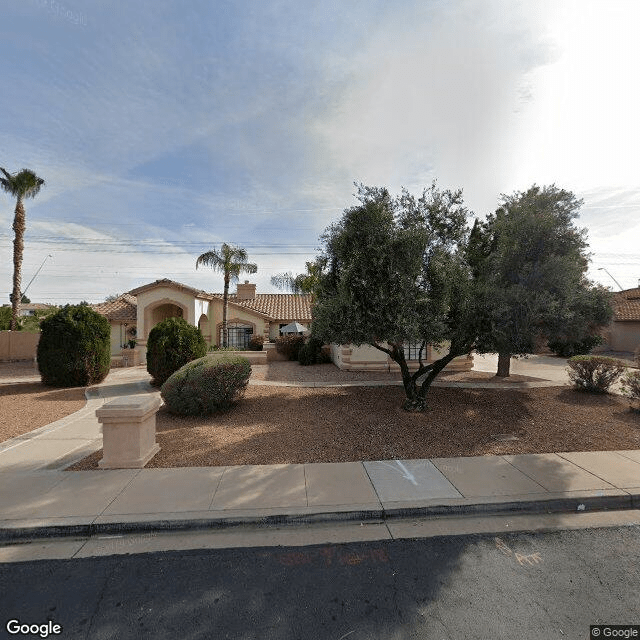
4149 East Greenway Circle, Mesa, AZ 85205
To contact a resident: (480) 985-9532
For more information about senior living options: (866) 208-4318
Affordable Luxury Care Costs & Pricing
Affordable Luxury Care offers competitive pricing for its services, especially when compared to the average costs in Maricopa County and the broader state of Arizona. For a semi-private room, Affordable Luxury Care is priced at $2,500 per month, which is notably lower than the county average of $2,801 and the state average of $2,820. Similarly, those seeking private accommodations will find that Affordable Luxury Care's rate of $3,000 is more economical than both the county's $3,318 and Arizona's $3,345 averages. This positioning highlights Affordable Luxury Care as an attractive option for individuals looking for quality care without straining their budgets.
| Floor plans | Affordable Luxury Care | Maricopa County | Arizona |
|---|---|---|---|
| Semi-Private | $2,500 | $2,801 | $2,820 |
| Private | $3,000 | $3,318 | $3,345 |
Overall Review of Affordable Luxury Care
Pros
 Jean and her staff provide very good care and communicate residents' progress regularly.
 - Families feel relieved seeing their loved ones thrive under their care.
- The owner Jean, the head caregiver Grace, and the rest of the caregivers are amazing.
- Their group homes are beautiful, accommodating, clean, and provide knowledgeable care.
- They opened a new home at Stapley Mesa.
- The new owner and staff care for residents' well-being and are always ready to help.
- The facility is clean and orderly, and the staff treat residents like family.
- Dr. D visits patients weekly, and Maweem provides devoted living care.
Cons
 They were not very experienced in hospice care.
- The food was not very good since the main cook left.
Review
Affordable Luxury Care in Mesa, AZ is best suited for families seeking a warm, home-like assisted living where caregivers know residents well, communication with families is steady, and cleanliness and comfort are non-negotiables. The community earns strong marks for daily warmth and attentiveness, making it a compelling fit for seniors who thrive on personal attention and predictable, respectful care. The recent expansion to a new Stapley Mesa location adds capacity while preserving the intimate, small-group feel that families rely on for regular visits and meaningful interactions.
The most persuasive advantages center on staffing and culture. Owners and top caregivers, notably Jean and Grace, consistently garner praise for hands-on leadership, deep engagement with residents, and a genuine, family-like atmosphere. Families report regular progress updates and a sense of relief knowing their loved one thrives under attentive supervision. Rooms and common areas are described as clean, orderly, and welcoming, with staff consistently treating residents with dignity, humor, and warmth. The caregiving team is lauded for going beyond basic routines, helping residents dress, eat, and participate in daily activities, with staff like Joel noted for brightening moods through personal interaction.
These positives are reinforced by observable, daily quality of life indicators. Residents are often found in common areas, engaged in celebrations of birthdays and holidays, and enjoying simple amenities like in-house outdoor space and even a mini-golf setup. Stories of specific staff interactions, comforting a resident who had a recent health scare, or joking to lift spirits, underscore a culture focused on engagement and emotional well-being. Family members repeatedly highlight the ease of visiting and the open channels for communication, which translate into confidence that loved ones are both safe and connected to their support network. The new Stapley Mesa home is presented as a natural extension that broadens access without diluting the care standard.
On the downside, the most concrete drawbacks relate to clinical scope rather than daily caregiving quality. The facility is not described as having deep hospice specialization, which matters for residents with advanced end-of-life needs or those requiring specialized palliative protocols. Relatedly, dining has surfaced as a concern, one review notes food quality declined after the main cook departed. For families prioritizing gourmet meals or highly specialized medical oversight within the building, these gaps could be meaningful. Taken together, the cons suggest a stronger fit for residents who are largely self-sustaining or modestly medically complex, but who will rely on external hospice services or outside culinary arrangements as needed.
That combination, exceptional personal care and engagement, coupled with limited hospice depth and dinner-service caveats, means some families should consider alternatives. For seniors needing robust, on-site hospice programs, advanced wound care, or a more medicalized model, larger facilities with dedicated hospice teams may deliver more comprehensive clinical continuity. Similarly, households with strong preferences for restaurant-quality dining or highly specialized therapies might want options that emphasize culinary programs or partnerships with hospital-affiliated providers. The Mesa market offers several such paths, so the choice hinges on how much weight is given to intimate, caregiver-driven daily life versus in-house medical breadth.
For families leaning toward Affordable Luxury Care, practical steps can ensure alignment with expectations. Schedule face-to-face time with Jean and Grace, and request candid conversations about clinical capabilities, especially around hospice readiness and medication management. Review the current menu, ask for a sample week, and gauge whether dietary standards meet resident preferences or if external catering could fill gaps. Inquire about staff-to-resident ratios, training in chronic condition management, and the process for escalating medical concerns to Dr. D or other visiting clinicians. Finally, visit the new Stapley Mesa home during a regular weekday to observe routine, resident autonomy, and the consistency of caregiver engagement. With clear expectations in place, Affordable Luxury Care can be an excellent match for those who prize a nurturing, lived-in environment where families stay tightly connected to their loved onesā€™ day-to-day happiness.
 10 resident community capacity
 Assisted Living
 Board and Care Home
 Memory Care
 Respite Care
 Activities on-site
 Beautician on-site
 Cable or satellite TV
 Devotional services off-site
 Dining room
 Fully furnished
 Garden
 Housekeeping services
 Indoor common areas
 Move-in coordination
 Outdoor common areas
 Private
 Private bathrooms
 Telephone
 Wheelchair accessible showers
 Wi-Fi/high-speed internet available
 Phoenix Sky Harbor International (15 miles away)
 24-hour supervision
 Ambulatory care
 Assistance with bathing
 Assistance with dressing
 Assistance with transfers
 Diabetes diet
 Diabetic care
 High acuity care
 Incontinence care
 Meal preparation and service
 Medication management
 Special dietary restrictions
 Transportation arrangement (medical)
 Transportation to doctors appointments





 Understanding Dementia Through Its Seven Stages: A Comprehensive Look at Progression and Expectations
 A Holistic Dementia Care Guide: Effective Strategies for Memory Support
 Comprehensive Insights into Activities of Daily Living (ADLs) and Their Assessment