
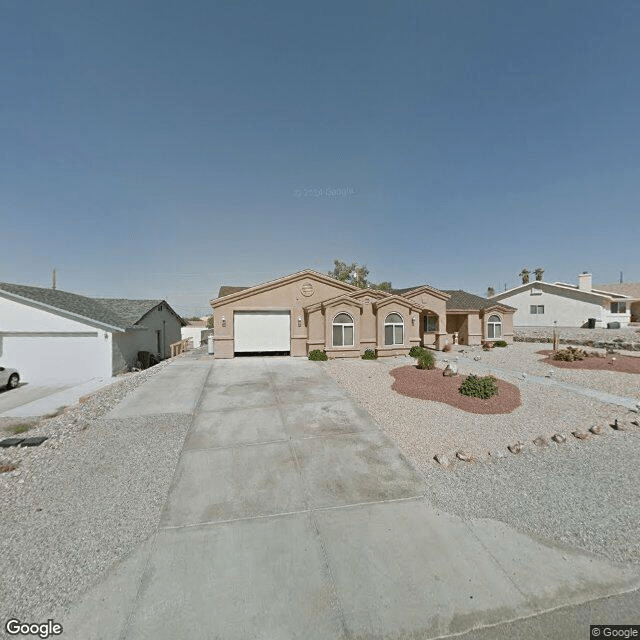
3677 Blue Colt, Lake Havasu City, AZ 86404
For more information about senior living options: (866) 208-4318
Serenity Assisted Living Costs & Pricing
At Serenity Assisted Living, the monthly costs for accommodations reflect a competitive pricing structure within the local context of Mohave County and the broader state of Arizona. For a semi-private room, residents can expect to pay $3,000 per month, which is notably lower than the county average of $3,664 and considerably above the state average of $2,820. In terms of private rooms, Serenity's rate stands at $4,500, which is more affordable compared to Mohave County's average of $4,900 but still higher than the statewide average of $3,345. These rates highlight Serenity Assisted Living's commitment to providing quality care while maintaining cost-effectiveness in comparison to broader market trends.
| Floor plans | Serenity Assisted Living | Mohave County | Arizona |
|---|---|---|---|
| Semi-Private | $3,000 | $3,664 | $2,820 |
| Private | $4,500 | $4,900 | $3,345 |
Assisted Living communities with a similar price nearby
-
from -$148 / mo

Utopia Assisted Living
$2,852 to $5,000 / month2.1 miles away -
from +$260 / mo
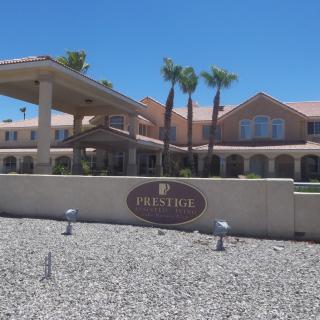
Prestige Assisted Living at Lake Havasu City
$3,260 to $4,170 / month3.3 miles away -
from +$556 / mo
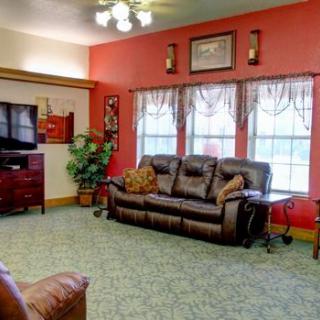
Jasmine Place
$3,556 to $5,137 / month2.4 miles away -
from -$500 / mo
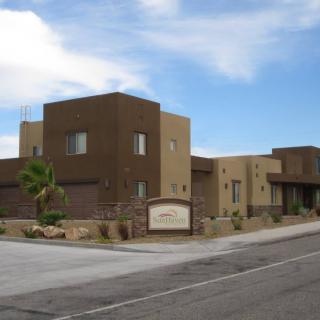
SunHaven Assisted Living - North
$2,500 to $2,900 / month2.4 miles away -
from -$500 / mo
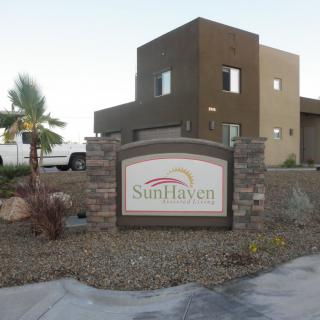
SunHaven Assisted Living - South
$2,500 to $2,900 / month2.2 miles away
Overall Review of Serenity Assisted Living
Pros
 The staff at Serenity is caring, loving, and compassionate.
- Serenity provides amazing care for residents and strong support for their families.
- Serenity is highly involved with its tenants and regularly offers fun, interactive activities.
- The staff celebrates every occasion, including the residents.
- Families feel blessed knowing their loved ones are living at Serenity and are very well cared for.
Cons
 There have been multiple bad experiences there.
- Nothing is what it seems there.
- It was not a good experience.
- The facility will not refund the money.
- Their latest excuse was bankruptcy.
Review
Serenity Assisted Living in Lake Havasu City is best suited for families seeking a small, hands-on care environment where caregivers are clearly involved and residents enjoy strong social programming. The most persuasive praise centers on a caring, compassionate staff and on-the-ground responsiveness, with family members expressing relief that their loved ones are overseen by people they trust. When the aim is visible attention, regular activities, and a sense of community, Serenity delivers a practical, reassuring experience that can ease the burden on anxious relatives.
Those evaluating Serenity should still weigh alternatives, especially if reliability and financial transparency are paramount. Several reviews raise questions about the consistency and predictability of the experience, including blunt statements that “not a good experience” and “everything is not what it seems.” A separate, pointed concern involves a sizable advance payment and room-hold fee that apparently produced a difficult refund dispute, suggesting potential gaps in contract clarity and financial handling. For families with rigorous expectations around administration, governance, and predictable outcomes, alternatives may deserve serious consideration.
The strongest positives, staff involvement, personal warmth, and a lively calendar of activities, do offset some of the more troubling notes, but only to a degree. When staff like Julie and the rest of the caregiving team demonstrate genuine, day-to-day commitment, families report reduced stress and greater confidence in the resident’s safety and well-being. The social emphasis, celebrating birthdays and keeping residents engaged, can meaningfully improve quality of life and prevent isolation, which is a meaningful counterbalance to typical assisted-living concerns. Yet these benefits are not a cure-all; they do not fully mitigate concerns about management consistency, communications, or the risk of financial friction that can erode trust over time.
The overall signal from the ratings is sobering: a 2.3 average from six reviews signals real variability in experience. A pair of five-star endorsements exists, underscoring that when the environment aligns, stable staffing, effective leadership, and solid family communication, the results can be excellent. However, the larger stack of critical experiences can't be dismissed. The contrast between glowing anecdotes about care and blunt statements about misalignment or poor experiences suggests that the day-to-day experience may hinge on factors like staff assignment, shifts, and the particular administrator in charge at any given moment. That volatility matters when choosing a place for a loved one with ongoing needs.
For families moving from decision to action, practical due diligence is essential. Start with a candid tour focused on the caregiving team and daily routines, then request a current activity calendar and a walk-through of a typical day. Demand a clear, written policy on deposits, room holds, and refunds, and insist on a concrete care plan that matches the level of assistance required. It is wise to compare Serenity against nearby communities with higher ratings or more transparent financial practices to ensure the chosen option can deliver consistent care without surprises. If possible, speak with several current residents’ families to gauge consistency across shifts and months.
Bottom line: Serenity Assisted Living can be a viable choice for families who prioritize genuine caregiver warmth and a vibrant, engaged daily life for their loved one. It can be a strong fit when staff relationships are consistently positive, and the resident thrives in a socially active setting. Yet the reviews also warn that the experience is not uniform, and financial handling may introduce avoidable friction. For families who require unwavering transparency, predictable policy enforcement, and consistently high care standards, it is prudent to explore alternatives in tandem and use a structured, probing approach to differences in contracts, staffing continuity, and long-term care planning.
 10 resident community capacity
 Assisted Living
 Board and Care Home
 Activities off-site
 Cable or satellite TV
 Dining room
 Fully furnished
 Garden
 Housekeeping services
 Indoor common areas
 Move-in coordination
 Outdoor common areas
 Private
 Swimming pool / hot tub
 Telephone
 Wheelchair accessible showers
 Wi-Fi/high-speed internet available
 24-hour supervision
 Ambulatory care
 Assistance with bathing
 Assistance with dressing
 Assistance with transfers
 Diabetes diet
 Diabetic care
 High acuity care
 Meal preparation and service
 Medication management
 Special dietary restrictions
 Transportation arrangement (medical)
 Transportation to doctors appointments

 Comprehensive Insights into Activities of Daily Living (ADLs) and Their Assessment
 Medicare Coverage for Assisted Living: An In-Depth Exploration
 Choosing the Right Senior Care: A Detailed Exploration of Assisted Living and Nursing Homes