
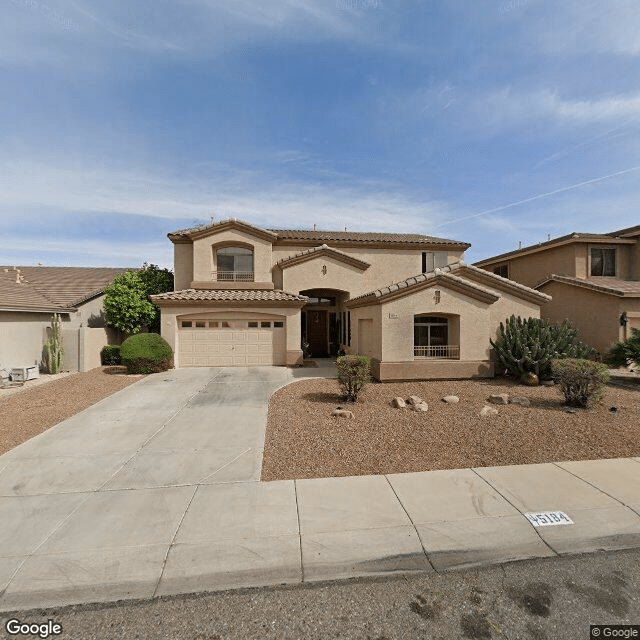
5184 W St John Rd, Glendale, AZ 85308
To contact a resident: (602) 283-4432
For more information about senior living options: (866) 208-4318
Progress Assisted Living Costs & Pricing
At Progress Assisted Living, the monthly costs reflect a commitment to quality care and comfortable living. For a semi-private room, residents can expect to invest $3,000 per month, which is notably higher than the Maricopa County average of $2,801 and Arizona's state average of $2,820. When it comes to private accommodations, the monthly fee is set at $5,000 - significantly above both county and state averages of $3,318 and $3,345 respectively. These costs highlight Progress Assisted Living's focus on providing enhanced services and amenities that cater to individual needs while maintaining a high standard of support for its residents.
| Floor plans | Progress Assisted Living | Maricopa County | Arizona |
|---|---|---|---|
| Semi-Private | $3,000 | $2,801 | $2,820 |
| Private | $5,000 | $3,318 | $3,345 |
Senior living communities with a similar price nearby
-
from -$200 / mo
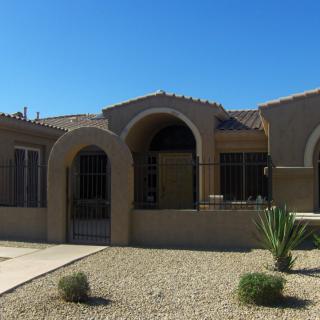
Pinnacle Peak Assisted Living
$2,800 to $3,100 / month15.4 miles away -
from +$500 / mo
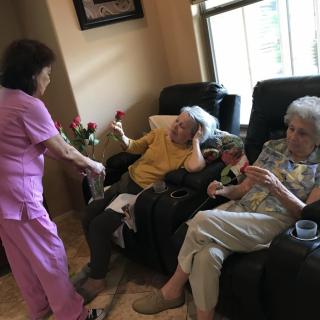
A Paradise for Parents Campbell Avenue
$3,500 to $4,500 / month15.9 miles away -
from -$375 / mo

The Eldercare Home Of Tempe
$2,625 to $3,412 / month24.2 miles away -
About the same
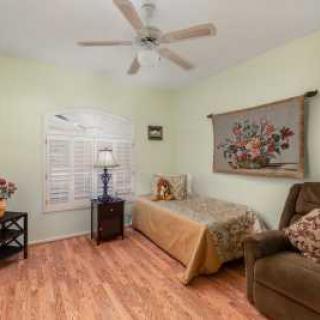
Endeavor AL I
$2,950 to $4,200 / month11.3 miles away -
from +$500 / mo
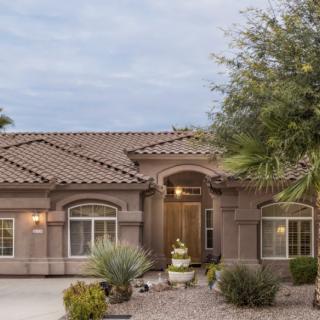
Endeavor AL II
$3,500 to $4,000 / month11.9 miles away
Overall Review of Progress Assisted Living
Pros
 They have extensive experience and expertise in assisted living.
- They are extremely knowledgeable and provide excellent care.
- The home is in a nice, safe neighborhood and is always clean.
- The food is outstanding and residents genuinely enjoy it.
- It is a quiet environment where residents rest peacefully.
- They do a flawless job and keep families informed.
- The level of care and the facility itself are outstanding.
- The staff are genuinely caring and attentive.
- The owner is accommodating and responsive to inquiries.
- Ella and her staff go above and beyond to ensure residents' well-being.
Review
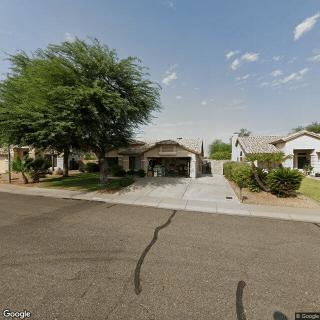
Progress Assisted Living in Glendale is best suited for families seeking a small, home-like setting where care is delivered hands-on by owners with long experience. The operation is clearly run by a couple who bring practical know-how and a willingness to stay closely involved in daily routines, care plans, and transitions. The home sits in a calm, safe Glendale neighborhood, contributing to a quiet, low-stimulation atmosphere where residents can rest and feel at ease. Reviewers repeatedly note exceptional cleanliness, a warm, attentive tone, and meals that residents actually enjoy, signaling a daily standard of comfort that matters for seniors who value dignity and continuity over institutional polish.
Those needing advanced clinical programming, memory-care specialization, or a campus with extensive shared spaces and structured, group activities may want to consider alternatives. The comparisons emerging in the broader local landscape show options like Northwood Glen delivering a broader platform: a larger facility, a professional care team, and coordinated support with hospice and families, plus regular programming and a more formal dining and activity rhythm. For families prioritizing scalability, consistent staffing across shifts, and a well-defined care schedule, Northwood Glen–type settings can offer more of that framework and a sense of ready-made systems.
On the pros side, Progress Assisted Living delivers a surprisingly personal care experience. The owners’ responsiveness and willingness to accommodate inquiries stand out, with families noting clear, ongoing updates and seamless coordination with hospice when needed. The environment stays exceptionally clean and quiet, translating into restful nights for residents. Food quality also rises above the norm for small-home settings, countering the stereotype of repetitive or bland meals. The combination of a safe neighborhood, strong caregiving integrity, and transparent communication makes Progress a reliable anchor when end-of-life comfort and gentle transitions are priorities.
Still, every community carries caveats, and Progress is not without them. One star in the rating indicates a level of dissatisfaction that isn’t explained in the available summaries, underscoring that no small operation is immune to friction. The lack of publicly documented cons can signal solid day-to-day performance, but a prudent family should acknowledge potential limits inherent in a small, owner-led team: staffing gaps during illnesses or vacations, and a naturally narrower program slate compared with larger facilities. These are reasonable tradeoffs; the intimate setup that enables close caregiver-resident bonds can also mean slower scale-up during peak demand. The key offset is that the same hands-on involvement that mitigates delays also yields highly customized, responsive care.
The contrast with Northwood Glen makes the decision clearer for families weighing options. Northwood Glen’s reviews describe a more expansive model: a well-maintained facility, a dedicated care team, and robust coordination with hospice, alongside weekly activities, social dining, and a visible emphasis on quality-of-life programming. Families repeatedly praise the owner and staff for attention to individual needs and for keeping families in the loop, which translates into confidence during vulnerable times. For someone weighing Progress against Northwood Glen, the choice becomes practical: Progress wins on warmth, privacy, and a deeply intimate home atmosphere; Northwood Glen wins on scale, activity breadth, and formalized care structures.
For families evaluating Progress Assisted Living, the recommended approach centers on a purposeful site visit with sharp questions about staffing coverage, care planning, and how hospice coordination will operate on evenings and weekends. Inquire about meal preparation processes, the cadence of social time, and how privacy is balanced with meaningful engagement. If the goal is a highly personalized, peace-filled home where caregivers know residents well and families receive frequent updates, Progress stands out as a prudent, low-stress choice. If the priority leans toward a larger campus, more formal programming, or specialized memory-care resources, exploration of Northwood Glen or similar options is warranted.
 Board and Care Home
 Activities off-site
 Devotional services off-site
 Indoor common areas
 Outdoor common areas
 Private
 Respite or short term stays offered
 Wheelchair accessible showers
 Phoenix Sky Harbor International (17 miles away)
 Diabetic care
 High acuity care
 Incontinence care
 Kosher
 Christian services


 Comprehensive Insights and Practical Strategies to Help Older Adults Avoid Falls
 6 Crucial Ways an Elder Law Attorney Assists Families
 Navigating the Tax Landscape of Caregiving: Credits, Deductions, and Beyond