
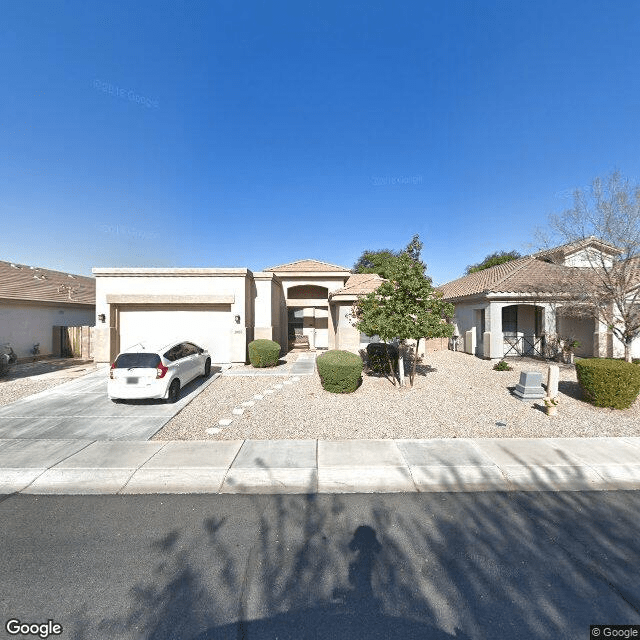
2834 East Cobalt Street, Chandler, AZ 85225
For more information about senior living options: (866) 208-4318
Castle Canyon Assisted Living II Costs & Pricing
Castle Canyon Assisted Living II offers competitive pricing for its residents, particularly when compared to both Maricopa County and the broader state of Arizona. For instance, the facility's semi-private rooms are available at $1,800 per month, representing a significant savings against the county average of $2,801 and the state average of $2,820. Similarly, one-bedroom accommodations are priced at $1,800, which is notably lower than Maricopa County's average of $3,473 and Arizona's overall average of $3,532. Private rooms at Castle Canyon are offered at $2,590 and still maintain an advantage over county and state averages of $3,318 and $3,345 respectively. Even studio apartments are priced attractively at $3,000 compared to higher rates in both the county ($3,960) and state ($3,829). This positioning not only reflects Castle Canyon Assisted Living II's commitment to providing affordable care but also makes it an appealing option for those seeking assisted living solutions in a cost-conscious environment.
| Floor plans | Castle Canyon Assisted Living II | Maricopa County | Arizona |
|---|---|---|---|
| Semi-Private | $1,800 | $2,801 | $2,820 |
| 1 Bedroom | $1,800 | $3,473 | $3,532 |
| Private | $2,590 | $3,318 | $3,345 |
| Studio | $3,000 | $3,960 | $3,829 |
Memory care communities with a similar price nearby
-
from +$200 / mo
Santo Nino Villas 2
$2,000 to $2,300 / month1.1 miles away -
from +$200 / mo
Angel's Adult Group Home
$2,000 to $3,000 / month11.0 miles away -
About the same
Divine Mercy Assisted Living II
$1,850 to $3,350 / month5.9 miles away -
from +$100 / mo

Maravilla Scottsdale
$1,900 to $6,130 / month24.1 miles away -
from -$205 / mo
The Citadel
$1,595 to $2,080 / month7.6 miles away
Overall Review of Castle Canyon Assisted Living II
Pros
 The caregivers are attentive and compassionate, providing wonderful care to residents.
- The staff excel at patient care and are approachable, with management actively involved in ongoing staff education to maintain a high-quality facility.
- The team loves what they do and takes pride in delivering outstanding care.
- Beth Garcia is a standout team member who is always available to assist and keeps operations running smoothly.
- The facility is clean, well staffed, and able to support a variety of residents, making everyone feel cared for.
- Castle Canyon offers round-the-clock, home-like care from a caring team that treats residents like family and understands dementia needs.
- The environment features home-cooked meals, friendly owners, and clear English-speaking staff that helps families feel confident in the care.
Cons
 A reviewer noted that a bedroom had no window and they would have preferred a nicer view.
- A reviewer stated that other facilities often lacked staff who spoke good English, making communication harder.
- A reviewer observed that some places did not have current residents who talked much, implying limited social interaction.
- A reviewer pointed out that, while the owners spoke English, they were not the ones on site daily, raising concerns about daily care consistency.
Review
Castle Canyon Assisted Living II in Chandler, AZ is best suited for families seeking a tightly focused, home-like setting where residents receive attentive, compassionate care from a consistently involved, hands-on staff. The reviews repeatedly emphasize caregivers who are approachable, kind, and patient, with management actively guiding daily operations and prioritizing ongoing staff education. The result is a facility that feels less like a generic campus and more like a small, well-run residence where residents are known by name, meals are cooked in-house, and cleanliness and safety are evident every visit. For seniors who thrive in a warm, intimate environment and value meaningful relationships with caregivers, Castle Canyon delivers a compelling, practical home-away-from-home option.
That said, alternatives are worth considering for families with different priorities. Those needing broader clinical oversight, intensive medical programming, or a larger activity schedule may gravitate toward bigger communities with more on-site healthcare resources. Families looking for multilingual staff beyond English or greater diversity of resident peers might also want to explore other options. While Castle Canyon’s staff is described as English-speaking and highly communicative, the intimate size of the home can limit available programs and social possibilities compared with larger campuses. In short, Castle Canyon excels in personal attention but may fall short for those chasing a wide-ranging, campus-style experience.
The core advantages of Castle Canyon, its staff, leadership, and environment, hardly hinge on sentiment. Highly visible, involved owners work alongside caregivers, reinforcing a culture of accountability and continuous improvement. This results in consistently clean settings, thorough attention to each resident’s needs, and a level of accessibility for families that is hard to match in larger facilities. The service model fosters trust: residents feel cared for around the clock, and families gain peace of mind knowing a small, cohesive team is managing daily routines, meals, and safety with discernible pride. When care quality and reliability are the priority, these factors offset the absence of expansive amenities.
Memory care and dementia-capable support are notable strengths. Several accounts highlight staff who understand cognitive decline and adapt interactions accordingly, with caregivers who are patient, observant, and emotionally attuned to residents’ needs. The couple who operate the home are repeatedly described as kind, respectful, and deeply engaged, making the environment feel less institutional and more like a family home that just happens to be licensed for long-term care. That resonance, behind-the-scenes competence paired with heartfelt, daily engagement, gives Castle Canyon a strong advantage for families navigating dementia or memory-related concerns in a setting that prioritizes emotional as well as physical safety.
Despite the many strengths, a practical lens reveals a couple of caveats. A tour note referencing a windowless bedroom serves as a reminder that some rooms may lack outside light or views, a factor some families may weigh when choosing living spaces. The same intimate scale, two caretakers for a small number of residents in some descriptions, could mean slower response times if multiple needs arise simultaneously, or less variety in activities than a larger campus can offer. Prospective residents should verify room layouts, window presence, and the specific staffing model for the unit under consideration to ensure alignment with personal preferences and health needs.
In sum, Castle Canyon Assisted Living II offers a compelling, disciplined option for families prioritizing a warm, caregiver-driven environment with consistent oversight and a demonstrated ability to support memory-impaired residents. It is an outstanding match for those who value close relationships with a small care team, reliable English-speaking communication, and a home-like daily rhythm that feels safer and more personalized than many larger communities. Families needing extensive programming, larger resident pools, or advanced clinical services may want to compare other options and consider how important scale and breadth of services are to long-term plans. The next step is a targeted visit: observe staff interactions, meet the owners, assess room options and light, and confirm that the care philosophy aligns with the resident’s needs and the family’s expectations.
 5 resident community capacity
 Assisted Living
 Board and Care Home
 Memory Care
 Respite Care
 Cable or satellite TV
 Dining room
 Fully furnished
 Garden
 Housekeeping services
 Move-in coordination
 Outdoor space
 Private
 Telephone
 Wi-Fi/high-speed internet available
 Phoenix Sky Harbor International (15 miles away)
 24-hour supervision
 Activities of daily living assistance
 Assistance with bathing
 Assistance with dressing
 Assistance with transfers
 Diabetes diet
 Diabetic care
 High acuity care
 Incontinence care
 Meal preparation and service
 Medication management
 Special dietary restrictions
 Transportation arrangement (medical)
 Transportation to doctors appointments
 Understanding Dementia Through Its Seven Stages: A Comprehensive Look at Progression and Expectations
 A Holistic Dementia Care Guide: Effective Strategies for Memory Support
 Memory Care Pathways: A Holistic Guide to Dementia Support