
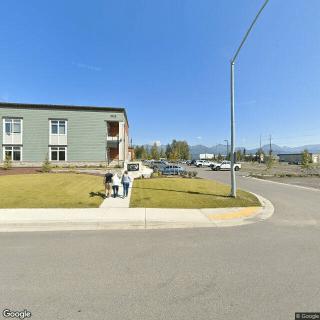
8520 Solar Drive, Anchorage, AK 99507
For more information about senior living options: (866) 208-4318
Overall Review of Hope Solar Drive
Pros
 Hope is a great resource for people with disabilities.
- Hope is loved for its soup and serves as a place where the homeless can get meals, showers, clothes, and mail.
- Hope is a great place with great people.
- The services at Hope allow clients to participate in fun activities and are top notch.
- A used shelf bought at Hope was a good deal.
- Hope is awesome.
- There are very kind, professional, and capable people who work at Hope.
- Hope provides fantastic services tailored to help those with special needs.
- People usually have a good experience when they go to Hope.
- Hope is an honest business focused on helping people with special needs do meaningful work.
Cons
 An employee parks in that spot every day, which is not legal and questions the role model status.
- The staff’s door policy was described as a lame excuse for not being open to the public.
- The employees are said not to listen, leading to ongoing issues.
- The staff are put on blast for their bad behavior.
- The leadership largely needs an overhaul and risks becoming their own downfall.
- The staff at the homes and in the community are unprofessional, rude, arrogant, and dismissive.
- They coerce clients and threaten them into doing what staff wants and intrude in meetings without client consent.
Review
Hope Solar Drive is best suited for adults with disabilities or special needs who benefit from a structured day program, practical supports, and a community-focused hub that offers meals, showers, clothes, mail, and a range of activities. The strongest case sits with individuals who value tangible day-to-day services and the opportunity to participate in purposeful, supervised activities without needing a high-traffic, hospital-like setting. When the goal is a dependable resource that can anchor daily routines and provide social connection, this community delivers solid value.
However, families should also recognize who may want to consider alternatives. The most consistent warning from reviewers centers on leadership and staff dynamics. Several comments flag a need for an overhaul in leadership, and others describe unprofessional, rude, or dismissive behavior among some staff. Those contrasts matter: where some staff are praised as kind, professional, and capable, others are accused of coercion, boundary issues, or manipulating clients. For households that require uniform, rock-solid staff interactions and predictable governance, these mixed signals suggest exploring other options for comparison.
The positive elements here do offset the drawbacks in meaningful ways. The program’s core strengths are unmistakable: a focus on services tailored to people with special needs, meaningful on-site activities, and a culture that can feel genuinely supportive to participants. The presence of practical resources, meals, showers, clothes, mail, plus the ability for clients to engage in social and recreational activities creates real daily value. For families who prioritize consistent access to daily conveniences and a stable social framework over flawless staff behavior across every encounter, these pros can substantially justify a close look at Hope Solar Drive.
That said, the main cons cannot be dismissed as minor. Inconsistencies in staff professionalism and leadership quality raise legitimate concerns about how reliably residents will experience respect, boundaries, and autonomy over time. Reports of coercion, disrespect, and client-rights questions point to risks that could erode trust and undermine the very benefits the community offers. Parking and access quirks, such as complaints about who parks in what spots and how doors are managed, signal organizational friction that can translate into daily annoyances or more serious logistical headaches. These factors collectively imply that the experience may vary by shift, by staff member, and by program or activity, rather than presenting a uniformly high standard.
Given these dynamics, a disciplined due-diligence approach is essential. Prospective families should arrange multiple, structured visits at different times and days to observe real interactions between staff and clients. Ask direct questions about incident reporting, resident rights, and how staff boundaries are enforced. Speak with residents and family members about consistency, safety, and respect across encounters. Probe leadership stability: what training is in place, how feedback is handled, and whether there is ongoing governance to address recurring concerns. Clarify practicalities: is there a predictable schedule for activities, how are meals handled, and what happens if a participant needs higher levels of assistance?
In the end, Hope Solar Drive offers practical, tangible value for a segment of families: those seeking a resource-rich environment that can support daily living skills, provide meaningful activities, and foster social belonging for adults with special needs. It is less ideal for households whose non-negotiables include unwavering staff professionalism and perfectly consistent governance. The decision hinges on weighing the importance of visible daily supports and community engagement against the reality of mixed staff experiences and leadership signals. For families ready to prioritize practical services with a robust social framework, and willing to actively verify consistency in person, Hope Solar Drive warrants serious consideration alongside other nearby options.
 4 resident community capacity
 Assisted Living
 Board and Care Home
 Cable or satellite TV
 Dining room
 Fully furnished
 Garden
 Housekeeping services
 Move-in coordination
 Outdoor space
 Telephone
 Wi-Fi/high-speed internet available
 Ted Stevens Anchorage International (7 miles away)
 24-hour supervision
 Activities of daily living assistance
 Assistance with bathing
 Assistance with dressing
 Assistance with transfers
 Diabetes diet
 Meal preparation and service
 Medication management
 Special dietary restrictions
 Transportation arrangement (medical)
 Transportation to doctors appointments


 Comprehensive Insights into Activities of Daily Living (ADLs) and Their Assessment
 Medicare Coverage for Assisted Living: An In-Depth Exploration
 Choosing the Right Senior Care: A Detailed Exploration of Assisted Living and Nursing Homes