
3719 Wesleyan Drive, Anchorage, AK 99508
For more information about senior living options: (866) 208-4318
Arc Wesleyan Costs & Pricing
Arc Wesleyan offers a range of room types at competitive prices compared to the broader market in Anchorage Municipality and Alaska as a whole. For instance, the semi-private rooms are priced at $5,816 per month, which is significantly higher than both the local average of $4,001 and the state average of $3,956. Similarly, private rooms at Arc Wesleyan come in at $6,979, exceeding the municipal rate of $4,831 and the statewide figure of $4,977. The studio option reflects this trend as well, with a monthly cost of $7,560 - notably above Anchorage's average of $4,599 and Alaska's statewide average of $4,197. While these rates indicate a premium experience at Arc Wesleyan compared to its regional counterparts, they also suggest an emphasis on quality care and services that may justify the higher costs for prospective residents seeking more personalized living arrangements.
| Floor plans | Arc Wesleyan | Anchorage Municipality | Alaska |
|---|---|---|---|
| Semi-Private | $5,816 | $4,001 | $3,956 |
| Private | $6,979 | $4,831 | $4,977 |
| Studio | $7,560 | $4,599 | $4,197 |
Assisted Living communities with a similar price nearby
-
from -$816 / mo
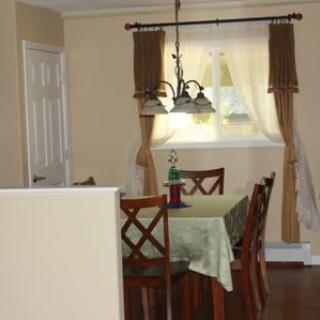
Jewel Lake Assisted Living Home
$5,000 / month6.4 miles away -
from +$684 / mo

Campbell Creek House
$6,500 / month1.2 miles away -
from +$384 / mo
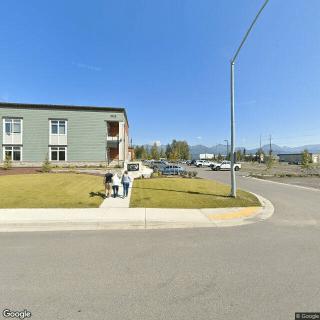
Aspen Creek
$6,200 to $7,500 / month2.3 miles away -
from +$479 / mo

Fitchetts Assisted Living
$6,295 to $11,395 / month2.3 miles away -
from -$816 / mo
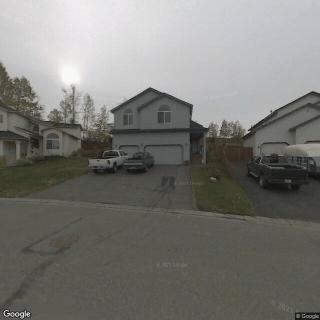
St Anne Assisted Living Home
$5,000 / month3.6 miles away
Overall Review of Arc Wesleyan
Pros
 It is a great place for disabled people to hang out and enjoy themselves.
- It is a wonderful agency.
- It is a great company.
- The staff are very nice.
- The staff are amazing.
- The organization helps people who need it.
Cons
 Some people are harassed by the employees and management.
- Many clients living there can be problematic.
- The place sucks and keeps calling people despite repeated requests to stop.
- The staff were total assholes.
- Donors were disrespected and insulted when attempting to donate clothes.
Review
Arc Wesleyan in Anchorage, AK is best suited for adults with disabilities who want a social, structured daytime setting where staff engagement and peer interaction form the core experience. The program comes across as welcoming and community-oriented, with residents able to participate in activities and socialize in a setting that feels more like a gathering place than a sterile care facility. For families seeking affordability, the balance tilts toward reasonable pricing and accessible staff presence, making daily engagement feasible without draining resources. In practice, the atmosphere can be warm and mission-driven, delivering meaningful connection for those who place emphasis on social vitality and practical support.
That clarity, however, should be paired with cautious expectations. Some reviews flag a workplace culture that can feel more transactional than caregiving-centered, and a few accounts describe harassment or boundary issues between staff and clients. The sense of being treated as a business model rather than a community resource appears in critiques, alongside concerns about staff choices and consistency. There is also feedback about persistent calling to households after requests for space, which highlights fragile boundaries. These factors collectively suggest that Arc Wesleyan may not be the right fit for those who demand a uniformly respectful, strictly boundary-conscious environment.
On the upside, the strongest enduring pro is the quality of interpersonal care. Numerous reviewers praise the staff as kind, helpful, and genuinely invested in residentsā€™ well-being. The presence of what is described as amazing, wonderful staff creates an atmosphere where residents feel supported and connected. The social fabric, friends, activities, and a sense of belonging, can significantly enhance quality of life for individuals who thrive on routine social contact. Coupled with fair prices, these positives offer real value for families prioritizing daily engagement and approachable, person-centered assistance.
Yet the downsides carry enough weight to influence a decision. Instances of perceived harassment or disrespect, and a few anecdotes about misaligned staff choices, cannot be dismissed lightly. The impression that the center has drifted from its peak years, with governance and service dynamics in question, weakens confidence for long-term placement. For families seeking rigorous care standards, predictable boundaries, and consistently-positive staff interactions, Arc Wesleyan may fall short. The combination of limited hours and the perception of a primarily business-like operation further narrows its appeal for those who expect a highly structured, mission-driven caregiving culture.
Practical decision-making steps help separate fit from misfit. Prospective families should verify exact daily schedules and activity options, and inquire how staff allocation is managed to minimize turnover and ensure continuity of relationships. Direct questions about complaint resolution, boundary enforcement, and incident handling are essential. Observing interactions during a visit can reveal whether residents are treated with dignity and respect, and speaking with current families provides concrete insights into how issues are addressed over time. A candid assessment of whether the cost aligns with the value of social programming and dependable communication is crucial.
Overall, Arc Wesleyan offers a pragmatic, budget-conscious option for adults seeking sociability and practical support within a community setting. It works best for individuals who prize access to engaged, caring staff and opportunities for meaningful daily interaction over a rigid, highly formal care model. Alternatives should be considered by families prioritizing uniform boundaries, longer operating hours, or governance that feels consistently aligned with caregiving principles. In Anchorage, Arc Wesleyan stands as a reasonable, sometimes imperfect fit, capable of transforming days through human warmth, but requiring careful vetting to ensure alignment with personal priorities and expectations.
 4 resident community capacity
 Assisted Living
 Board and Care Home
 Cable or satellite TV
 Dining room
 Fully furnished
 Garden
 Housekeeping services
 Move-in coordination
 Outdoor space
 Telephone
 Wi-Fi/high-speed internet available
 Ted Stevens Anchorage International (7 miles away)
 24-hour supervision
 Activities of daily living assistance
 Assistance with bathing
 Assistance with dressing
 Assistance with transfers
 Diabetes diet
 Meal preparation and service
 Medication management
 Special dietary restrictions
 Transportation arrangement (medical)
 Transportation to doctors appointments
 Vibrant Senior Living: A Comprehensive Guide for Active Older Adults
 When to Transition from Assisted Living to Memory Care: Key Indicators, Steps, and Finding the Right Community
 Assisted Living and Memory Care: Understanding Their Core Differences