
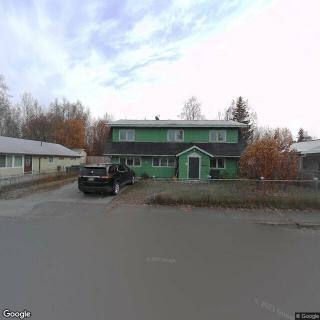
2210 Arca Drive Unit #2, Anchorage, AK 99508
For more information about senior living options: (866) 208-4318
Overall Review of Arc 2210 Unit 2
Pros
 The place has its upsides.
- It is a great place for disabled people to hang out and enjoy themselves.
- They are a great company.
- They are a wonderful agency.
- They offer nice places with fair prices.
- They are helping people who need it.
- The staff are very nice here.
Cons
 The place is criticized for being more like a business than a help center, with many clients living there seen as a problem.
- Some people are singled out for harassment by the employees and management.
- There are issues with the selection of some staff.
- The establishment has fair prices but would benefit from opening a little longer.
- The place keeps calling people despite numerous requests to stop.
- The reviewer was disrespected and called names while trying to donate clothes, and will no longer deal with either organization.
- It used to be the best, but now it has issues.
Review
Arc 2210 Unit 2 in Anchorage is best suited for adults with disabilities who want a budget-friendly, socially oriented option that feels more like a community hub than a clinical care setting. The environment emphasizes practical support and peer interaction over rigid medical oversight, rewarding residents who participate in shared activities. This social focus delivers real value for families seeking companionship and everyday engagement at a modest price. It is not ideal for those needing highly structured care, constant supervision, or a pristine, safety-first reputation. For families prioritizing affordability and a community atmosphere over institutional polish, this option can be a pragmatic match.
Those who should seriously consider alternatives are families prioritizing strong professional boundaries and zero tolerance for harassment, or anyone requiring consistent 24/7 supervision and formalized care plans. Reviews raise concerns about staff behavior and management tone, signaling a potential mismatch for residents who need predictable, highly accountable governance. If governance transparency, clear complaint resolution, and robust resident protections are nonnegotiable, it may be wiser to look at communities with more explicit accountability and stronger oversight from leadership.
On the upside, several reviewers praise the staff as kind, supportive, and capable of helping people who need assistance to enjoy daily life. The facility is repeatedly described as a place where residents can connect with others, with multiple notes highlighting genuine warmth from caregivers and a sense of belonging for those who engage. Affordability and reasonable location further strengthen the practical value, allowing families to stretch limited resources while preserving social access. When the environment functions smoothly, the combination of approachable staff and peer-driven moments can yield meaningful daytime enrichment.
The core drawbacks cluster around perceived management quality and consistency. Reports of harassment by employees and questionable staff choices color the overall impression, and at least one incident describes disrespect during a donation interaction. A recurring theme is the sense that the operation feels more like a business than a resident-centered community, which undermines trust for families hoping for steady, compassionate oversight. Additionally, experiences of being repeatedly contacted by phone despite requests to stop can erode confidence in the level of respect shown to residents and families.
From a decision-making standpoint, Arc 2210 Unit 2 can be a sensible choice for families prioritizing social engagement and affordability, provided the resident can tolerate occasional staff missteps and a businesslike atmosphere. The key value lies in the lower cost and the active peer network, which can sustain independence and daily purpose without high medical needs. However, if reliability, respectful boundaries, and transparent governance are essential, alternatives with clearer accountability and more consistent staff conduct should be pursued. The recommended path is a direct, in-person examination of how interactions unfold, rather than relying solely on impressions from secondhand reviews.
Practical next steps solidify the decision. Schedule unannounced visits to observe common-area dynamics and how staff interact with residents. Speak with multiple residents about day-to-day experiences and request a candid briefing on complaint handling and staff training policies. Verify that persistent outreach attempts have ceased if requested and confirm the availability of on-site supervision during peak activity hours. Clarify operating hours and activity calendars to ensure alignment with daily routines and cognitive or physical requirements. When these checks align with the residentā€™s preferences for social engagement, comfort with a less formal atmosphere, and acceptable risk, Arc 2210 Unit 2 becomes a viable, budget-conscious option worth embracing; otherwise, guiding toward a more formally governed community is prudent.
 3 resident community capacity
 Assisted Living
 Board and Care Home
 Cable or satellite TV
 Dining room
 Fully furnished
 Garden
 Housekeeping services
 Move-in coordination
 Outdoor space
 Telephone
 Wi-Fi/high-speed internet available
 Ted Stevens Anchorage International (6 miles away)
 24-hour supervision
 Activities of daily living assistance
 Assistance with bathing
 Assistance with dressing
 Assistance with transfers
 Diabetes diet
 Meal preparation and service
 Medication management
 Special dietary restrictions
 Transportation arrangement (medical)
 Transportation to doctors appointments
 Comprehensive Insights into Activities of Daily Living (ADLs) and Their Assessment
 Medicare Coverage for Assisted Living: An In-Depth Exploration
 Choosing the Right Senior Care: A Detailed Exploration of Assisted Living and Nursing Homes