For more information about senior living options: (866) 208-4318
2.7 from 51 reviews
5 stars
16
4 stars
7
3 stars
0
2 stars
2
1 stars
26
Bay At Sheridan Health And Rehabilitation Costs & Pricing
At Bay At Sheridan Health And Rehabilitation, the monthly costs for both semi-private and private room options reflect a premium compared to both Kenosha County and the broader state of Wisconsin. Specifically, the semi-private rooms at Bay At Sheridan are priced at $5,880, significantly exceeding the county average of $5,073 and the state average of $3,977. Similarly, the cost for private rooms amounts to $6,210, which is notably higher than Kenosha County's rate of $4,804 and Wisconsin's average of $4,339. This pricing suggests that while residents may benefit from specialized care or enhanced amenities at Bay At Sheridan, potential clients should carefully consider their budget in relation to local and statewide offerings.
Floor plans
Bay At Sheridan Health And Rehabilitation
Kenosha County
Wisconsin
Semi-Private
$5,880
$5,073
$3,977
Private
$6,210
$4,804
$4,339
Skilled Nursing Facilities with a similar price nearby
Overall Review of Bay At Sheridan Health And Rehabilitation
common10 reviews mention this
Staff compassion shows through
Residents and families frequently describe the staff as caring and helpful.
Multiple reviewers say the staff members are kind, knowledgeable, and genuinely invested in residentsā€™ recovery. Several also call out supportive communication and encouragement during therapy. A few others note the difference comes from certain individuals, but overall the positive descriptions of staff are a consistent pattern.
common7 reviews mention this
Rehab and therapy support recovery
Many reviews mention therapy and rehab helping residents regain strength or function.
Some reviewers describe physical and occupational therapy as encouraging and as part of a meaningful recovery plan. Others say their loved one benefited from getting stronger through therapy. A smaller set of reviews describe problems with therapy timing or progress, including claims that therapy was canceled or not enough was provided at first.
common6 reviews mention this
Food is a frequent talking point
Food quality comes up repeatedly in both positive and critical feedback.
Positive reviews often single out the meals, describing the food as good and sometimes homemade. There are also complaints where residents or families say meals were unappetizing or not what they asked for. Some of the harsher reviews still list food as one of the few things that worked well.
caveat8 reviews mention this
Getting answers can be difficult
Several reviews describe long waits and unanswered calls.
A recurring complaint is that phones and messages are not answered, with families reporting they had to call repeatedly or waited a long time for a response. Some reviewers also describe delays getting staff attention after calling for help. A few accounts contrast this with occasional improvements, but the communication issues still show up often in negative feedback.
caveat9 reviews mention this
Cleanliness concerns appear repeatedly
Multiple reviews report rooms and care areas were not kept clean.
Several reviewers describe dirty rooms, bodily fluid issues, or conditions they felt were unsafe or unsanitary. Others mention that cleaning and sanitizing did not happen as expected, including claims that families had to clean areas themselves. A bedbug infestation is also mentioned in one review, while a smaller number of reviewers say the facility looked cleaner and brighter during their visit.
How we summarize
Counts show how many written reviews mention each theme; a review can touch several themes, and only frequently mentioned themes are displayed.
Features
Housing
81 resident community capacity
Types of Care
Skilled Nursing Facility
Amenities
Air-conditioning
Beauty salon
Cable or satellite TV
Computer center
Dining room
Fitness room
Fully furnished
Gaming room
Garden
Housekeeping services
Kitchenette
Move-in coordination
Outdoor space
Private
Private bathrooms
Restaurant-style dining
Small library
Telephone
Wellness center
Wi-Fi/high-speed internet available
Transportation
Community operated transportation
Transportation arrangement
Transportation arrangement (non-medical)
Transportation to doctors appointments
Care Services
12-16 hour nursing
24-hour call system
24-hour supervision
Activities of daily living assistance
Assistance with bathing
Assistance with dressing
Assistance with transfers
Diabetes diet
Meal preparation and service
Medication management
Mental wellness program
Special dietary restrictions
Dining
Diabetes diet
Special dietary restrictions
Activities
Community-sponsored activities
Concierge services
Fitness programs
Planned day trips
Resident-run activities
Scheduled daily activities
Nearby Places of Interest
Restaurants
Culver's (0.2 miles)
McDonald's (0.3 miles)
Taco Bell (0.3 miles)
Starlite Club (0.9 miles)
Burger King (1.1 miles)
Popeyes Louisiana Kitchen (1.8 miles)
Shenanigans on 60th (2.1 miles)
Pharmacies
CVS Pharmacy (0.6 miles)
Walgreens (0.8 miles)
Good Value Pharmacy (1.2 miles)
Good Value Pharmacy (1.3 miles)
Walgreens (1.5 miles)
Octapharma Plasma (1.8 miles)
Alcohol & Other Drugs Council (2.2 miles)
Places of Worship
St Therese Church (0.9 miles)
St Paul's Lutheran Church (1.5 miles)
Holy Rosary Parish (3.1 miles)
Lakeside Lutheran Church (3.4 miles)
Parks
Southport Park (0.9 miles)
Eichelman Park (2 miles)
Wolfenbuttel Park (2.1 miles)
Gangler Park (3.1 miles)
Charles Nash Park (3.4 miles)
Playground (5.3 miles)
Physicians
Junith M. Thompson MD Sc (1.5 miles)
Comprehensive Orthopaedics Sc (1.7 miles)
United Hospital System - Joshua Bloom MD (1.7 miles)
At Bay At Sheridan Health And Rehabilitation, the monthly costs for both semi-private and private room options reflect a premium compared to both Kenosha County and the broader state of Wisconsin. Specifically, the semi-private rooms at Bay At Sheridan are priced at $5,880, significantly exceeding the county average of $5,073 and the state average of $3,977. Similarly, the cost for private rooms amounts to $6,210, which is notably higher than Kenosha County's rate of $4,804 and Wisconsin's average of $4,339. This pricing suggests that while residents may benefit from specialized care or enhanced amenities at Bay At Sheridan, potential clients should carefully consider their budget in relation to local and statewide offerings.
Bay At Sheridan Health And Rehabilitation is located at 8400 Sheridan Road, Kenosha, WI 53143 in Kenosha County, Wisconsin
Nearby Communities
Azalea Place
Kenosha, WI
4 from 18 reviews
Small, personalized community with 24-hour supervision and specialized memory care programs.
Cedarhurst of Kenosha
Kenosha, WI
4.2 from 49 reviews
$4,000 to $5,150 / month
Friendly, attentive staff; caring community with strong amenities and activities.
Beech Pointe Senior Apartments
Kenosha, WI
4.5 from 15 reviews
$640 to $740 / month
Harbour Village West
Kenosha, WI
Comprehensive assisted living with 24-hour supervision, ADL support, medication management, and dietary accommodations; on-site dining, housekeeping, move-in coordination, garden/outdoor spaces, and transportation for medical appointments.
Harbour Village West
Kenosha, WI
Specialized diabetic care within a vibrant, activity-rich community.
Harbor Village East
Kenosha, WI
Lakeside Towers
Kenosha, WI
3.9 from 9 reviews
Active independent living with a pet-friendly policy and nearby parks, dining, and healthcare.
Manor Of Kenosha
Kenosha, WI
2.9 from 8 reviews
Caring staff and effective therapy; improvements under new management.
Kenosha Place Senior Living
Kenosha, WI
4.2 from 64 reviews
$2,670 to $3,300 / month
Friendly staff, clean environment, and engaging activities.
The article highlights the importance of empathy and open communication when comforting someone who is grieving, noting that grief is unique to each individual and emphasizing the need for sincere expressions of condolence, active listening, and ongoing support. It also addresses cultural differences in mourning practices and encourages tailored approaches to provide effective comfort.
Home health care aides provide vital medical and non-medical support to individuals at home, assisting with daily living activities and promoting emotional well-being, while the demand for these services increases due to an aging population. Families benefit from in-home care's flexibility and cost-effectiveness but face challenges like scheduling consistency and caregiver turnover.
Older adults with urinary tract infections (UTIs) often present atypical symptoms, complicating diagnosis due to factors like incomplete bladder emptying and chronic health conditions that increase their susceptibility. Effective management involves prompt treatment with antibiotics, hydration, and preventive strategies while minimizing antibiotic resistance and focusing on holistic care approaches.
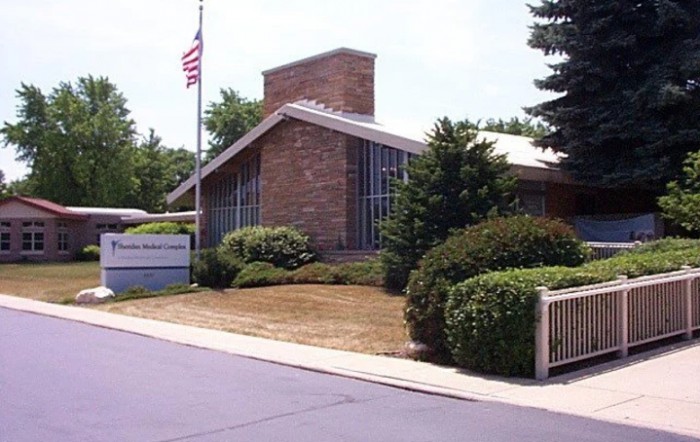
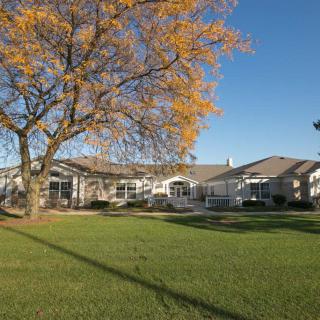
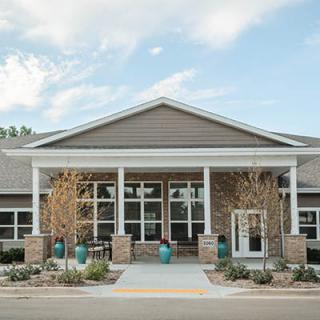
Landscaping, Building, Trees, Flag, Brick, and Church
Get PricingAsk A QuestionSchedule A TourContact Senior Advisor
By clicking submit, you agree to our Partner's Terms of Use. You
also consent to receive calls and texts, which may be autodialed, from our Partner. Your consent is not a condition to
using our Partner's service. Please visit our Partner's Privacy Policy for information about their privacy practices.

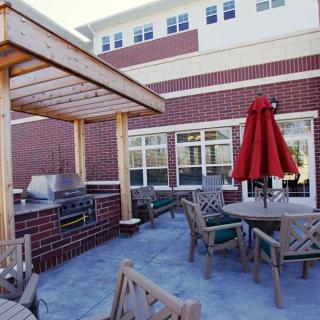
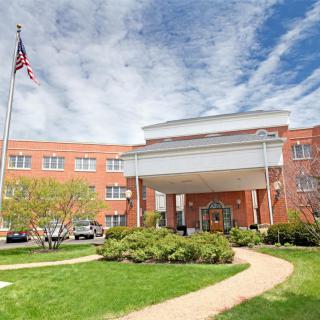

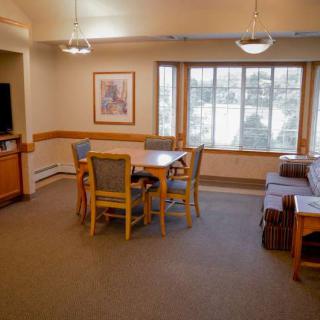
 81 resident community capacity
 Skilled Nursing Facility
 Air-conditioning
 Beauty salon
 Cable or satellite TV
 Computer center
 Dining room
 Fitness room
 Fully furnished
 Gaming room
 Garden
 Housekeeping services
 Kitchenette
 Move-in coordination
 Outdoor space
 Private
 Private bathrooms
 Restaurant-style dining
 Small library
 Telephone
 Wellness center
 Wi-Fi/high-speed internet available
 Community operated transportation
 12-16 hour nursing
 24-hour call system
 Activities of daily living assistance
 Assistance with bathing
 Assistance with dressing
 Assistance with transfers
 Diabetes diet
 Medication management
 Mental wellness program
 Special dietary restrictions
 Concierge services
 Planned day trips
 Small, personalized community with 24-hour supervision and specialized memory care programs.


 Compassionate Conversations: How to Comfort Someone Who Is Grieving
 Home Health Care Aides: Understanding Their Role and Supporting Your Family
 Urinary Tract Infections in Older Adults: Comprehensive Insights on Symptoms, Treatment, and Prevention