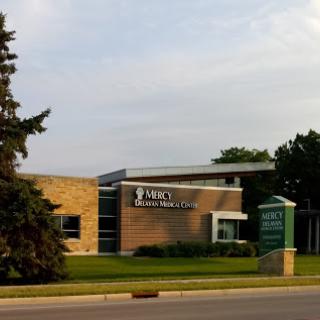

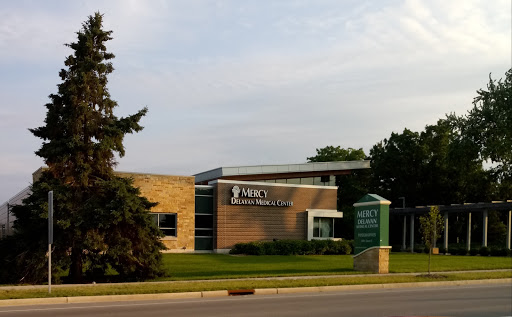
905 East Geneva Street, Delavan, WI 53115
For more information about senior living options: (866) 208-4318
Overall Review of Delavan Health Services
Pros
 The staff are very helpful, caring, and kind.
- They paid a lot of attention to the patient, keeping her comfortable.
- The staff are outgoing and know how to interact with someone who is hard to understand due to health concerns.
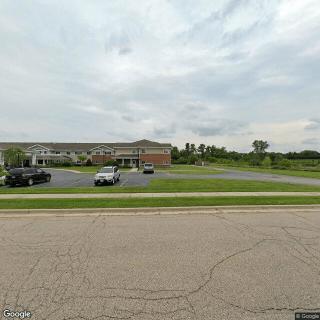
- The facility is kept clean, and the age of the building does not seem to be a problem.
- There is a nice outdoor patio area for family time and a pleasant indoor visiting area for residents to socialize.
- Overall, the reviewer was very satisfied with the quality of care and the condition of the facilities.
- Hospice services are above average, with educated, professional, and compassionate staff.
- They provide care for the client and support to the family during and after.
Cons
 The place is run down and old looking.
- The rooms are very small and do not offer a comfortable atmosphere.
- Most staff only did their job and did not go above and beyond to make the father comfortable, offering no extra encouragement or sympathy.
- A staff member was rude to the mother when she reported that the father’s oxygen was not working.
- The oxygen was not working because it had been hooked up incorrectly.
- All in all, this is not the place to take someone if one wants to keep a loved one’s spirits up.
Review
Delavan Health Services is best suited for seniors who want dependable, staff-driven care in a modest, homey setting and for families that value regular, compassionate interactions, straightforward routines, and spaces that support visiting and outdoor time. The most persuasive thread from the reviews is that attentive, caring staff can make a meaningful difference in daily life, even when the building itself feels dated. For those who prize warmth, steady assistance, and practical comfort over luxury or modern amenities, this community can feel like a solid, no-nonsense option.
That said, certain realities deserve close scrutiny before choosing Delavan Health Services. Prospective families should explicitly weigh the possibility of alternatives if modern aesthetics, larger private rooms, or a consistently high-energy, uplifting atmosphere are high priorities. One review foregrounds a run-down, old-looking environment with very small rooms and a palpable sense that staff stay within a job description rather than going the extra mile to lift a loved one’s spirits. An alarming incident, oxygen equipment not working and a rude moment from a staff member, serves as a stark reminder that morale and vigilance matter as much as courtesy and routine care.
The strongest counterpoint to those drawbacks is the demonstrated care and attentiveness of the staff. In multiple observations, caregivers were described as helpful, compassionate, and skilled at engaging a resident who has complex health needs, including communication challenges from strokes. The facility’s cleanliness and the fact that the environment supports family time, evidenced by a patio area and an indoor visiting space, help offset some of the physical limitations. Where shortcomings exist, a supervising staff presence and consistent patient interactions can sustain dignity and comfort, making the difference for residents who rely on staff for daily reassurance.
Nevertheless, the age of the building and the small, less-than-spacious rooms remain persistent concerns. This is not a setting that projects modern luxury or suite-like privacy; for residents who require larger living spaces, more contemporary infrastructure, or a consistently buoyant atmosphere to support mood and morale, the drawbacks may overshadow the basic care advantages. The reviews imply a tension between capable caregiving and a facility that doesn’t fully meet expectations for environment, ambience, or proactive emotional engagement. Families should assess whether the emotional climate aligns with the loved one’s preferences, especially for long-stay scenarios.
An important plus to consider is the hospice support footprint associated with the campus, cited in relation to Willowfield Nursing & Rehabilitation Center. The hospice services described as above average emphasize professionalism, compassion, and ongoing family support, dimensions that extend beyond resident care and can be pivotal in end-of-life planning. For families seeking integrated hospice alongside traditional skilled nursing care, this linkage offers a meaningful option that may mitigate some concerns about the core environment. It suggests a pathway to skilled, compassionate end-of-life experiences even if the day-to-day setting feels imperfect.
In practical terms, families weighing Delavan Health Services should approach a site visit with clear priorities. Confirm how oxygen and medical equipment are monitored and tested, and inquire about staff-to-resident ratios during different shifts. Explore opportunities to spend time in the outdoor patio and indoor visiting area to gauge whether those spaces truly support meaningful family interactions. Probe the atmosphere: is there consistent warmth in everyday exchanges, or does the mood depend on individual staff personalities? If the loved one requires stronger emotional encouragement or a more uplifting milieu, or if a more modern aesthetic is non-negotiable, it may be wise to compare with alternatives such as Willowfield’s hospice offerings or other nearby communities that better align with those preferences.
In sum, Delavan Health Services presents a practical, capable option for families prioritizing reliable caregiving and accessible social spaces within an understated, traditional setting. The main cons, an older physical plant, small rooms, and pockets of staff performance that fail to elevate spirits, do not automatically negate the value offered, but they do demand vigilance and a careful fit to the resident’s personality and needs. For those who require a higher-end environment, or who cannot compromise on consistently buoyant morale, it is prudent to investigate alternatives and to consider leveraging the hospice pathway through Willowfield as a complementary or substitute component of care where appropriate.
 50 resident community capacity
 Skilled Nursing Facility
 Beauty salon
 Cable or satellite TV
 Dining room
 Fully furnished
 Garden
 Housekeeping services
 Kitchenette
 Move-in coordination
 Outdoor space
 Restaurant-style dining
 Small library
 Telephone
 Wi-Fi/high-speed internet available
 24-hour call system
 Activities of daily living assistance
 Assistance with bathing
 Assistance with dressing
 Assistance with transfers
 Diabetes diet
 Medication management
 Mental wellness program
 Special dietary restrictions



 In-Home Care Costs in 2025: A Detailed State-by-State Exploration
 Understanding Home Health Care: A Comprehensive Guide
 Home Health Care Demystified: A Comprehensive Guide for Families and Caregivers