

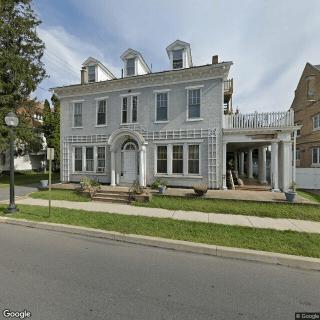
1040 Market Street, Sunbury, PA 17801
To contact a resident: (570) 286-6922
For more information about senior living options: (866) 208-4318
Golden LivingCenter - Mansion Costs & Pricing
Golden LivingCenter - Mansion presents a notable pricing structure for its accommodations, with monthly costs that significantly exceed both Northumberland County and the broader Pennsylvania averages. For a semi-private room, residents can expect to pay $6,935, which is substantially higher than the county's average of $4,458 and the state figure of $3,542. Similarly, those opting for a private room will incur monthly charges of $7,035, in contrast to Northumberland County's average of $5,143 and Pennsylvania's overall average of $4,890. These figures suggest that while Golden LivingCenter - Mansion offers specialized services or amenities that may justify these costs, potential residents should carefully weigh their budget against the more economical options available within the local area and state.
| Floor plans | Golden LivingCenter - Mansion | Northumberland County | Pennsylvania |
|---|---|---|---|
| Semi-Private | $6,935 | $4,458 | $3,542 |
| Private | $7,035 | $5,143 | $4,890 |
Skilled Nursing Facilities with a similar price nearby
-
from -$1020 / mo
Nipple Convalescent Home
$5,915 to $7,689 / month22.5 miles away
Overall Review of Golden LivingCenter - Mansion
Pros
 Families describe the Mansion as a blessing where their loved ones become more upbeat quickly and receive excellent care from all staff.
- The facility is clean, well organized, and staffed by friendly, attentive team members.
- Therapists listen, collaborate with residents, and genuinely care about rehabilitation, with needs met cheerfully.
- Communication with families is excellent, including thoughtful care plan meetings and helpful connections to resources.
- Staff make loved ones feel welcomed, loved, and treated with kindness, compassion, and respect.
- A nurse stood out as particularly caring, with the resident speaking fondly of her after discharge.
- The staff are wonderful and dedicated, providing care around the clock to help residents regain their footing.
- The Mansion feels like a home away from home and fosters a strong sense of family among residents and staff.
- The rehab team is highly effective and highly recommended for helping residents get back on their feet.
- The staff treat residents like family and are consistently attentive to their needs.
Cons
 An awful experience with a CNA named Price.
- The elevator reportedly had a 50% chance of working, which is unacceptable.
- The reviewer noted that their aunt was upset about leaving her apartment to enter a nursing home.
- There were stories about residents getting stuck in the elevator.
Review
Golden LivingCenter - Mansion in Sunbury is best suited for families seeking a warm, rehab-forward setting where short-term recovery is prioritized and care teams cultivate a welcoming, almost familial atmosphere. The community shines for older adults who arrive after surgery, fracture, or other medical setbacks with the goal of regaining independence and returning home. With a 4.6 rating based on 14 reviews, the Mansion earns trust through tangible rehab outcomes and the steady, compassionate support of its staff. It is especially well-suited for residents who value clear communication during transitions, daily attentiveness, and a culture that feels like a second family. It is not primarily a long-term memory-care campus, but for short-term rehabilitation and post-acute recovery, the Mansion delivers.
Strengths in this setting are deeply rooted in rehabilitation and relationships. The rehab department stands out for therapists who listen, tailor plans, and push residents toward meaningful progress. Caregivers consistently treat residents with kindness, delivering care with a genuine, daily warmth. The facility is clean and well organized, and staff communicate proactively with families while collaborating on care plans. Visitors repeatedly describe the place as welcoming to both short-term and longer-term residents, with staff who form bonds and celebrate small victories. The care plans meetings, resources for home transition, and ongoing advocacy are core values, and the environment supports recovery, quiet enough for focus yet social enough to sustain morale.
These strengths offset many common concerns about rehab facilities. When therapy staff are engaged and the care team is readily available to answer questions, families gain confidence that recoveries will be managed crisply and with accountability. Cleanliness and organization reduce confusion during transitions, while family-like warmth helps residents cooperate with therapy and feel less anxious about leaving home. The practical effect is a smoother discharge process and a clearer road back to independence, which often makes a temporary stay feel worthwhile rather than something to endure. In short, the Mansion tends to deliver practical and timely rehabilitation outcomes that families can trust.
Yet two concrete drawbacks require attention. The elevator reliability issue, described as roughly a 50/50 affair, is a material constraint for anyone with mobility limits or a heavy reliance on wheelchairs. In daily life, that problem can slow movement between floors, complicate therapy sessions, and add friction to routine care. The standout negatives are not ubiquitous, but they are enough to push some families to ask for assurances about service continuity or to prefer rooms on a single accessible floor if available. The CNA incident cited, a significant lapse, cannot be ignored, and it raises valid questions about supervision, staffing consistency, and immediate remediation when concerns arise. Still, the broader staffing culture in this facility remains overwhelmingly positive, with many long-tenured, attentive professionals who typically deliver compassion alongside competence.
For families where dependable infrastructure and consistently positive staff interactions are non-negotiable, alternatives should be considered. If elevator reliability is a non-starter or if a resident requires ongoing, highly specialized nursing attention that demands flawless floor-to-floor mobility, visit other nearby communities with verified elevator performance and stronger CNA oversight. If the need extends into long-term memory care or requires a more robust, dementia-focused program, there are facilities designed specifically for those needs. Golden LivingCenter - Mansion remains strong for short-term rehab, but long-term residence with complex needs may be better served elsewhere.
When evaluating, run the discharge roadmap with the rehab director, confirm the plan for ongoing communication, and request to meet the team who will drive rehabilitation. Check elevator maintenance schedules, ask about CNA supervision and incident response protocols, and tour multiple units to gauge consistency across shifts. If a short-term recovery goal is the priority, the Mansion offers a compelling blend of compassionate care, practical rehab results, and a family-like atmosphere that can make a difficult transition feel manageable, and often successful.
 Skilled Nursing Facility
 Cats allowed
 Dogs allowed
 Activities off-site
 Bath tubs
 Beautician on-site
 Devotional services off-site
 Indoor common areas
 Outdoor common areas
 Private
 Respite or short term stays offered
 Wheelchair accessible showers
 High acuity care
 Incontinence care
 Kosher

 Comprehensive Insights and Practical Strategies to Help Older Adults Avoid Falls
 6 Crucial Ways an Elder Law Attorney Assists Families
 Navigating the Tax Landscape of Caregiving: Credits, Deductions, and Beyond