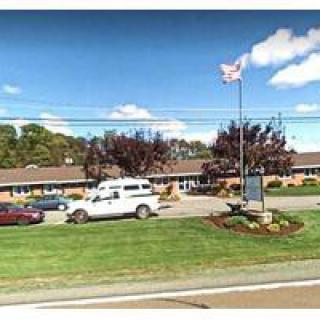
17350 Old Turnpike Road, Millmont, PA 17845
For more information about senior living options: (866) 208-4318
Overall Review of Rolling Hills Healthcare And Rehabilitation Center
Pros
 The staff were helpful, respectful and informative, delivering truly wonderful and compassionate care.
- The facility is great, with caring staff who treat residents like family and go above and beyond to make loved ones feel at home.
- The staff provide regular, informative updates about residents' condition, which is important to families.
- The facility organizes engaging activities, such as Halloween events, that involve residents and enhance their experience.
Cons
 The administration is focused on money, ignoring tenants' wants and their well-being.
- The administration ignores residents' needs, as shown in the reviewer’s experience with their mother.
- Management should treat its staff better, recognizing that staff are the backbone of the facility’s success.
Review
Rolling Hills is best suited for families that prize a warm, home‑like atmosphere where frontline caregivers form real connections with residents. It works well for seniors who need steady, compassionate daily care but do not demand highly complex medical management. The environment reads as intimate and family‑oriented, with aides and nurses who appear genuinely devoted to individual residents. Families prioritizing personal rapport, regular staff check‑ins, and meaningful activities that foster belonging will likely feel confident placing a loved one here. It isn’t a glossy, high‑tech showcase, but it delivers human‑scale care where it matters most.
Those weighing alternatives should consider the governance angle. Several reviews portray leadership as focused on the revenue stream, with resident preferences sometimes overlooked. That gap between the warmth on the floor and top‑level decision‑making introduces a real risk: important concerns or care decisions may not be addressed with the urgency desired. If a family needs transparent billing practices, clear policy updates, and proactive care planning, Rolling Hills may test patience and require closer scrutiny of how management handles requests.
The strongest asset is the caregiving team. Aides and staff are consistently described as helpful, respectful, and genuinely compassionate, with one account highlighting truly wonderful and attentive care for a loved one. Families report feeling like the facility treats residents as family, with staff going beyond the basics to make life feel comfortable and familiar. Regular family updates and small, inclusive activities, such as holiday events, help maintain a strong sense of connection to a loved one’s daily life and progress.
The downside is tangible in several voices: administration perceived as prioritizing the bottom line over resident wants and welfare. That critique carries practical consequences, including the potential for care plans to drift, requests to be overlooked, and concerns about staffing or policy slow to move. There is also a clear call that staff should be treated better, signaling that workforce morale and retention are tied to governance quality. When management falters in supporting the care team, the risk increases that day‑to‑day warmth may not translate into sustained, reliable operations.
Do the positives offset the negatives? For families that lean on direct caregiver relationships and value frequent, reassuring updates, the favorable elements can outweigh the concerns, especially when care remains steady and residents feel “at home.” The calculus shifts for long‑term stays or residents with higher medical needs, where robust administrative oversight and transparent problem resolution become more critical. If leadership proves capable of aligning with staff and residents’ welfare, the facility’s strengths will index high; if not, the risk of mounting friction grows.
Practical decision guidance centers on a deliberate, two‑track assessment. First, visit with a focus on governance and care coordination as much as on kindness on the floor: speak with frontline staff and the administrator, observe how care plans are discussed, how updates are delivered, and how requests are tracked. Second, verify staffing fundamentals, ratios, shift coverage, and the cadence of family updates, and insist on concrete examples of how concerns have been addressed in the past. If a short trial period is possible, propose a defined start and end point with a written plan for escalation. For families prioritizing warmth and daily caregiver attention, Rolling Hills is a compelling option; for those needing airtight administrative transparency and consistent governance, it is wise to explore alternatives.
 57 resident community capacity
 Skilled Nursing Facility
 Air-conditioning
 Beauty salon
 Cable or satellite TV
 Computer center
 Dining room
 Fitness room
 Fully furnished
 Gaming room
 Garden
 Housekeeping services
 Kitchenette
 Move-in coordination
 Outdoor space
 Private bathrooms
 Restaurant-style dining
 Small library
 Telephone
 Wellness center
 Wi-Fi/high-speed internet available
 Community operated transportation
 12-16 hour nursing
 24-hour call system
 Activities of daily living assistance
 Assistance with bathing
 Assistance with dressing
 Assistance with transfers
 Diabetes diet
 Medication management
 Mental wellness program
 Special dietary restrictions
 Concierge services
 Planned day trips

 Skilled Nursing Facilities vs. Nursing Homes: Making Sense of the Differences
 A Detailed Examination of Nursing Home Costs Across the U.S.
 Exploring Nonmedical Home Care: Understanding Services, Costs, and Financial Approaches