
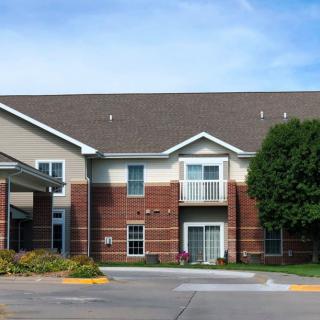
719 North Brown Street, Alma, NE 68920
For more information about senior living options: (866) 208-4318
Good Samaritan Society - Colonial Villa Costs & Pricing
At Good Samaritan Society - Colonial Villa, the monthly cost for a private room is competitively set at $1,700. This rate aligns perfectly with the average costs in Harlan County, ensuring that residents receive quality care without exceeding local pricing norms. In contrast, the broader state averages in Nebraska reflect a significantly higher cost of $4,615 for similar private accommodations. This favorable pricing structure not only underscores Good Samaritan Society's commitment to affordability but also highlights its role as an accessible option for families seeking exceptional care within their community.
| Floor plans | Good Samaritan Society - Colonial Villa | Harlan County | Nebraska |
|---|---|---|---|
| Private | $1,700 | $1,700 | $4,615 |
Overall Review of Good Samaritan Society - Colonial Villa
Pros
 The facility is consistently clean, offers good food, has great nurses, and friendly staff.
- The staff consistently provide excellent care to residents.
- The location is highly recommended.
- The staff treat residents like family members, not merely as patients.
- Families are kept informed by telephone about any changes in a resident’s health.
- This home offers a level of care not seen in other homes.
Review
This community is best suited for seniors who need ongoing nursing support in a calm, home‑like setting, and for families that prize consistent, attentive caregiving and transparent communication. The Alma location presents a small‑town, accessible environment where residents and staff develop a familiar routine, and where daily life centers on dignity and practical care. For older adults who value dependable hands‑on nursing, clean surroundings, good meals, and staff who genuinely seem to care, Colonial Villa delivers a solid, reliable baseline of quality. It is not marketed as a glossy resort, but it is a dependable and reassuring home for long-term care needs.
Those weighing alternatives will want to consider the elder’s priorities beyond daily care. If the goal is aggressive rehabilitation after a hospital stay, a more intensive rehab program, or a facility with a busier social calendar and broader amenities, other options may serve those needs better. Families seeking highly specialized memory care with strict, structured routines might prefer facilities designed around dementia care at scale. Likewise, if location breadth, larger campus resources, or different price structures are decisive, exploring options in larger markets or with different models may yield a better fit.
The strongest pro set here centers on caregiving culture and reliability. Residents often stay long term, and the experiences describe a home where staff, especially nurses and aides, are capable, friendly, and consistently present. Cleanliness and food quality are repeatedly cited as strong points, reinforcing daily comfort and well-being. The most impactful factor is the relational approach: staff treating residents like family, with families kept well informed about health changes through timely communication. This combination creates substantial peace of mind for families, especially when navigating evolving health needs and end-of-life planning.
Because no notable drawbacks appear in the shared accounts, these advantages effectively offset the typical anxieties families have about continuity of care and resident dignity. The absence of reported safety or service gaps, paired with visible staff stability and a culture of clear updates, reduces uncertainty about what life will look like day to day. Still, practical diligence remains essential: prospective residents should verify current staffing levels, understand the care planning process, and confirm that the available services align with specific medical or memory-care requirements. A contemporaneous tour and conversations with the administrator will illuminate how well the community handles personalized care plans.
For decision‑makers, Colonial Villa represents a compelling match when the priority is a long‑standing, reliable nursing home with a welcoming, family‑oriented atmosphere. It is particularly well suited for those prioritizing stable relationships with caregivers, consistent daily routines, and open lines of communication with family members. To proceed confidently, families should request a current overview of services and pricing, meet with direct care staff, and, if possible, speak with current residents or family members about daily life and responsiveness. Those whose criteria align with these strengths will find a clear, practical fit here; those chasing broader rehab options, bigger campuses, or memory‑care models may want to compare alternatives before deciding.
 53 resident community capacity
 Skilled Nursing Facility
 Air-conditioning
 Beauty salon
 Cable or satellite TV
 Computer center
 Dining room
 Fitness room
 Fully furnished
 Gaming room
 Garden
 Housekeeping services
 Kitchenette
 Move-in coordination
 Outdoor space
 Private bathrooms
 Restaurant-style dining
 Small library
 Telephone
 Wellness center
 Wi-Fi/high-speed internet available
 Community operated transportation
 12-16 hour nursing
 24-hour call system
 Activities of daily living assistance
 Assistance with bathing
 Assistance with dressing
 Assistance with transfers
 Diabetes diet
 Medication management
 Mental wellness program
 Special dietary restrictions
 Concierge services
 Planned day trips

 In-Depth Look at the VA Aid and Attendance Program
 Nurturing Our Loved Ones: A Daughter's Journey in Caring for Her Mother
 Nurturing Our Elders: Linda's Journey of Supporting Her Mother