
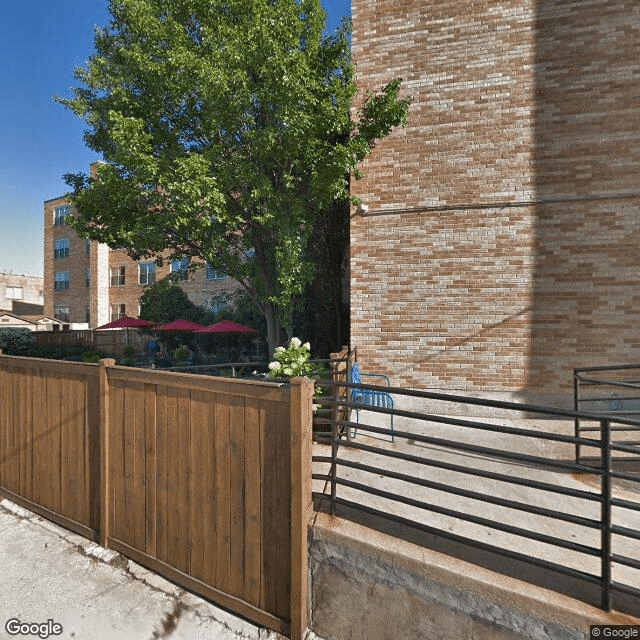
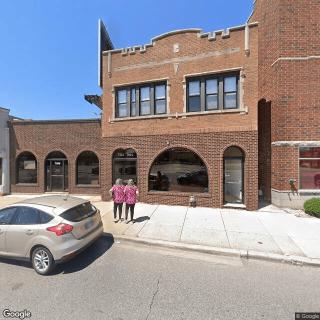
7733 W Grand Ave, Elmwood Park, IL 60707
To contact a resident: (708) 452-9200
For more information about senior living options: (866) 208-4318
Elmwood Care Costs & Pricing
Elmwood Care offers competitive pricing for its services, particularly when compared to the averages in Cook County and throughout Illinois. For a semi-private room, Elmwood Care charges $3,300 per month, significantly lower than the county's average of $5,192 and the state's average of $5,146. Similarly, those looking for a private room will find Elmwood's rate of $3,600 to be quite favorable; this is notably less than both Cook County's average of $5,168 and Illinois' statewide average of $5,049. These cost advantages not only make Elmwood Care an appealing option for potential residents but also reflect a commitment to providing quality care at accessible prices.
| Floor plans | Elmwood Care | Cook County | Illinois |
|---|---|---|---|
| Semi-Private | $3,300 | $5,192 | $5,146 |
| Private | $3,600 | $5,168 | $5,049 |
Skilled Nursing Facilities with a similar price nearby
-
from -$275 / mo
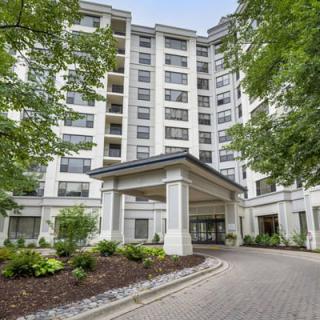
Brookdale Des Plaines
$3,025 to $4,710 / month8.5 miles away -
from -$350 / mo
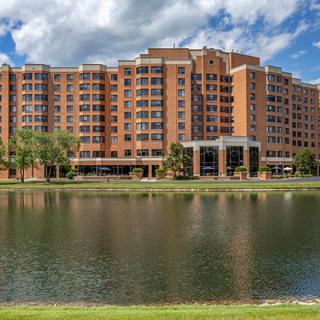
Brookdale Hoffman Estates
$2,950 to $4,250 / month18.7 miles away -
About the same
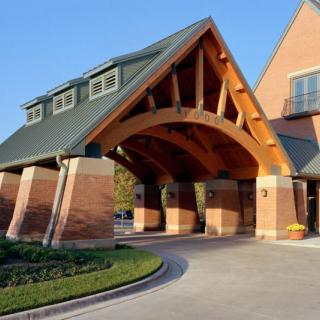
The Garlands of Barrington
$3,286 to $9,430 / month22.4 miles away -
from +$130 / mo
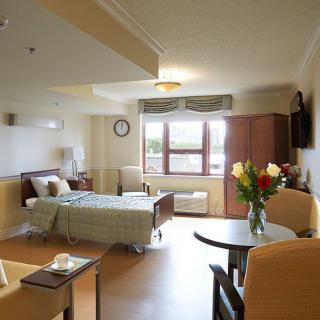
The Selfhelp Home
$3,430 to $4,630 / month9.2 miles away -
from +$584 / mo
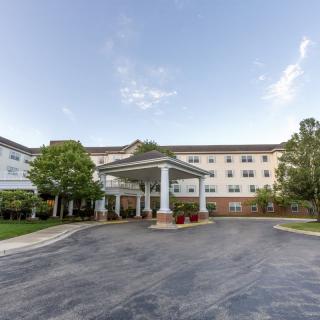
StoryPoint Naperville
$3,884 to $4,643 / month20.9 miles away
Overall Review of Elmwood Care
Pros
 The administration and medical staff are caring and friendly.
- They took excellent care of the resident, and he got to go home.
- He was very happy during his stay.
- The social worker was great and the CNA was an angel to him.
- The front desk receptionist was awesome.
- The nurses provided outstanding care.
- The staff is awesome and the facility is a loving, caring home.
- The reviewers would recommend this nursing home to anyone seeking a loving, caring environment.
Review
Elmwood Care in Elmwood Park, IL is best suited for families seeking a warm, hands-on skilled-nursing environment where care culture is personal and proven. The community shines for short-term rehab and post-acute recovery, with a steady, approachable administrative team and a nursing staff described as caring and friendly. Reviewers point to tangible outcomes, one resident returning home after treatment, and families expressing gratitude for guidance through the process. The social worker, a CNA described as an angel, and a responsive front-desk team collectively underpin a setting where clinical needs and emotional well-being are addressed in tandem. For families pursuing a reliable path to recovery within a homelike atmosphere, Elmwood Care stands out as a practical, well-supported option.
Those evaluating options should consider alternatives if memory-focused programming or a very quiet, ultra-stable long-term environment is a priority. The reviews do not cite a dementia-dedicated unit or highly specialized cognitive-care offerings, and there is no detail about cost structures or long-term affordability. For residents whose goals center on ongoing, intensive memory care, or who require a care model with a different pacing or emphasis beyond rehab, comparing Elmwood Care with other communities ensures alignment with needs, expectations, and financial planning. In short, Elmwood Care delivers exceptionally well for recovery-focused stays, but a memory-care or long-term-centric model may be a better fit elsewhere.
On the strength side, Elmwood Care earns credibility from a cohesive, compassionate team. Administrators and medical staff are highlighted as caring and accessible, and the positive outcome of a resident being able to go home after care underscores effective treatment and discharge planning. The social worker earns explicit praise for guiding families through the process, while the CNA who supported the resident is lauded as a meaningful, daily lifeline. The front-desk staff and the broader nursing team are repeatedly acknowledged for responsiveness and expertise. Together, these elements create a care lattice where clinical acumen and personal regard reinforce each other, particularly during transitions from hospital to home-based recovery.
Equally important is the environment for daily life, described as a nice place with lots of activity and a full staff. That combination matters for mood, safety, and functional recovery, because robust staffing translates into timely help, better mobility support, and sustained social engagement. For residents who value structured days, purposeful programming, and the reassurance that assistance is readily available, Elmwood Care delivers a setting that supports both well-being and practical recovery goals. Families will notice fewer moments of isolation and more opportunities for meaningful interaction, which often correlates with improved outcomes and a smoother return home.
The balance of strengths against the limited, if unspoken, cons suggests a clear value proposition. The most salient caveat is the lack of explicit information about long-term care depth, memory-focused programming, and financial terms. While the rehabilitation success stories and the evident warmth offset typical concerns about impersonal care or inadequate staff presence, families planning for extended stays or specific cognitive-care needs should seek direct answers on these points. In practice, the scores and narrative suggest Elmwood Care offers exceptional handling of short-term recovery with a human touch that matters.
For families making a decision, concrete steps can translate this promise into certainty. Schedule a visit and observe how the staff interact with residents across shifts. Meet the social worker and a few frontline caregivers to gauge accessibility and tone. Inquire about average nurse-to-patient ratios, the care planning process, and what a typical rehab trajectory looks like, from admission through discharge. Ask to see sample activity calendars and ask how weekends are staffed to confirm consistency. Finally, compare Elmwood Care with alternatives that emphasize dementia programming or different resident mixes to ensure the choice aligns with goals, timeline, and budget. When the priority is a humane, hands-on environment with a proven track record of returning residents home, Elmwood Care stands out as a solid, practical option.
 Skilled Nursing Facility
 Activities on-site
 Bath tubs
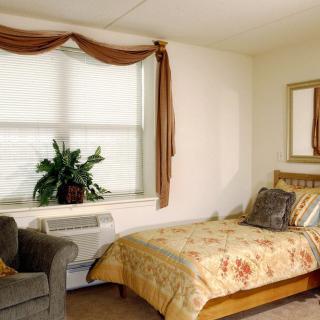
 Private
 Respite or short term stays offered
 Wheelchair accessible showers
 Chicago O'Hare International (6 miles away)
 Diabetic care
 High acuity care
 Incontinence care
 Meals provided

 Compassionate Conversations: How to Comfort Someone Who Is Grieving
 Home Health Care Aides: Understanding Their Role and Supporting Your Family
 Urinary Tract Infections in Older Adults: Comprehensive Insights on Symptoms, Treatment, and Prevention