
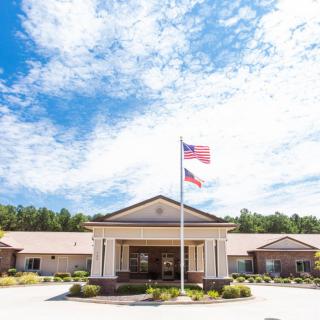
561 University Drive, Evans, GA 30809
For more information about senior living options: (866) 208-4318
Overall Review of University Extended Care/Westw
Pros
 The staff at Westwoods are caring individuals.
- They seem to have sincere concern for the residents.
Cons
 Staffing levels remain at the minimum required level or below due to turnover.
- Staff members are stretched thin, leading to meals being late.
- Residents are left in bed for days.
- There is a consistent stench in the air of human waste.
- This is a management problem.
Review
University Extended Care/Westw in Evans, GA is best suited for families seeking a setting where caregivers show genuine warmth and personal investment, even if the care cadence isn’t consistently reliable. The residents who prosper here are those who respond well to kindness, respectful communication, and bedside courtesy when staff are on shift. This is not a facility built around clockwork efficiency; it succeeds in building rapport and a sense of being known. For families that prioritize emotional connection and compassionate bedside manner over rigid scheduling, this community can feel like the right match. Yet for those who cannot tolerate regular delays or inconsistencies, the fit grows uncertain quickly.
This is a facility to scrutinize for anyone who requires dependable staffing and predictable service every day. Alternatives should be considered for families prioritizing consistent meal delivery, timely assistance, and a consistently clean, odor-free environment. If 24/7 responsiveness is non-negotiable, or if daily hygiene and routine completion must be guaranteed, exploring options with higher staffing stability and tighter management controls is prudent. Prospective residents with complex medical needs or high fall-risk should weigh the risk of intermittent coverage against the benefits of the evident warmth among staff when shifts cooperate.
On the positive side, the staff’s caring demeanor leaves a meaningful impression. When caregivers are on the floor and attentive, residents feel seen, valued, and supported in a way that can lift mood and comfort. The culture appears to be one where caregiver-to-resident interactions matter, and personal attention can translate into moments of dignity and reassurance. That emotional thread matters, especially for residents who respond to kindness and familiarity. In short, the human touch here can be real and impactful when staffing aligns with demand.
The core concerns center on staffing levels and turnover, which appear to drive a cascading set of operational problems. In practice, the minimum or below-minimum staffing creates pressure across the daily routine: meals arrive late, and routine tasks pile up as workers stretch to cover multiple residents. Even more troubling are reports of residents remaining in bed for extended periods and a persistent air issue described as a stench of waste. These red flags point to deeper management and oversight gaps, where insufficient coverage and turnover destabilize consistent care and basic hygiene practices.
In weighing the positives against the downsides, the caring temperament of the staff offers meaningful benefit but does not fully compensate for the structural shortcomings. The emotional reassurance provided by attentive aides cannot substitute for reliable meals, timely assistance, and a consistently clean environment. When staffing remains stretched, even well-meaning caregivers struggle to meet needs, and the risk to resident well-being grows. For families, this means the decision hinges on tolerance for variability: if a preferred balance of warmth and dependable routine can be achieved only intermittently, the odds of sustained satisfaction are uncertain.
For families committing to this community, a practical plan is essential. Schedule extended visits across multiple shifts to observe how staffing translates into real care during mornings, afternoons, and evenings. Ask for a transparent staffing matrix showing nurse and aide coverage by shift, and request to meet the administrator who will oversee the care plan. Seek a concrete care plan with defined response times, medication administration schedules, and a hygiene routine, plus a guaranteed escalation path if needs aren’t met. If these assurances cannot be solidified or performance doesn’t improve within a defined period, it is prudent to explore alternatives, prioritizing facilities with steadier staffing, more consistent meal service, and demonstrably lower odor and sanitation concerns.
 149 resident community capacity
 Skilled Nursing Facility
 Air-conditioning
 Beauty salon
 Cable or satellite TV
 Computer center
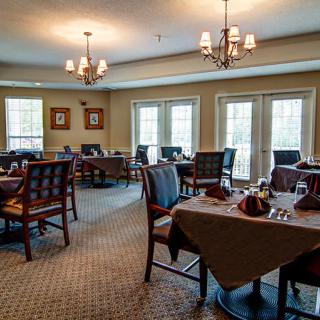
 Dining room
 Fitness room
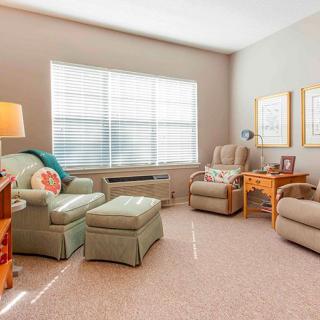
 Fully furnished
 Gaming room
 Garden
 Housekeeping services
 Kitchenette
 Move-in coordination
 Outdoor space
 Private bathrooms
 Restaurant-style dining
 Small library
 Telephone
 Wellness center
 Wi-Fi/high-speed internet available
 Bush (14 miles away)
 Community operated transportation
 12-16 hour nursing
 24-hour call system
 Activities of daily living assistance
 Assistance with bathing
 Assistance with dressing
 Assistance with transfers
 Diabetes diet
 Medication management
 Mental wellness program
 Special dietary restrictions
 Concierge services
 Planned day trips





 A Comprehensive Exploration of Common Misunderstandings about Powers of Attorney
 Senior Move Management: Understanding the Role, Value, and Associated Costs
 Weight Training for Seniors: Building Strength and Vitality