
5157 Park Club Drive, Sarasota, FL 34235
For more information about senior living options: (866) 208-4318
Overall Review of Tarpon Point Nursing And Rehabilitation Center
Pros
 Tarpon Point offers comprehensive physical therapy.
- The center has about 100 rooms and is kept clean with daily dusting, mopping, and toilet cleaning.
- The administrator is highly regarded and the receptionists are very nice.
- It has department heads (including human relations, dietitians, and housekeeping) and an attentive nursing staff.
- Nurses manage daily prescriptions via medical carts, with a room specialist for room issues.
- The facility provides two care areas: one for more dependent residents and one for more independent residents receiving therapy.
- CNAs are part of the care team.
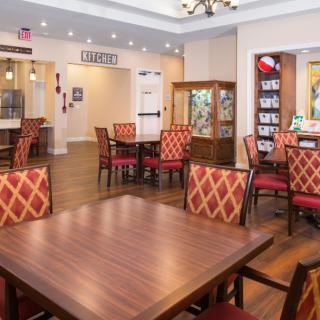
- Meals are delivered to residents, with dining facilities available.
- Families describe the staff as caring, compassionate, and supportive, providing dignity and love during end-of-life care.
Cons
 Tarpon Point is not the place to go for therapy for someone with memory issues.
- The reviewer feels guilt for allowing her to stay there.
- When she left, she was no longer able to walk at all.
- The reviewer believes staff did not take the time to assist her walking.
- The reviewer would not recommend Tarpon Point to anyone.
- She was getting more care than she actually needs.
Review
Tarpon Point Nursing and Rehabilitation Center is best suited for families seeking a hands-on, compassionate care environment where a loved one can receive steady daily support, rehabilitation services, and meaningful activity, including dementia care or end-of-life service, within a structured two-area layout. The facility clearly stratifies residents into more independent, therapy-focused individuals and those who require higher levels of supervision or cognitive support, allowing caregivers to align expectations with the appropriate unit. It is particularly suitable for residents on Medicaid who need consistent staffing, a broad care team, and access to PT and RN oversight, all within a community that prioritizes dignity and personal attention.
Caregivers should consider alternatives if memory-focused rehabilitation and modern amenities are non-negotiable priorities. The building’s age stands out, and the dining arrangement, meal delivery rather than communal dining, may feel less than ideal for families seeking a more traditional, social dining experience. Families who want robust, specialized memory-care therapy with a strong emphasis on preserving mobility and independent function may find that Tarpon Point’s approach does not fully meet those expectations. For residents whose needs revolve around high-end facility features or highly specialized dementia programming, exploring other options with dedicated memory-care neighborhoods could be prudent.
On the upside, Tarpon Point benefits from an engaged leadership and an accessible, responsive staff structure. The administration and admissions processes receive high praise, and the care team, RNs, CNAs, dietitians, and department heads, appears consistently attentive. Cleanliness is noted, with daily housekeeping support that helps maintain a comfortable environment. The facility operates with a robust medical presence: nurses manage daily prescriptions, and there is a designated room specialist to handle room-related concerns. The two distinct areas, one for residents needing more intensive daily support and another for those pursuing therapy and greater independence, provide a practical framework that can align with varied care needs within the same campus.
The strongest praise centers on compassionate, hands-on care and genuine, person-centered interaction. Families recount staff who treat residents with dignity, warmth, and attentiveness, particularly in end-of-life scenarios where hospice involvement is coordinated with a steady, reassuring presence. Rehabilitation services are present and active, with residents engaging in physical therapy and a broad slate of activities ranging from traditional games to more dynamic engagement. For Medicaid-dependent residents, Tarpon Point represents a realistic, caring option that can deliver both necessary medical attention and meaningful day-to-day enrichment, underscored by positive experiences of staff going above and beyond to support families through trying times.
Yet, the most cautioned area involves rehabilitative outcomes for residents with significant memory impairment. A cautionary review describes a scenario in which dementia impaired walking ability post-rehab, raising questions about how aggressively therapy is coupled with daily functional support in memory-heavy cases. This caution is not a universal verdict, but it does suggest that expectations should be carefully calibrated: talk through specific therapy goals, request transparent progress reports, and seek opportunities to observe therapy sessions. Privacy and room-sharing dynamics in a double-room setup may also matter for those who prioritize quiet, private spaces, or who have sensory needs that a shared bathroom and shared room might complicate.
Ultimately, Tarpon Point stands as a practical, experienced choice for families prioritizing reliable staffing, compassionate care, and accessible medical oversight, especially when Medicaid coverage is a factor. Its dual-unit design accommodates different care trajectories without uprooting families, and its emphasis on activity and social engagement provides meaningful quality-of-life benefits. However, for families whose priority is advanced memory-dedicated therapy, or who desire a modern facility aesthetic and a more traditional communal dining experience, it is worth exploring alternatives that emphasize specialized memory programs and newer accommodations. In deciding, families should schedule targeted conversations with the DON and admissions staff, request to tour both units, review therapy protocols and goals, and assess whether the daily routines and privacy levels align with the resident’s needs and the family’s expectations. Tarpon Point offers solid, compassionate foundations, those foundations must be matched to the resident’s precise cognitive, mobility, and social requirements to ensure a genuinely suitable fit.
 120 resident community capacity
 Skilled Nursing Facility
 Air-conditioning
 Beauty salon
 Cable or satellite TV
 Computer center
 Dining room
 Fitness room
 Fully furnished
 Gaming room
 Garden
 Housekeeping services
 Kitchenette
 Move-in coordination
 Outdoor space
 Private bathrooms
 Restaurant-style dining
 Small library
 Telephone
 Wellness center
 Wi-Fi/high-speed internet available
 Sarasota Bradenton International (6 miles away)
 Community operated transportation
 12-16 hour nursing
 24-hour call system
 Activities of daily living assistance
 Assistance with bathing
 Assistance with dressing
 Assistance with transfers
 Diabetes diet
 Medication management
 Mental wellness program
 Special dietary restrictions
 Concierge services
 Planned day trips

 6 Crucial Ways an Elder Law Attorney Assists Families
 Navigating the Tax Landscape of Caregiving: Credits, Deductions, and Beyond
 Highly Beneficial Low-Impact Exercises for Senior Living Residents