
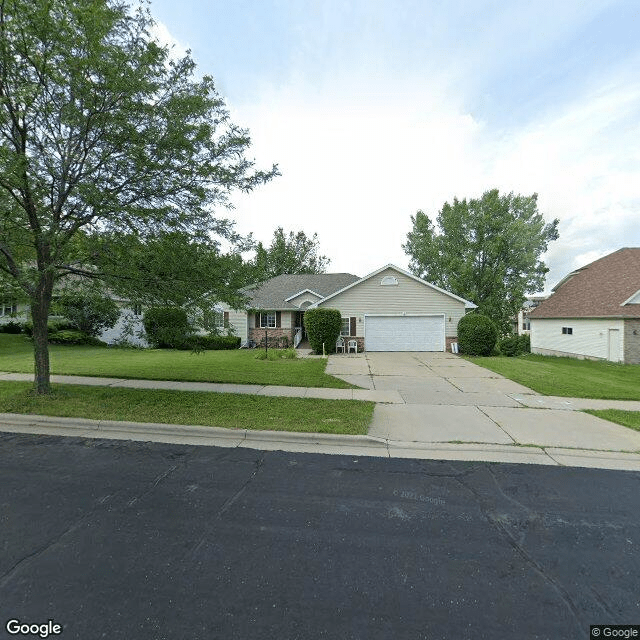
8410 Blackwolf Dr., Madison, WI 53717
To contact a resident: (608) 833-4813
For more information about senior living options: (866) 208-4318
Oak Ridge Living Madison West Costs & Pricing
At Oak Ridge Living Madison West, residents can expect to pay $4,000 per month for either a private room or a studio. This pricing is competitive when compared to the broader context of Dane County and Wisconsin as a whole. In Dane County, the average cost for a private room is slightly lower at $3,914, while studios exceed Oak Ridge's pricing at $4,418. Conversely, in the state of Wisconsin overall, private rooms are higher than what Oak Ridge offers at $4,339, but studio apartments are more affordable at an average of $3,999. Overall, Oak Ridge Living Madison West presents an appealing option for those seeking quality accommodations while remaining mindful of their budget in comparison to local and state averages.
| Floor plans | Oak Ridge Living Madison West | Dane County | Wisconsin |
|---|---|---|---|
| Private | $4,000 | $3,914 | $4,339 |
| Studio | $4,000 | $4,418 | $3,999 |
Memory care communities with a similar price nearby
-
About the same
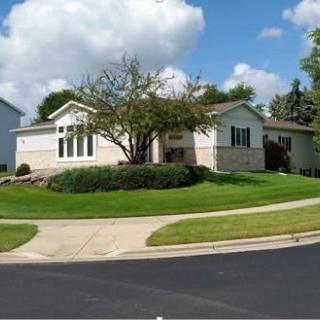
Timberwood Lodge Assisted Living and Memory Care
$4,000 to $4,500 / month4.2 miles away -
from -$500 / mo
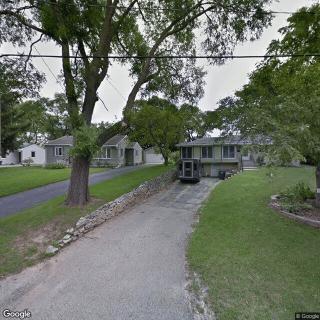
Reynolds Assisted Living Home LLC
$3,500 to $3,750 / month9.5 miles away -
About the same

Kettle Park Senior Living
$3,900 to $4,820 / month18.6 miles away -
from -$200 / mo

Cardinal View Senior Living
$3,800 to $5,000 / month3.1 miles away -
from +$710 / mo

All Saints Assisted Living
$4,710 / month1.2 miles away
Overall Review of Oak Ridge Living Madison West
Pros
 The place is wonderful.
- They treat the residents and staff nicely here.
- The location is nice and central.
- The director is liked a lot.
Cons
 The management is terrible and doesn’t care about the staff.
- The manager neglects patients and often gives them their medicine late.
- They don’t fully pay their staff and keep them waiting for pay.
- Employees work 73 hours and still haven’t received their paycheck in over a month.
- Money is withheld and employees are threatened with being blocked for asking for help.
- Not worth even one star; the manager is rude, a drama queen, and disrespectful.
Review
Oak Ridge Living Madison West is best suited for families seeking a central Madison address with an active, full-capacity feel and a caregiving environment that seems approachable on first impressions. This community tends to attract residents who value location and the social bustle that comes with a busy, fully occupied building. It can work for someone who is comfortable sharing bathrooms (a recurring point in resident discussions) and who has strong family oversight to monitor day-to-day care and staff interactions. The strongest caveat is that reliability of care depends heavily on management patterns, which recent experiences suggest may be inconsistent. In short, it is a practical pick for those who can tolerate a degree of operational volatility in exchange for convenience and a lively neighborhood setting.
Those who should consider alternatives are families prioritizing predictability and meticulous staffing standards. If medication administration, timely payment to staff, or stable caregiver assignments are non-negotiables, this community warrants a hard look elsewhere. Prospective residents who require private, individual bathrooms, and a consistently smooth workflow in daily routines will likely be disappointed by ongoing concerns about understaffing, late medications, or perceived management disengagement. Families who want transparent payroll, steady caregiver retention, and a clearly documented care plan should explore competing options that spell out accountability, communications, and privacy more definitively.
On the upside, Oak Ridge Living Madison West exhibits practical strengths that can matter in everyday life. The location is convenient, with a sense of being “in the mix” and easily accessible for family visits, errands, and appointments. The building’s occupancy is robust, signaling that the community remains a viable, long-term option for those who prefer not to move again. Some residents and staff report a respectful, friendly atmosphere and note that the director is well-liked by at least a portion of the community. These positive signals suggest that, when operations run smoothly, residents experience courteous care and a capable leadership presence guiding daily routines.
Yet the main headwinds are substantive and hard to ignore. The most persistent issues center on management and staffing stability: stories of late or withheld payments, overworked staff, and medication delays raise legitimate concerns about reliability and resident safety. Recurrent claims of a manager who “cares little about residents or staff” and of friction with employees point to a governance problem that can undermine trust and complicate care coordination. While some reviews dispute these impressions, the volume and consistency of the negative experiences outweigh the occasional affirmations, making the risk profile clearly weighted toward instability rather than consistency.
Putting pros against cons, the central location and the sense of a bustling community do not sufficiently offset the critical risks around care continuity and staff reliability. The practical effect is that families must weigh the comfort of a convenient address against the possibility of medication delays, inconsistent staffing, and uncertain follow-through on payroll and staffing promises. The most responsible approach is to enter with heightened diligence: demand current, verifiable assurances about medication routines, staffing ratios for shifts, clear lines of accountability, and a transparent plan for addressing resident concerns. Without those safeguards, the favorable location and occupancy cannot justify the potential care gaps.
The bottom line is clear. Oak Ridge Living Madison West can serve a niche audience: those who prize location and are ready to supervise care closely in a dynamic environment. For families that cannot accept intermittent medication timing, payroll inconsistencies, or signs of managerial disengagement, alternatives should be prioritized. If pursuing this community anyway, insist on concrete assurances, detailed care plans, scheduled caregiver assignments, prompt medication rounds, and direct access to decision-makers. Conduct thorough conversations with current residents and their families, request up-to-date staffing rosters, and verify payroll continuity. In the end, the decision hinges on whether the comfort of a central, bustling setting can justify the potential volatility in day-to-day care.
 Board and Care Home
 Memory Care
 Activities off-site
 Beautician on-site
 Devotional services on-site
 Indoor common areas
 Outdoor common areas
 Private
 Respite or short term stays offered
 Wheelchair accessible showers
 Dane County Regional (11 miles away)
 Ambulatory care
 Diabetic care
 High acuity care
 Incontinence care
 Meals provided





 Comprehending Evening Confusion in Dementia: Causes, Manifestations, and Support
 Delirium and Dementia: Unraveling the Key Differences
 Are Dementia and Alzheimer's Disease Lethal? A Comprehensive Exploration