

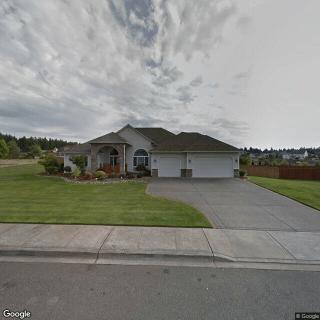
3846 Yorkshire Drive SE, Lacey, WA 98513
To contact a resident: (360) 438-0596
For more information about senior living options: (866) 208-4318
Kelly Adult Family Home Costs & Pricing
Kelly Adult Family Home offers competitive pricing options for its residents, making it an attractive choice compared to the overall costs in Thurston County and the broader state of Washington. For a semi-private room, Kelly's monthly fee is $2,500, significantly lower than the county average of $4,280 and the state average of $4,267. If residents opt for a private room or a one-bedroom accommodation, both are priced at $3,000 per month - again positioning Kelly below county averages ($4,532 for private and $4,085 for one-bedroom) and state averages ($4,772 for private and $4,632 for one-bedroom). This pricing structure not only emphasizes Kelly Adult Family Home's commitment to affordability but also reflects its dedication to providing quality care without compromising on value.
| Floor plans | Kelly Adult Family Home | Thurston County | Washington |
|---|---|---|---|
| Semi-Private | $2,500 | $4,280 | $4,272 |
| 1 Bedroom | $3,000 | $4,085 | $4,634 |
| Private | $3,000 | $4,532 | $4,774 |
Memory care communities with a similar price nearby
-
About the same

Merrill Gardens at Tacoma
$2,500 to $5,400 / month18.6 miles away -
from -$230 / mo

Franke Tobey Jones - Retirement Estates
$2,270 to $6,270 / month22.3 miles away -
About the same
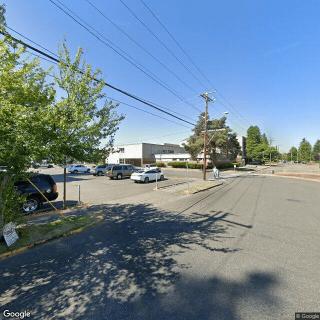
Bradley Park in Puyallup
$2,434 to $3,720 / month23.9 miles away -
from +$410 / mo
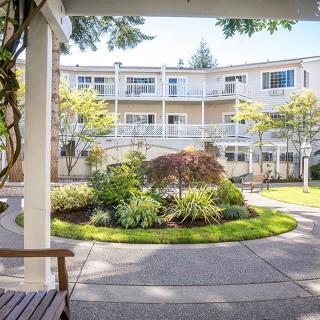
Weatherly Inn-Tacoma
$2,910 to $5,940 / month20.1 miles away -
from +$300 / mo
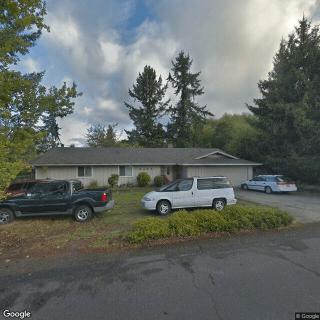
Grace Joy AFH
$2,800 to $3,000 / month18.0 miles away
Overall Review of Kelly Adult Family Home
Pros
 Everyone at Kelly Adult Family Home is described as very nice.
- The reviewers highly recommend Kelly Adult Family Home as a safe and loving home for loved ones.
- The staff at Kelly Adult Family Home is truly exceptional, being kind, compassionate, and patient.
- Staff go above and beyond to keep residents comfortable and happy.
- The meals are excellent, with fresh, nutritious meals prepared daily that residents enjoy.
- Families are grateful for the care, noting that their loved ones were happy and well cared for.
- The environment is positive, personable, and inclusive, with residents and families treated like part of the family.
- The home felt right from the first meeting and is described as the perfect place for their mom.
Cons
 They had to pay $5,000 per month and also provide latex gloves and adult diapers.
- The family had to pay for and supply nitrile gloves and Depends underwear for their loved one, though doctors said these should have been supplied by the home as part of the monthly fee.
- Her mother's needs had moved beyond what the previous assisted living residence could provide.
Review
Kelly Adult Family Home in Lacey, WA is best suited for families seeking a warm, home-like setting where a small, tightly knit staff delivers highly personalized care. It works particularly well for seniors who have recovered from a stroke or who require steady, hands-on supervision delivered with patience and genuine warmth. The community’s strength lies in a familial atmosphere: residents feel part of a caring “family,” and the staff’s approachable, compassionate style helps ease transitions from independent living or hospitalization into ongoing daily support. With a high rating from a small pool of reviews, this home consistently communicates reliability, personal attention, and a comforting routine.
Those weighing alternatives should consider sites that provide more formal medical oversight or larger-scale programming. Families with complex medical needs or memory-care requirements may find a stronger fit elsewhere, where specialized staffing and structured protocols are more readily available. Another caveat concerns pricing transparency and inclusions: while the monthly fee is substantial, several reviewers report that certain items, gloves and incontinence products, must be supplied by families rather than by the home. For households operating on tighter budgets or seeking an all-inclusive model, exploring other options may prevent unexpected out-of-pocket costs.
The strongest pros center on people and culture. The staff at Kelly Adult Family Home are repeatedly described as kind, compassionate, and patient, with a willingness to go above and beyond to keep residents comfortable and content. The environment is consistently depicted as safe, inclusive, and like a tight-knit family, which aligns closely with what families want when a loved one transitions from independent living. Add to that a commitment to daily nourishment, the chef’s fresh, nutritious meals are frequently highlighted as a standout, and it’s clear that emotional well-being and physical health are pursued in tandem. This combination often translates into residents looking forward to each day rather than feeling institutionalized.
The notable cons, however, are real and influential in decision-making. The most frequently cited concern is the cost structure tied to supplies: families must supply nitrile gloves and depending underwear, even as those items are essential for daily care. In at least one review, doctors indicated that such supplies should be included in the ongoing monthly fee. That friction between what is billed and what is expected can erode the overall value proposition for price-sensitive families, especially when care needs are already expensive. There is also a sense that a resident’s needs may outgrow what a small, home-like setting can accommodate, which can prompt difficult conversations about whether a higher level of medical support is required elsewhere.
When weighing the positives against the costs, the math tilts in favor of Kelly Adult Family Home for families prioritizing personal connection, dignity, and a restorative sense of home. The key offset is the human element: devoted caregivers who treat residents like family, a nurturing social milieu, and dependable daily routines that support recovery and daily functioning. For households comfortable with navigating supply expectations and prepared to verify what is included in the monthly rate, the trade-off is favorable. The explicit guidance is to confirm a clear, written policy on what is included, what must be supplied by the family, and how changes in care needs would be managed before committing.
In the end, Kelly Adult Family Home represents a compelling option for families who want a genuine, home-forward experience with exceptionally caring staff and satisfying meals for a loved one in transition or with post-acute needs. It is less suited for those who require intensive medical management, specialized memory-care programming, or a fully all-inclusive pricing model. For decision-makers, the next steps are practical: verify inclusions and out-of-pocket expectations in writing, discuss escalation plans if care needs increase, and, if possible, arrange a stay or trial period to observe day-to-day interactions. A well-structured inquiry now will illuminate whether this family-centered setting can truly be the right long-term home.
 Board and Care Home
 Memory Care
 Activities off-site
 Indoor common areas
 Outdoor common areas
 Private
 Private bathrooms
 Wheelchair accessible showers
 Diabetic care
 High acuity care
 Incontinence care
 Medication management
 Kosher
 Adventist services
 Islamic services



 Understanding Dementia Through Its Seven Stages: A Comprehensive Look at Progression and Expectations
 A Holistic Dementia Care Guide: Effective Strategies for Memory Support
 Memory Care Pathways: A Holistic Guide to Dementia Support