

8025 West Montgomery Rd., Houston, TX 77088
To contact a resident: (281) 999-3276
For more information about senior living options: (866) 208-4318
House of Matthews Two 7 Costs & Pricing
At House of Matthews Two 7, the monthly costs for accommodations present an attractive option when compared to both Harris County and the broader state of Texas. For semi-private rooms, residents can expect a monthly fee of $2,500, significantly lower than the county average of $3,518 and the state average of $3,680. Similarly, private room rates at House of Matthews Two 7 are set at $3,500, which is more economical than both Harris County's rate of $3,784 and Texas's state average of $4,096. Furthermore, one-bedroom units are offered at the same competitive price of $3,500 - again undercutting Harris County's cost of $4,027 while remaining slightly higher than the state's average of $3,761. Overall, these pricing structures position House of Matthews Two 7 as a compelling choice for prospective residents seeking quality accommodations without the financial burden typically associated with similar facilities in the region.
| Floor plans | House of Matthews Two 7 | Harris County | Texas |
|---|---|---|---|
| Semi-Private | $2,500 | $3,518 | $3,680 |
| Private | $3,500 | $3,784 | $4,096 |
| 1 Bedroom | $3,500 | $4,027 | $3,761 |
Memory care communities with a similar price nearby
-
from +$300 / mo
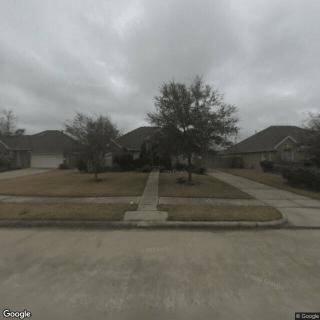
Atascocita Senior Care Home, Inc
$2,800 to $3,450 / month15.5 miles away -
About the same

Northgate Assisted Living
$2,500 to $3,000 / month9.2 miles away -
from +$300 / mo

Wenzy’s Place Boarding and Personal Care Home
$2,800 / month16.0 miles away -
from +$350 / mo

The Gardens of Bellaire
$2,850 to $3,211 / month11.1 miles away -
from +$485 / mo

Reunion Court Of The Woodlands
$2,985 to $7,000 / month20.0 miles away
Overall Review of House of Matthews Two 7
Cons
 The address is incorrect.
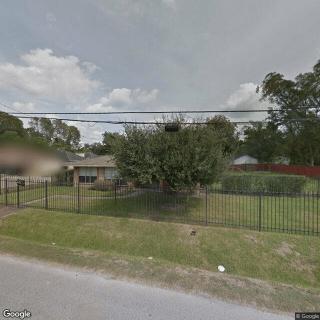
- The home is run down, the yard is nasty, and it is unprofessional.
- The rent of 600 a month for a small room shared with another resident is unreasonable.
- They warn others not to deal with this woman because something is shady.
- They fear she will accept monetary gain even though they do not want to be residents.
Review
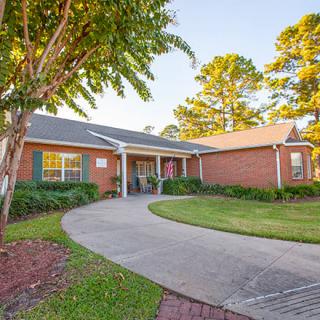
This community is best avoided by families seeking trustworthy, well-run assisted living for a loved one. If there is no alternative, and financial constraints are the sole driver, it may be the last-resort option, but only after exhaustively confirming basic legitimacy. The single, strongly negative review notes a host of red flags: an address that does not appear to be correct, which immediately signals administrative disorganization; communications that fail to reach a hearing-impaired applicant; and a fear that someone in charge may act opportunistically for monetary gain. Taken together, these signals indicate a setting where reliability and ethical stewardship are not demonstrated, making the environment risky for anyone counting on consistent care and transparent operations.
Families should actively consider alternatives that offer verified addresses, clear and responsive communication channels, and visible professional governance. Look for facilities with updated licensing, straightforward leases, and staff who respond promptly to inquiries. Prioritize locations with well-maintained grounds, a safe and accessible living space, and a track record of respectful resident interaction. If the goal is cost-conscious senior living, still demand a transparent pricing structure, no hidden charges, and a clear understanding of what is included in the monthly rate. In short, seek out options that prioritize stability, accountability, and clear lines of communication from day one.
The limited positives evident in the cited experience do not meaningfully offset the major drawbacks. There is an implication of initial resident placement, but that benefit is undercut by persistent concerns about ethics and governance. When a facility cannot provide consistent, accessible communication or a trustworthy decision-making process, any potential benefit, however small, fades quickly. The absence of credible assurances about who is managing the home, how decisions are made, and how residents are protected renders the purported advantages moot. For families evaluating options, reliability and integrity outrank any nominal convenience or price while the care needs are ongoing and specific.
The core deficiencies go beyond cosmetic “look and feel.” The home is described as run-down, with a yard that appears unkempt, signaling neglect and potential safety risks. Unprofessional presentation, coupled with a premise that is not clearly verifiable via proper address records, raises questions about routine maintenance, safety checks, and emergency preparedness. For seniors who require assistance, such an atmosphere can translate into inconsistent daily routines, delayed assistance, and heightened anxiety for both residents and their families. The combination of physical upkeep concerns and fragile administrative credibility creates a foundation that is difficult to trust for long-term care.
Financially, the stated rate of 600 per month for a small, shared room is not compelling when matched against the described conditions. The cost would have to be offset by dependable care, predictable billing, and a respectful living environment, none of which are evidently present in the account. In practice, a relatively modest monthly price is valuable only if it accompanies transparent terms and a management team that can be held accountable. Here, that accountability appears suspect, making the price hard to justify. Prospective residents should insist on seeing a detailed, line-by-line pricing sheet, room measurements, and a clear explanation of what constitutes “monthly” charges before any commitment.
Ultimately, the decision guidance is clear: proceed with caution, and prioritize options that demonstrate integrity, reliability, and a clear commitment to resident welfare. If still inclined to pursue this community, demand immediate, face-to-face engagement with the administrator, a verifiable street address, written assurances about communication channels, especially for residents with hearing impairments, and a signed, comprehensive care plan. Obtain recent references from current or former residents or families, and request an on-site tour focusing on safety, accessibility, and daily routines. If even one of these elements cannot be confirmed, walk away in favor of established facilities with stronger reputations. The bottom line is that this community, given the combination of administrative ambiguity, facility condition concerns, and opaque operations, is not fit for a loved one who requires dependable, compassionate, and transparent assisted living.
 Board and Care Home
 Memory Care
 Activities on-site
 Devotional services off-site
 Indoor common areas
 Private
 George Bush Intercontinental (10 miles away)
 Ambulatory care
 Diabetic care
 Incontinence care
 Medication management
 Meals provided
 Memory Care specialization with personalized care, private rooms, and competitive pricing.


 Engaging Memory Care Activities That Enhance Quality of Life
 When to Transition from Assisted Living to Memory Care: Key Indicators, Steps, and Finding the Right Community
 Understanding the Distinctions: Assisted Living and Memory Care Explained