
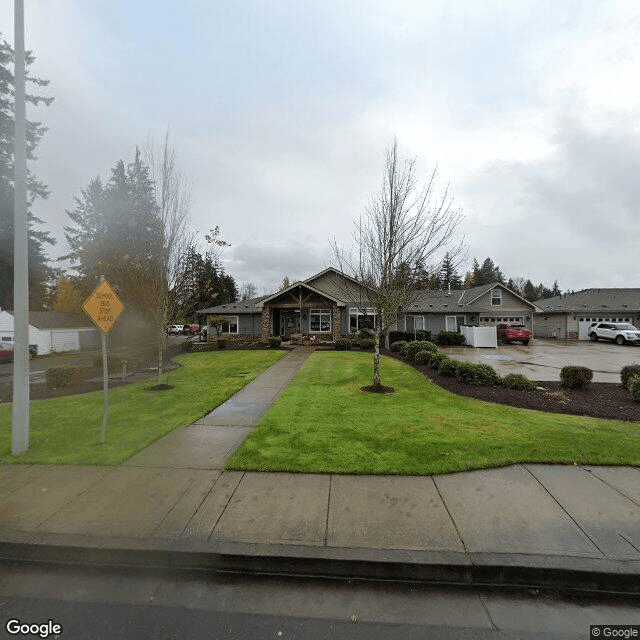
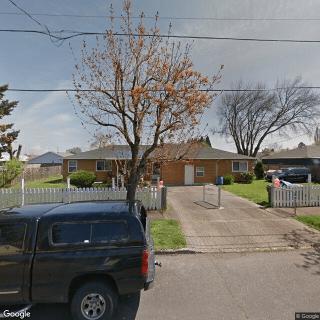
3062 Hyacinth Street Northeast, Salem, OR 97301
To contact a resident: (503) 588-0722
For more information about senior living options: (866) 208-4318
Harmony House of Salem Costs & Pricing
Harmony House of Salem offers competitive pricing for its residents compared to both Marion County and the broader state of Oregon. For semi-private rooms, Harmony House charges $3,300 per month, which is significantly lower than the Marion County average of $4,031 and the state average of $4,457. When it comes to private accommodations, the monthly rate at Harmony House is $3,550 - slightly above Marion County's average of $3,564 but more affordable than Oregon's statewide figure of $3,424. Additionally, studio apartments are priced at $3,550 at Harmony House, aligning closely with Marion County's average of $3,836 and slightly under Oregon's state level of $3,815. Overall, Harmony House provides a cost-effective option within the local market while maintaining a quality living environment for its residents.
| Floor plans | Harmony House of Salem | Marion County | Oregon |
|---|---|---|---|
| Semi-Private | $3,300 | $4,031 | $4,457 |
| Private | $3,550 | $3,564 | $3,424 |
| Studio | $3,550 | $3,836 | $3,815 |
Memory care communities with a similar price nearby
-
from -$385 / mo
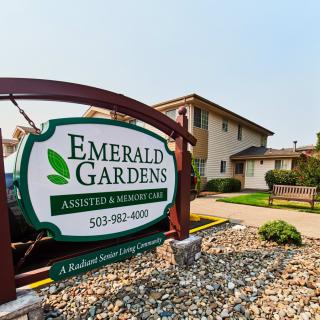
Emerald Gardens of Woodburn
$2,915 to $4,160 / month13.3 miles away -
from -$300 / mo
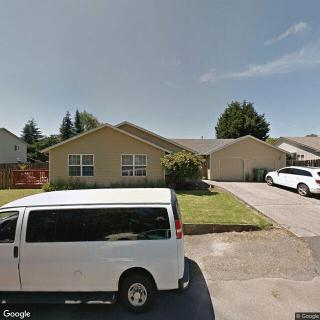
Angel's Place II Adult Care Home
$3,000 to $4,000 / month23.3 miles away -
from +$630 / mo
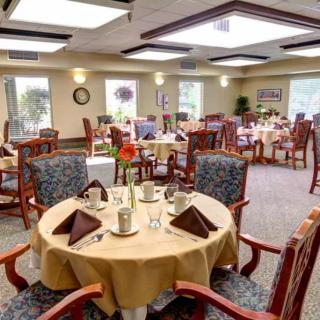
Silver Creek Senior Living
$3,930 to $5,730 / month13.1 miles away -
from +$200 / mo
Emerald Gardens
$3,500 to $4,200 / month13.3 miles away -
from -$100 / mo
Waverly Place
$3,200 to $4,000 / month23.6 miles away
Overall Review of Harmony House of Salem
Pros
 Harmony House offers a warm, home-like atmosphere with intimate, one-on-one care.
- The staff are amazing, caring, and personable, making the place feel like a family.
- The facility is clean, smells nice, and serves home-cooked meals.
- Residents are treated with patience, love, humor, and respect.
- The environment is quiet and safe, with a high standard of care and peace of mind for families.
- The small size enables more individualized attention and prevents residents from being lost in a crowd.
- Communication with families is strong, and activities are engaging and festive.
Cons
 The transition and financial aspects have been the hardest for them.
- The administration was rated 4/5, indicating some dissatisfaction.
- There isn’t anyone on care duty at night.
- There is a need for more staff on site at once.
Review
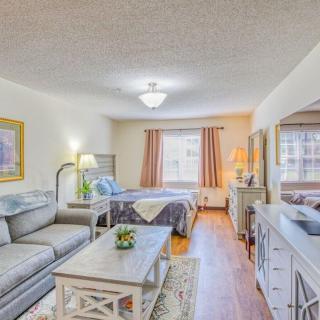
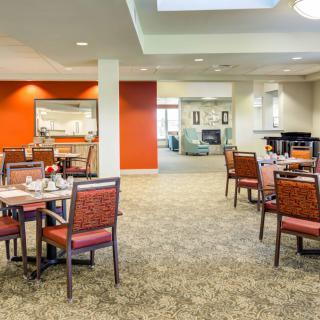
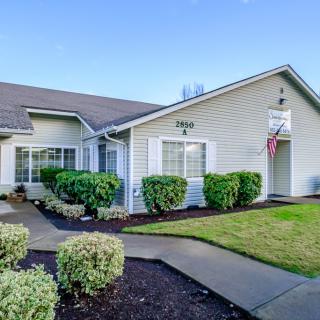
Harmony House of Salem is best suited for families seeking a small, home-like memory-care setting where residents receive highly personalized, one-on-one attention in a calm, domestic atmosphere. With roughly 14 to 15 residents, the community operates like a close-knit family, which translates into attentive oversight, quicker responses to needs, and a sense of security that larger campuses struggle to match. The environment is clean, inviting, and softly curated, with open sightlines from the kitchen to dining and living areas, so residents remain visible to staff and family members. The staff culture is consistently described as caring and personable, which matters when dementia care requires gentle redirection and steady routines. The combination of intimate size, homey surroundings, and around-the-clock staff makes this a practical haven for seniors who thrive on predictable, respectful care.
Families whose priorities include a truly intimate setting and genuine daily warmth should choose Harmony House, but there are clear reasons some may prefer alternatives. Those seeking a broader array of clinical services, a larger community with more staff during peak hours, or more intensive medical oversight may find the small footprint limiting. Administrative processes around transitions and financing were noted as challenging by some families, suggesting that a careful, written plan and upfront budgeting are essential. Additionally, residents requiring complex or highly specialized nursing care beyond what a memory-care home in a small house can sustain may want to evaluate options with greater medical capacity. In short, Harmony House excels at heart-forward care; it may not satisfy every clinical or logistical expectation.
The strongest positives, one-on-one attention, a calm care style, and a true home-like feel, provide real offset to potential drawbacks. The small scale enables staff to know each resident’s history, preferences, and triggers, reducing agitation and promoting stability. Caregivers are described as calm, patient, and creative in redirecting behavior, which aligns with best practices for dementia care. Cleanliness, a welcoming aroma, and wholesome, home-cooked meals reinforce comfort and dignity throughout the day. Residents seem less likely to feel overwhelmed or anonymous, and staff consistently demonstrate a “family” approach that supports families during transitions and ongoing care. The ability to offer transportation and to host regular activities, birthdays, parties, holiday gatherings, helps maintain social engagement without sacrificing the intimate attention residents expect.
However, some trade-offs deserve careful consideration. While the facility touts 24/7 care and a care ratio that surpasses state requirements, a few reviews call for more staff presence during busy moments, such as meals or group activities. The small crew can stretch during peak times, making proactive scheduling and clear communication essential. On the administrative side, families report that navigating the financial aspects and transition logistics requires diligence and patience, signaling that the operating model prioritizes care quality over ultra-smooth onboarding. These cons are not fatal, but they do shape a prudent decision: Harmony House rewards families who can plan ahead for costs and who value a deeply personal care cadence over a broader menu of services.
For decision-makers, Harmony House is a compelling fit for memory-care needs where your loved one benefits from a quiet, respectful, and highly personalized routine. It is especially strong for families that value ongoing family involvement, transparent communication, and a living-droom-to-dining-room flow that supports socialization without the chaos of a larger campus. The leadership and staff are frequently described as devoted and approachable, reinforcing trust at a time when navigating dementia care matters most. Prospective residents should expect frequent family updates, opportunities to participate in activities, and a consistent, home-like daily rhythm that resembles everyday life more than a clinical setting.
The practical next step is to tour with an eye for daily rhythms and personal interactions: observe how staff engage with residents during meals and activities, ask about peak-hour coverage, and request a clear, written outline of costs, what is included, and how the transition process works. Speak with current families about communication cadence and how monthly meetings function in practice. Inquiries about transportation specifics, memory-care training for CNAs and nurses, and contingency plans for staffing shortages will prove particularly valuable. Harmony House shows up as a strong, practically viable option for a family prioritizing intimate, respectful memory care; it is less suited for those requiring a larger community footprint, broader clinical services, or highly streamlined administrative processes. For the right family, this is the kind of care that delivers peace of mind through daily, dependable, home-centered support.
 Board and Care Home
 Memory Care
 Private
 Private bathrooms
 Respite or short term stays offered
 Wheelchair accessible showers
 Ambulatory care
 Diabetic care
 High acuity care
 Incontinence care
 Meals provided


 Medications Associated with Dementia Risk: A Comprehensive Overview
 Guiding Your Journey: Understanding Power of Attorney for Elderly Parents
 22 Remarkable Caregiver Support Groups Available Online and In-Person