Fountain Bleu Health and Rehab Center Costs & Pricing
Fountain Bleu Health and Rehab Center offers competitive pricing for its services, particularly when compared to the costs in Wayne County and across Michigan. For a semi-private room, residents can expect a monthly cost of $5,400, which is significantly higher than the county's average rate of $2,860 and the state average of $3,191. Similarly, the private room option at Fountain Bleu is priced at $5,850, again exceeding both Wayne County's average of $3,335 and Michigan's statewide figure of $3,675. These higher costs may reflect the specialized care and amenities provided by the center, catering to those seeking personalized rehabilitation and health services in a supportive environment.
| Floor plans | Fountain Bleu Health and Rehab Center | Wayne County | Michigan |
|---|
| Semi-Private | $5,400 | $2,860 | $3,189 |
| Private | $5,850 | $3,335 | $3,674 |
Skilled Nursing Facilities with a similar price nearby
-
from -$900 / mo

Stratford House
$4,500 / month
17.6 miles away
-
from -$206 / mo
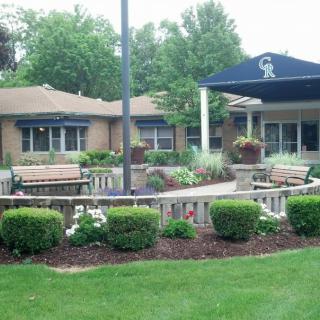
The Gilbert Residence
$5,194 / month
17.1 miles away
-
from -$1000 / mo
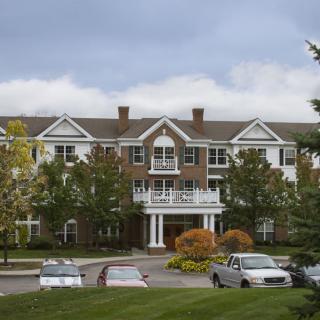
Fairmont of Northville
$4,400 to $6,900 / month
5.8 miles away
-
from -$644 / mo
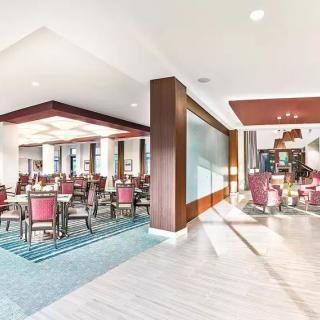
The Sheridan at Birmingham
$4,756 to $7,585 / month
13.6 miles away
-
from -$710 / mo
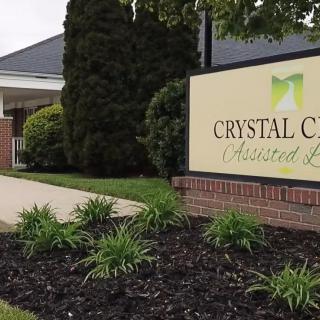
Crystal Creek Assisted Living and Memory Care
$4,690 to $5,350 / month
6.9 miles away
Overall Review of Fountain Bleu Health and Rehab Center
common
58 reviews mention this
Care staff are repeatedly praised
Residents and families consistently describe staff as kind, responsive, and attentive.
Across many reviews, residents and families say caregivers are friendly and take their time with individual needs. Multiple people also call out specific roles—nursing, aides, therapy teams, social work, housekeeping, and the front desk—as helpful and supportive during rehab and longer stays. Even when reviews are critical overall, they still often mention that some staff members were attentive in person.
differentiator
31 reviews mention this
Therapy support is a major focus
Rehab therapy is a consistent point of value in reviews.
A strong theme in the feedback is that physical and occupational therapy help residents regain mobility and confidence after hospitalization or injury. Several reviews describe therapists working regularly, communicating well, and tailoring efforts to individual progress goals. Some reviewers also mention therapy sessions multiple times a day, and that discharge preparation included learning how to move safely.
caveat
16 reviews mention this
Food quality feels inconsistent
Food quality and diet support are described as inconsistent.
Many reviews discuss meals, but the tone varies: some people call the food great or nutritious and report weight gain, while others say meals are cold, tasteless, or not suitable for special diets. A few reviews also describe diet accommodations falling short despite concerns being raised. Overall, dining appears to be a frequent reason for both positive and negative experiences.
common
28 reviews mention this
Clean environment is often mentioned
Reviews frequently mention a clean, well-kept environment.
Multiple families and residents say the facility is clean, odor-free, and organized, sometimes describing rooms and common areas positively. A number of reviews connect cleanliness with a more comfortable healing experience. There are also negative reviews that claim dirtiness or unpleasant conditions, so this theme is mostly positive but not universal.
caveat
13 reviews mention this
Care responsiveness varies by shift
Some reviews describe delayed help and communication gaps.
A recurring concern in the critical feedback is that call lights, bathroom assistance, and medication timing do not always happen promptly. Several reviews also describe poor communication with families, especially around updates and discharge paperwork, and cite understaffing as a contributing factor. Even within negative experiences, some reviewers still acknowledge that certain individual staff members were more attentive than others.
caveat
2 reviews mention this
Pricing runs well above benchmarks
Pricing appears significantly above local and state benchmarks.
The listed price range is $5,400 to $5,850, which the precomputed deltas characterize as well above both county and state levels for both semi-private and private options. This means families comparing affordability may see this community as a higher-cost choice based on the provided benchmarks.
How we summarize
Counts show how many written reviews mention each theme; a review can touch several themes, and only frequently mentioned themes are displayed.

 Memory Care
 Skilled Nursing Facility
 Activities on-site
 Devotional services off-site
 Indoor common areas
 Private
 Detroit Metropolitan-Wayne County (11 miles away)
 Ambulatory care
 Diabetic care
 Meals provided
 Comprehensive care options with 24/7 supervision and memory care.

 How to Communicate with a Loved One Living with Dementia: 10 Supportive Strategies
 Comprehensive Guide to VA Nursing Homes: A Crucial Long-Term Care Resource for Veterans
 Estimating the Expenses of At-Home Dementia Care: A Detailed Exploration