
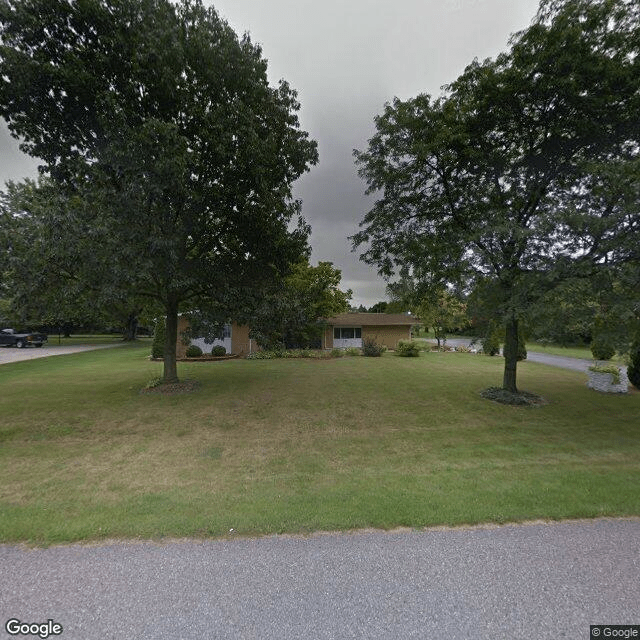
1152 Woodkrest Lane, Flint, MI 48532
To contact a resident: (810) 496-0002
For more information about senior living options: (866) 208-4318
Woodkrest House Costs & Pricing
Woodkrest House offers competitive pricing for its accommodations, reflecting a commitment to quality care and comfort. For a one-bedroom unit, residents can expect to pay $3,500 per month, which is higher than the average of $3,121 in Genesee County but slightly below the state average of $3,384. In the semi-private category, the cost remains at $3,500, again positioning it above local averages but favorably against state norms. Private rooms are priced at $3,800 per month; this rate exceeds both Genesee County's average of $4,118 and Michigan's overall average of $3,675. While Woodkrest House may have higher costs in certain categories compared to neighboring options and broader state averages, these figures reflect its dedicated focus on providing exceptional living environments tailored to resident needs and preferences.
| Floor plans | Woodkrest House | Genesee County | Michigan |
|---|---|---|---|
| 1 Bedroom | $3,500 | $3,121 | $3,384 |
| Semi-Private | $3,500 | $3,243 | $3,189 |
| Private | $3,800 | $4,118 | $3,674 |
Memory care communities with a similar price nearby
-
from -$600 / mo

Metacare Inc
$2,900 to $3,300 / month24.3 miles away -
from -$500 / mo

Vicinia Gardens Transition
$3,000 to $4,500 / month14.9 miles away -
from +$550 / mo

Meadows of Owosso
$4,050 to $5,075 / month17.8 miles away -
from -$500 / mo

Provision Living at Fenton
$3,000 to $5,750 / month14.8 miles away -
from +$650 / mo

Oliver Woods
$4,150 to $4,570 / month21.0 miles away
Overall Review of Woodkrest House
Pros
 The food is decent.
- The house is clean.
Cons
 The reviewer would not recommend this facility.
- Physical therapy and memory care depend on insurance, which was not disclosed during the initial interview.
- There are no activities.
- There is no transportation to appointments.
- Staff interaction is minimal.
- It is difficult to get in touch with loved ones.
- The facility has a high turnover of staff.
- It appears they hire many young workers who do a minimal job with the clients.
- There is only one staff member per shift.
- The reviewer would not recommend this facility for residents who need assistance with eating or bathing.
Review
Woodkrest House in Flint, MI is best suited for seniors who can manage with limited daily-care needs in a clean, modestly comfortable setting. The facility presents as an orderly, tidy residence with decent food, and it may satisfy residents who value occasion meals and a straightforward, unpretentious environment over a highly interactive care culture. It is not a good fit for anyone who depends on regular assistance with eating, bathing, or mobility, nor for those who require memory care or structured rehabilitation services. Prospective residents who plan to rely mainly on family oversight and external transportation might find it passably adequate, but this is a place where care expectations must be carefully aligned with what is actually offered.
Those considering Woodkrest should explicitly be aware that key services such as physical therapy and memory-care support are described as contingent on insurance coverage and were not clearly disclosed during the initial interview. The lack of guaranteed access to therapies or targeted programs means the experience can vary widely from resident to resident. For families needing reliable activity programming, social engagement, and transportation to appointments, this community is unlikely to deliver consistently. Alternatives with transparent service inclusions, regular activity calendars, and dependable transportation are usually preferable when ongoing support is essential.
From a positive side, the facility’s cleanliness and the adequacy of meals provide a basic level of comfort that can ease initial transitions. Yet these small comforts do not compensate for the fundamental gaps in daily care, communication, and staffing. Interaction with staff is described as minimal, and the frequency and quality of engagement with residents appears inconsistent. A high staff turnover compounds the problem, creating instability and making it hard to build trusting relationships. The impression of hiring younger staff who perform at a minimal level, combined with a reported one-staff-member-per-shift model, raises legitimate concerns about safety, supervision, and timely assistance.
Families evaluating Woodkrest should demand concrete, written assurances on staffing, shift coverage, and response times, as well as a clear schedule of activities and transportation arrangements. Ask to meet the therapy providers and to review a sample week of programming. Inquire how dining and personal-care tasks are allocated, and whether residents can access help promptly during meals or when assistance is needed for eating, bathing, or dressing. Request a full disclosure of how eligibility for physical therapy and memory-care services is determined, and insist on documentation that such services are consistently available regardless of insurance status or interview impressions.
Safety and daily living hinge on dependable staffing, and Woodkrest’s current profile suggests those dependables may be unreliable. With only one staff member on shift in some periods, residents could experience delays in getting help with basic needs or timely supervision during meals, which risks safety and dignity. The combination of minimal staff interaction and high turnover also undermines reassurance for families who need transparent communication about their loved ones’ day-to-day experiences. This is not a place to entrust someone who requires constant monitoring, aggressive assistance, or frequent coordination of care across multiple disciplines.
Overall, Woodkrest House should be considered only if the priority is a clean, quiet environment for a resident with modest care needs and family support on standby. For anyone requiring reliable daily assistance, memory-support, or structured rehabilitation, alternatives with stronger staffing, clearer care plans, and consistent engagement are strongly advised. The prudent path is to compare several communities, demand specifics in writing, and arrange in-person tours that include shadowing staff during routine tasks. The verdict is clear: the cons outweigh the pros for most families evaluating long-term living solutions where ongoing personal care matters most.
 Board and Care Home
 Memory Care
 Private
 Bishop (3 miles away)





 Delving into the Inner World of Dementia: Insights into Thoughts and Awareness
 Five Subtle Dementia Indicators to Observe: An In-Depth Guide to Understanding “Does My Mom Have Dementia?”
 Dementia, Paranoia, and Caregiver Guidance: Understanding the Connection