



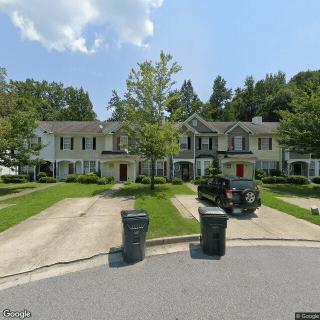
1986 Westley Drive, Riverdale, GA 30296
To contact a resident: (770) 728-4047
For more information about senior living options: (866) 208-4318
Janet's Blissful Retreat Costs & Pricing
Janet's Blissful Retreat offers competitive pricing for its accommodations, significantly more affordable than both Fulton County and the broader state of Georgia. For example, the semi-private rooms are priced at $1,200 per month, starkly contrasting with Fulton County's average of $2,883 and Georgia's statewide average of $2,529. Similarly, both the one-bedroom and private rooms at Janet's are set at $2,150 per month, which is notably lower than the county's rate of $3,411 and Georgia's $3,412 for a one-bedroom. Even in the case of private rooms, Janet's pricing aligns closely with quality care while remaining well below the county's average of $3,203 and the state's rate of $2,864. This strategic pricing underscores Janet's commitment to providing an exceptional value in a nurturing environment.
| Floor plans | Janet's Blissful Retreat | Fulton County | Georgia |
|---|---|---|---|
| Semi-Private | $1,200 | $2,883 | $2,529 |
| 1 Bedroom | $2,150 | $3,411 | $3,412 |
| Private | $2,150 | $3,203 | $2,864 |
Memory care communities with a similar price nearby
-
from +$150 / mo
Le'glen Personal Care Home
$1,350 to $2,150 / month10.9 miles away -
About the same
Praise Personal Care
$1,200 to $1,400 / month18.9 miles away -
About the same
Thereatha Hill Personal Care Home
$1,200 / month7.3 miles away -
from +$150 / mo
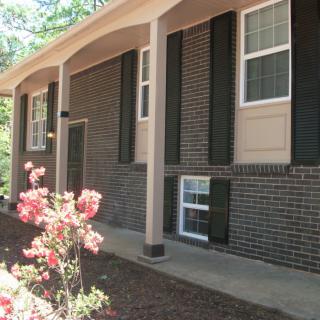
Young @ Heart Place
$1,350 to $1,650 / month18.4 miles away -
from +$200 / mo
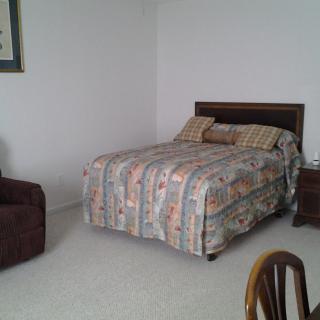
Southside Personal Care Home
$1,400 to $1,500 / month7.6 miles away
Overall Review of Janet's Blissful Retreat
Pros
 Everything they do is awesome.
- They are very family friendly, and go above and beyond, taking excellent care of my grandparents.
- This one has gone very well.
- This was a nice older home, small on the outside but very roomy inside.
Cons
 Other places have not gone as well.
- The home has stairs, and this would not work for their loved one.
Review
Janet’s Blissful Retreat in Riverdale, GA is best suited for families seeking a small, homelike assisted living where caregivers treat residents like family and where daily routines can be tailored to individual preferences. The strongest selling point is the staff’s evident dedication to residents’ well-being and the sense that care is delivered with warmth and personal attention. For families who value a community that feels less institutional and more like an extended family, this setting can be a remarkably reassuring fit. It works best when a resident benefits from close caregiver relationships, predictable intimacy, and a home atmosphere that supports individualized caregiving.
The physical footprint reinforces this approach. Descriptions of the home emphasize a charming, older house, small on the exterior but surprisingly roomy inside, with a layout that accommodates familiar routines, meals, and social interaction without the stiffness of a larger campus. That interior space can translate into flexible daily schedules, easier supervision, and quicker caregiver responsiveness. In a world of sprawling facilities, this is a notable advantage for seniors who respond well to a calm, family-style rhythm and prefer daily contact with a consistent caregiving team rather than a bustling, impersonal environment.
Yet the facility presents a tangible caveat that cannot be ignored: access. The home’s stairs create a real barrier for residents with limited mobility or those who rely on walkers or wheelchairs. This is not a feature that can be overlooked, and it is repeatedly cited as a deal-breaker for individuals whose care needs include barrier-free access. In practical terms, the stairs mean that the community is best matched with residents who can navigate steps safely and independently or with family assistance and adaptive strategies, while those seeking a fully single-story, no-stair arrangement may find this a significant misalignment.
When the stairs are manageable, the pros carry substantial weight. The same caregiver-first culture and “above and beyond” attitude that earns strong praise from families translates into dependable daily care, companionship, and reliable communication about a loved one’s status. The warmth described by families, being treated with respect, feeling connected to caregivers, and experiencing a responsive, engaged approach to daily needs, helps offset the limitations of a more compact, older home. For residents who thrive on routine and personal attention, the trade-offs become less prohibitive and the overall experience remains highly favorable.
Alternatives are worth serious consideration for anyone whose loved one cannot tolerate stairs or requires a more expansive set of on-site amenities and services. If barrier-free design, a broader activity calendar, or more formalized medical oversight is essential, a larger, one-story or fully accessible community may better align with those priorities. The rating mix, placing Janet’s Blissful Retreat in the mid range, signals there can be meaningful value here, but not universal applicability. Families should benchmark against options with proven accessibility and scale to determine whether the intimate, home-like approach justifies the architectural constraint.
For a practical decision, begin with a focused on-site evaluation. Observe the level of caregiver engagement during routine tasks, meal times, and social periods. Test the accessibility firsthand, note how difficult it would be for a resident with reduced mobility to navigate the stairs, and ask about possible accommodations (assistive devices, alternate entrances, or caregiver-assisted transitions). Speak with residents and families about consistency of care, response times, and how medical needs are managed day-to-day. Finally, compare these firsthand impressions to alternative communities that offer single-story layouts and broader clinical programming. The bottom line: Janet’s Blissful Retreat delivers heartfelt, competent care in a warm, intimate setting, but the stairs will steer families toward other options if mobility limits are a primary concern.
 Board and Care Home
 Memory Care
 Activities off-site
 Bath tubs
 Indoor common areas
 Outdoor common areas
 Private
 Private bathrooms
 Respite or short term stays offered
 William B Hartsfield-Atlanta International (5 miles away)
 Ambulatory care
 Incontinence care
 Medication management
 Kosher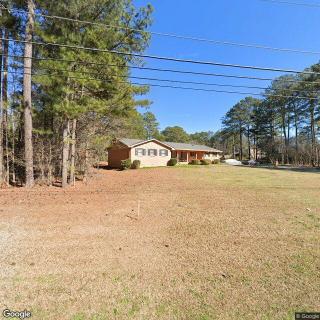

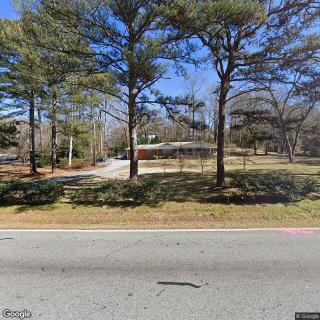


 Understanding Dementia Through Its Seven Stages: A Comprehensive Look at Progression and Expectations
 A Holistic Dementia Care Guide: Effective Strategies for Memory Support
 Comprehensive Insights into Activities of Daily Living (ADLs) and Their Assessment