
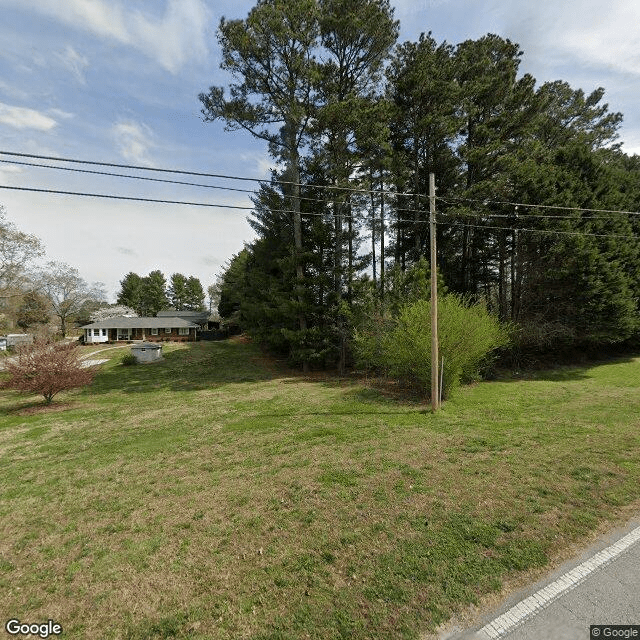
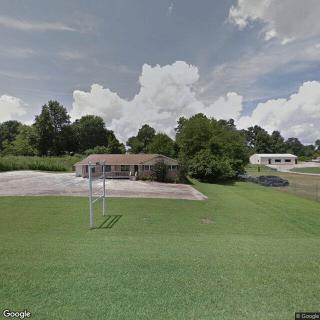
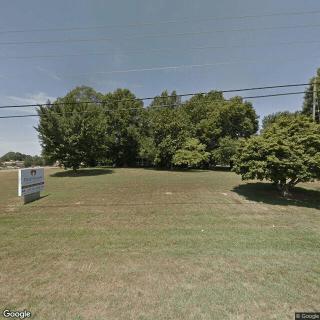
4804 Flat Creek Road, Oakwood, GA 30566
To contact a resident: (706) 654-5700
For more information about senior living options: (866) 208-4318
The Olive Branch PCH Oakwood Costs & Pricing
The Olive Branch PCH Oakwood offers competitive pricing for its rooms, with a monthly rate of $5,300 for both private and semi-private accommodations. This cost is significantly higher than the average rates in Hall County, where a private room averages around $3,368 and a semi-private room costs approximately $2,742. When compared to the state average in Georgia, which sees averages of $2,864 for a private room and $2,529 for a semi-private one, The Olive Branch's pricing reflects its commitment to providing enhanced care services and amenities tailored to residents' needs. Additionally, the one-bedroom option at $5,300 aligns closely with Hall County's average of $4,052 but exceeds the Georgia state average of $3,412. Overall, while The Olive Branch PCH Oakwood is positioned at a premium price point relative to local and state averages, this likely corresponds to the quality of care and living environment offered to residents.
| Floor plans | The Olive Branch PCH Oakwood | Hall County | Georgia |
|---|---|---|---|
| Semi-Private | $5,300 | $2,742 | $2,529 |
| 1 Bedroom | $5,300 | $4,052 | $3,412 |
| Private | $5,300 | $3,368 | $2,864 |
Memory care communities with a similar price nearby
-
from -$800 / mo
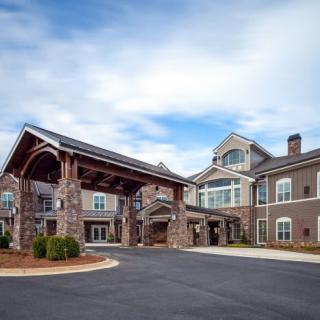
Arbor Terrace of South Forsyth
$4,500 to $6,315 / month15.7 miles away -
About the same
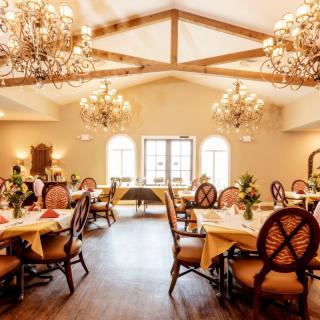
The Mann House Assisted Living and Memory Care Cumming and Johns Creek
$5,300 to $8,480 / month17.1 miles away -
from -$905 / mo
Dogwood Forest of Grayson
$4,395 to $7,500 / month23.3 miles away -
from -$1050 / mo

Peachtree Villa at Suwanee
$4,250 to $5,940 / month18.9 miles away -
from -$965 / mo

Arbor Terrace Hamilton Mill
$4,335 to $5,485 / month11.5 miles away
Overall Review of The Olive Branch PCH Oakwood
Pros
 The congregation is friendly and welcoming, making visitors feel like family.
- The service is guided by the Holy Spirit, with praise, worship, prayer, and the Word of God.
- God’s grace is experienced as miraculous within the church.
- The Holy Spirit is present and tangible in worship.
- The church practices baptism in Jesus’ name and believes in the Holy Ghost.
- The leadership is described as fantastic and anointed, and the church community is loving and friendly.
Review
The Olive Branch PCH Oakwood is best suited for seniors who want daily life centered in a warm, faith-forward community where worship, fellowship, and spiritual growth are the core experiences. In Oakwood, GA, this personal care home presents itself as a small, church-rooted environment where residents are welcomed into a family-like church culture. For families prioritizing meaningful religious engagement, personal warmth, and a sense of belonging, this option delivers in spades. Those whose priorities extend beyond spiritual life, specifically those needing robust medical oversight, formal assisted-living amenities, or secular activities, should consider alternatives that foreground professional caregiving and a broader program of daily living supports.
The strongest selling points are the unmistakable warmth and cohesion of the congregation. Reviews consistently describe a friendly, welcoming atmosphere where people are greeted like family and where kindness flows from the leaders and members alike. The sense of fellowship is palpable: the worship experience is described as powerful and uplifting, with many noting an “anointed” service and a palpable presence of God. Leadership, pastors and church figures, are perceived as clear, compassionate guides who feed the soul and reinforce sound doctrine. In practical terms, this translates into a daily life that centers on purpose, hope, and communal support, reducing loneliness and fostering emotional resilience for residents who value spiritual companionship.
However, the narrative does not address the practical dimensions of assisted living beyond the spiritual framework. The reviews provide no explicit information about nurse staffing, round-the-clock care, medication management, mobility assistance, memory care, or safety systems. No detail emerges about meal plans, housekeeping, transportation, or the breadth of activities beyond worship services. For seniors who require regular ADL support, chronic disease management, fall prevention, or memory-care programming, this absence is a meaningful unknown. In short, the community’s spiritual vibrancy is well documented, but its capacity to deliver comprehensive, professionally supervised care remains unclear from the available impressions.
The strength of the faith-based, community-centric model can offset some limitations for residents whose primary need is emotional and spiritual wellbeing. A supportive church family can provide consistent social interaction, purpose-driven routines, and pastoral care that extends beyond standard caregiving, elements that can significantly enhance overall happiness and life satisfaction. For a resident who thrives on regular worship, prayer, and church-related activities as part of daily life, these intangibles may outweigh gaps in formal clinical services. Yet this offset only holds if the level of medical and personal care required remains modest and compatible with what a faith-focused setting can feasibly sustain.
Given these dynamics, eligibility for alternatives should hinge on care needs and expectations around daily living supports. Families should seriously consider options that deliver robust, 24/7 caregiving, medication oversight, mobility assistance, and structured recreational programs if these are priorities. Secular or non-faith-based facilities may offer a broader menu of services, more diversified programming, and clearly outlined staffing metrics that some residents and families require. The Olive Branch PCH Oakwood can be a powerful fit for those who want to weave spiritual life into daily routines, but it is not a one-size-fits-all substitute for comprehensive assisted living.
In the end, The Olive Branch PCH Oakwood stands out for residents who treasure a spiritual home as much as any daily care plan. It delivers an exceptionally warm, faith-filled living experience with a sense of belonging that few environments can match. For families weighing this against the need for formal medical oversight and broader activity offerings, the prudent path is a targeted visit: explore what care capabilities exist on-site, ask about staffing, safety protocols, meal service, transportation, and the scope of memory-care or specialized support. If the resident’s priority is ongoing worship and a compassionate church family, this community earns strong consideration; if the priority is comprehensive, medically supervised assisted living, it warrants comparison with alternatives that emphasize professional caregiving and diverse, secular programming.
 Board and Care Home
 Day Program
 Memory Care
 Beautician on-site
 Devotional services off-site
 Indoor common areas
 Outdoor common areas
 Private
 Respite or short term stays offered
 Ambulatory care
 Diabetic care
 High acuity care
 Incontinence care
 Medication management
 Meals provided

 22 Remarkable Caregiver Support Groups Available Online and In-Person
 Understanding Medicaid Coverage for Assisted Living: A Comprehensive Guide
 How and When Medicaid May Cover Assisted Living Costs