

3508 Kensington Road, Decatur, GA 30032
To contact a resident: (404) 294-0203
For more information about senior living options: (866) 208-4318
Avondale Senior Living Costs & Pricing
Avondale Senior Living offers competitive pricing for its residents, particularly when compared to both DeKalb County and the broader state of Georgia. For instance, the cost of a semi-private room at Avondale is $1,850, significantly lower than the county average of $2,188 and the state average of $2,529. Similarly, private rooms are available for $2,100 at Avondale, which again undercuts both the county price of $2,415 and the state average of $2,864. Notably, studios at Avondale also reflect a favorable rate at $2,100 in contrast to DeKalb County's $2,811 and Georgia's higher average of $3,520. This pricing structure positions Avondale Senior Living as an attractive option for those seeking quality care without compromising on affordability.
| Floor plans | Avondale Senior Living | DeKalb County | Georgia |
|---|---|---|---|
| Semi-Private | $1,850 | $2,188 | $2,529 |
| Private | $2,100 | $2,415 | $2,864 |
| Studio | $2,100 | $2,811 | $3,520 |
Memory care communities with a similar price nearby
-
from +$250 / mo
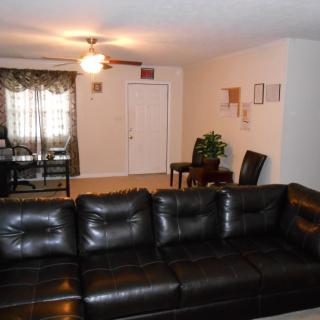
Premium Personal Care Home
$2,100 to $2,850 / month22.7 miles away -
from +$250 / mo
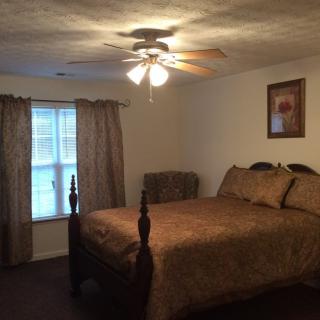
Abiding Care Home
$2,100 / month7.8 miles away -
from -$350 / mo

Harmony Home Care
$1,500 to $2,100 / month19.8 miles away -
from +$350 / mo
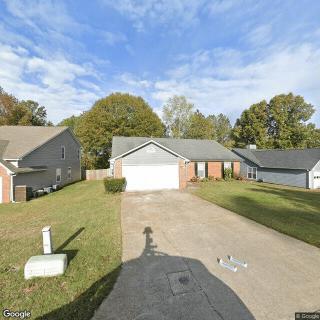
Lia's Personal Care Home
$2,200 to $2,500 / month21.6 miles away -
About the same

Agape Haven Personal Care Home
$1,800 to $2,000 / month24.8 miles away
Overall Review of Avondale Senior Living
Pros
 They've done a pretty good job at Avondale.
- They've been very dedicated and very accommodating in working through those with us.
- Everything is working out fine now.
- The staff were nice and they were attentive.
- The place was kept clean and organized.
Cons
 The manager treated the reviewer with hostility and rudeness.
- The staff failed to communicate as the mom's health worsened and did not seem adequately trained to handle her medical conditions.
- His care needs were not being met over the past year.
- The community was undergoing frequent transitions, and that instability wasn't working out.
Review
Avondale Senior Living in Decatur, GA is best suited for families seeking a clean, approachable environment where front-line staff come across as caring and responsive, and where a director is actively involved in day-to-day operations. It fits better for residents with mild to moderate daily-care needs who do not demand aggressive medical management, and for families who want approachable staff, decent meals, and a maintained, orderly setting. Those who prize a sense of accessibility and warmth from staff over rapid clinical intervention will find some consistency here, especially if a family member plans to stay actively engaged with care planning and supervision.
Those evaluating Avondale should consider alternatives if medical complexity is high or if steady, proactive communication is non-negotiable. Several reviews flag concerns about how medical conditions are managed and communicated to families, suggesting that rapid escalation and specialized oversight may be lacking. Potential residents who require reliable, protocol-driven clinical responses, or who rely on consistent leadership to coordinate complex care, may want to explore other communities with more stable medical staffing and clearer family updates. A pattern of transitions and leadership changes can also mean ongoing unsettledness, which risks destabilizing a long-term care plan.
On the plus side, the advantages are tangible in daily life. Families note that staff are generally nice, attentive, and engaged with residents’ needs, and that the facility remains clean and organized. Meals are described as acceptable and enjoyable enough to be part of the daily routine. The director earns positive comments from some families, and there is a sense that the community’s leadership is capable of problem-solving when issues arise. Importantly, one staff- and family-driven narrative emphasizes a sustained commitment to addressing early hurdles, with outcomes that eventually become more favorable and recommend the community to others.
Yet the most serious drawbacks cannot be ignored. The most pointed concerns involve hostility and rudeness attributed to the manager, and a pattern of poor family communication as a resident’s health changes. When care needs escalate, these deficiencies become substantial gaps in accountability and trust. Additional concerns include staff reportedly not being fully trained or equipped to handle complex medical conditions, and a phase of meaningful transitions that unsettles routine and raises questions about continuity of care. Taken together, these factors create a risk profile that weighs heavily against Avondale for residents requiring consistent, medical-grade oversight.
The balance between modest daily advantages and significant management and medical gaps suggests a cautious approach. For families who can tolerate some variability and are prepared to stay actively involved, Avondale offers a reasonable environment with decent daily life quality and a cooperative staff dynamic that improves with time. However, for anyone prioritizing rigorous medical oversight, predictable communication, and stable leadership, alternatives are worth serious consideration. The practical choice hinges on the resident’s medical needs, tolerance for leadership turnover, and willingness to participate in ongoing care coordination.
If Avondale is on the short list, enter with a clear, proactive plan. Request a formal meeting with the director to review a detailed care plan, communication routines, and escalation processes. Ask about staff training specifically related to medical conditions, luminal response times, and who serves as the primary family liaison. Investigate turnover rates and how transitions are managed when care needs evolve. For families with higher medical needs or a low tolerance for organizational instability, seek communities with stronger clinical staff, more consistent management, and a reputation for steady, proactive family communication. Ultimately, the decision should align with medical necessity, comfort with leadership stability, and the degree of active advocacy willing to be sustained over time.
 Board and Care Home
 Memory Care
 Private
 Respite or short term stays offered
 William B Hartsfield-Atlanta International (14 miles away)








 Vibrant Senior Living: A Comprehensive Guide for Active Older Adults
 Assisted Living and Memory Care: Understanding Their Core Differences
 Choosing the Right Senior Care: A Detailed Exploration of Assisted Living and Nursing Homes