For more information about senior living options: (866) 208-4318
4.4 from 49 reviews
5 stars
41
4 stars
0
3 stars
1
2 stars
1
1 stars
6
Market Street Tampa Costs & Pricing
Market Street Tampa presents a premium option for assisted living, with monthly costs that significantly exceed both Pinellas County and the broader Florida state averages. For a semi-private room, residents at Market Street can expect to pay $4,594, which is notably higher than the county's average of $2,765 and the state's figure of $3,009. Private rooms offer even greater disparities in cost, priced at $5,512 compared to Pinellas County's $3,602 and Florida's average of $3,699. The trend continues with studio apartments at Market Street Tampa costing $5,972 versus the county's and state's averages of $3,598 and $3,823 respectively. This pricing reflects not just the quality of services provided but also the amenities and environment that Market Street Tampa offers its residents.
Floor plans
Market Street Tampa
Pinellas County
Florida
Semi-Private
$4,594
$2,765
$3,009
Private
$5,512
$3,602
$3,699
Studio
$5,972
$3,598
$3,823
Memory care communities with a similar price nearby
Residents and families repeatedly describe staff as genuinely caring and responsive.
Across the reviews, people emphasize how kind, welcoming, and attentive staff are during day-to-day care and family visits. Several reviewers specifically call out leadership figures by name and describe them as warm, professional, and quick to address concerns. Even in the more critical reviews, families often distinguish between the building’s appearance and the level of care they say their loved one actually received.
differentiator9 reviews mention this
Memory care is designed for safety
The memory care approach is frequently described as thoughtful, secure, and dementia-focused.
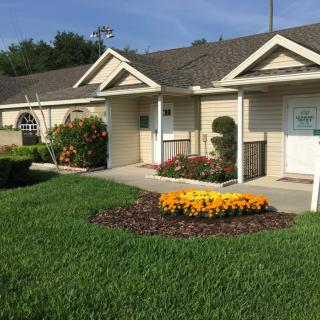
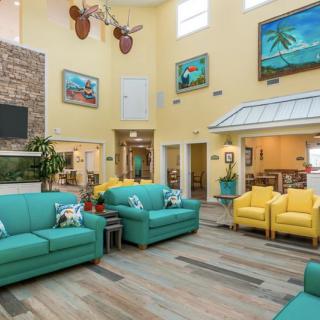
Multiple reviewers describe the memory care setting as clean, well decorated, and designed with dementia-specific needs in mind. Some mention secured exits and a layout that supports movement and engagement. Others describe noticeable improvements in mood and participation after transitioning a loved one into the community’s memory care program.
common4 reviews mention this
Meals and food get strong praise
Dining is repeatedly described as freshly prepared and enjoyable.
Several reviews highlight the quality of meals, describing them as wonderful, delicious, or freshly prepared with choices. One reviewer also credits a specific kitchen talent for Italian-style cooking. Even among people who focus on other concerns, the positive dining mentions stand out as a recurring point of satisfaction.
common4 reviews mention this
Activities help residents stay engaged
Residents are described as staying involved through frequent, varied activities.
Reviewers describe activities as well organized and aligned with residents’ interests, including everyday programming and social events. Some mention live music and family-observable moments like staff joining residents during activities. Others connect engagement to improved behavior and willingness to participate over time.
caveat5 reviews mention this
Staffing and follow-through draw criticism
Some families report serious breakdowns in consistency, communication, and care follow-through.
A recurring negative thread is that families felt staffing levels or management practices led to inconsistent care and weak follow-through on promised steps. Several reviewers describe issues such as missed expectations around nutrition or hygiene, concerns about fall prevention, and hospital-related emergencies they felt were handled poorly. A couple of reviews also mention high turnover and the need for families to be continuously present to advocate.
How we summarize
Counts show how many written reviews mention each theme; a review can touch several themes, and only frequently mentioned themes are displayed.
Features
Types of Care
Memory Care
Transportation
Tampa International (16 miles away)
St. Petersburg-Clearwater International (17 miles away)
Nearby Places of Interest
Pharmacies
CVS Pharmacy (1.6 miles)
Walgreens (2.5 miles)
CVS Pharmacy (2.9 miles)
Winn-Dixie (3.3 miles)
1st Choice Pharmacy (3.6 miles)
Walgreens (3.7 miles)
Walgreens (4 miles)
Physicians
Premier Community Healthcare Group (2.2 miles)
Pediatric Specialists Medical Group (2.4 miles)
Same Day Teeth Coastal Jaw Surgery at New Port Richey (2.4 miles)
Market Street Tampa presents a premium option for assisted living, with monthly costs that significantly exceed both Pinellas County and the broader Florida state averages. For a semi-private room, residents at Market Street can expect to pay $4,594, which is notably higher than the county's average of $2,765 and the state's figure of $3,009. Private rooms offer even greater disparities in cost, priced at $5,512 compared to Pinellas County's $3,602 and Florida's average of $3,699. The trend continues with studio apartments at Market Street Tampa costing $5,972 versus the county's and state's averages of $3,598 and $3,823 respectively. This pricing reflects not just the quality of services provided but also the amenities and environment that Market Street Tampa offers its residents.
The article presents five subtle indicators of dementia, such as memory lapses and mood swings, to help families assess cognitive decline in loved ones. It emphasizes early detection, open communication, and seeking professional help while providing practical support steps.
Dementia encompasses progressive neurological disorders that impair cognitive functions and can lead to paranoia due to cognitive decline and emotional changes. The article discusses the triggers of paranoia in dementia, caregiver strategies for managing it, and the importance of distinguishing between dementia-related paranoia and other psychiatric conditions.
Memory care activities are essential for improving the quality of life of seniors with cognitive impairments, as they stimulate cognitive function, promote well-being, and encourage social interaction through tailored strategies. These activities combine structured exercises with spontaneous tasks, sensory engagement, physical workouts, creative pursuits, and intergenerational interactions to enhance emotional connection and a sense of purpose.
Get PricingAsk A QuestionSchedule A TourContact Senior Advisor
By clicking submit, you agree to our Partner's Terms of Use. You
also consent to receive calls and texts, which may be autodialed, from our Partner. Your consent is not a condition to
using our Partner's service. Please visit our Partner's Privacy Policy for information about their privacy practices.

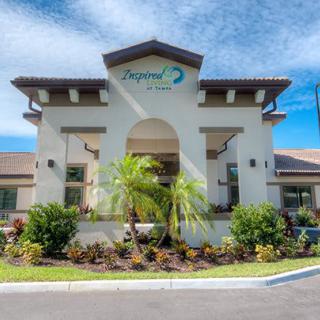
 Memory Care
 Tampa International (16 miles away)
 Specialized memory-care with 24/7 supervision and restaurant-style dining.


 Five Subtle Dementia Indicators to Observe: An In-Depth Guide to Understanding “Does My Mom Have Dementia?”
 Dementia, Paranoia, and Caregiver Guidance: Understanding the Connection
 Engaging Memory Care Activities That Enhance Quality of Life