
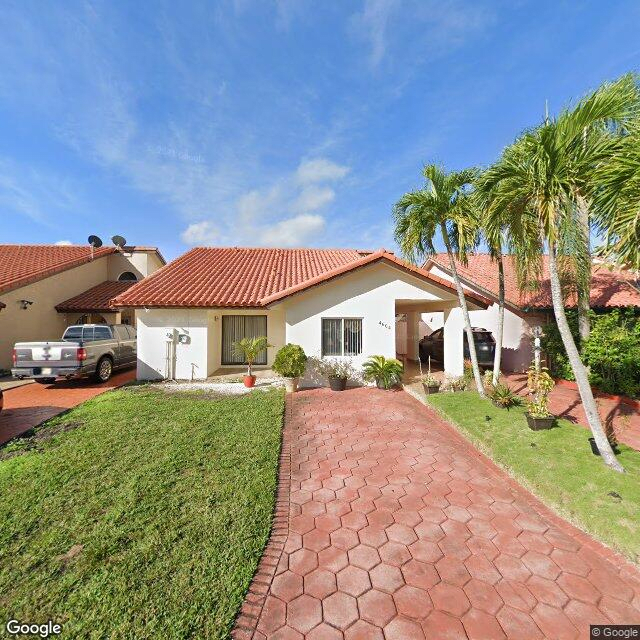
4604 Southwest 144 Court, Miami, FL 33175
To contact a resident: (305) 559-9559
For more information about senior living options: (866) 208-4318
Mercy Family Care # 1 Costs & Pricing
Mercy Family Care #1 offers competitive monthly rates for its services, particularly when compared to both Miami-Dade County and the broader state of Florida. For semi-private accommodations, Mercy Family Care charges $2,100, which is notably lower than the county average of $2,250 and significantly beneath the state average of $3,009. Similarly, for those seeking private rooms, the monthly cost at Mercy Family Care is $3,500 - still more affordable than Miami-Dade's average of $3,304 and just below the state average of $3,699. This pricing positions Mercy Family Care as an economically attractive option for families looking for quality care while managing costs effectively within a competitive market.
| Floor plans | Mercy Family Care # 1 | Miami-Dade County | Florida |
|---|---|---|---|
| Semi-Private | $2,100 | $2,250 | $3,009 |
| Private | $3,500 | $3,304 | $3,699 |
Memory care communities with a similar price nearby
-
from +$300 / mo
Ana's Assisted Living Facility
$2,400 / month22.6 miles away -
from +$400 / mo
La Casita Nuestra Home
$2,500 to $3,500 / month1.8 miles away -
from -$100 / mo
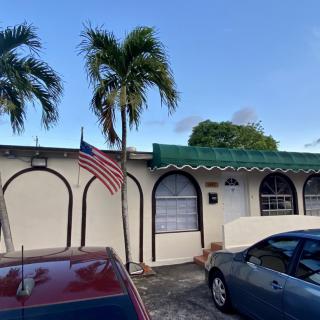
Care and Love Retirement Home
$2,000 to $2,500 / month13.0 miles away -
from -$300 / mo
Magnet Adult Home South
$1,800 to $3,500 / month14.4 miles away -
from +$120 / mo

Miami Jewish Home & Hospital for the Aged
$2,220 to $7,500 / month16.4 miles away
Overall Review of Mercy Family Care # 1
Pros
 The facility was a good fit for his dad.
- He tried activities to improve his social interaction.
- The community was kept clean and everything was fine.
- His dad did well while living there.
Cons
 None found in the provided review.
Review
Mercy Family Care #1 in Miami is best suited for seniors who want a straightforward, stable living environment with moderate social engagement and minimal medical complexity. The community appeals to families seeking a reliable, no-frills option that prioritizes cleanliness, predictable routines, and everyday practicality over high-intensity care features. It works well for residents who can manage much of daily life with some assistance and who value a calm, uncomplicated setting where services feel accessible without the bustle of larger campuses. In essence, this is a practical choice for those prioritizing consistency, affordability-tinged value, and a quiet pace over sophistication in programming.
The strongest notes from the available feedback center on cleanliness and social opportunity. Reviewers describe the facility as well-kept, with a calm, orderly environment that supports resident comfort. The simple truth that a resident tried activities, interacted with others, and appeared to do well reinforces the sense that daily life can proceed smoothly here. Importantly, one family states there is nothing to complain about and that their loved one adapted positively, which is meaningful for families weighing risk versus routine. The combination of a tidy setting and an approachable social slate makes Mercy Family Care #1 a credible option for those not seeking high-stimulation programming or intensive clinical support.
Yet the picture is not without caveats. The small pool of reviews, only three, limits confidence in a broad, representative view of care quality across specific needs. A 3-star rating among those reviews signals that experiences may diverge, and limited detail exists regarding staff responsiveness, medical oversight, meal quality, or dementia-specific supports. The absence of explicit information about on-site clinicians, medication management, or memory-care options leaves important questions unanswered for families whose loved ones require more than basic assistance. Those evaluating care should treat the data as a promising but incomplete signal, not a definitive verdict.
These gaps intersect with practical implications for decision-making. The pro of a clean, orderly, and socially engaging environment can be significant for residents who value stability and gentle activity exposure. When balanced against the ambiguous data on staffing and medical capabilities, Mercy Family Care #1 aligns with families seeking a modest environment where daily life feels manageable and predictable. The absence of strong evidence for advanced care, dedicated memory care, or robust clinical coordination means this option may fall short for residents with complex health needs or those requiring high levels of supervision and rapid medical response.
For families actively evaluating Mercy Family Care #1, a disciplined due-diligence approach is warranted. Prospective residents should request detailed disclosures on staffing ratios by shift, how medication management is handled, and the degree of daily living assistance available. Inquire about the activity calendar’s frequency, depth, and resident engagement, as well as transportation options for appointments and social outings. Finally, ask about meal quality, dietary accommodations, safety features throughout the community, and the protocol for escalating health concerns. These specifics are essential to determine if the fit is truly right or if a move to a memory-care-focused or higher-acuity setting would be wiser.
The bottom line is clear. Mercy Family Care #1 offers a solid, no-nonsense environment with clean facilities and accessible social programs that can support steady, everyday quality of life. It is well-suited for seniors who do not require intensive medical care or specialized memory support and for families prioritizing simplicity, reliability, and value. However, for residents needing substantial clinical oversight, memory-care services, or a broader, more dynamic activity program, alternatives, ranging from larger assisted-living communities with dedicated memory-care wings to facilities known for stronger medical integration, may prove more suitable. A candid appraisal of care needs, followed by targeted questions, will reveal whether this Miami option truly aligns with the long-term well-being and happiness of a loved one.
 Board and Care Home
 Day Program
 Memory Care
 Bath tubs
 Beautician on-site
 Private
 Respite or short term stays offered
 Wheelchair accessible showers
 Miami International (10 miles away)
 Ambulatory care
 Diabetic care
 High acuity care
 Incontinence care
 Medication management
 Meals provided



 Delirium and Dementia: Unraveling the Key Differences
 Are Dementia and Alzheimer's Disease Lethal? A Comprehensive Exploration
 Exploring the Power of Reminiscence Therapy for Individuals With Dementia