
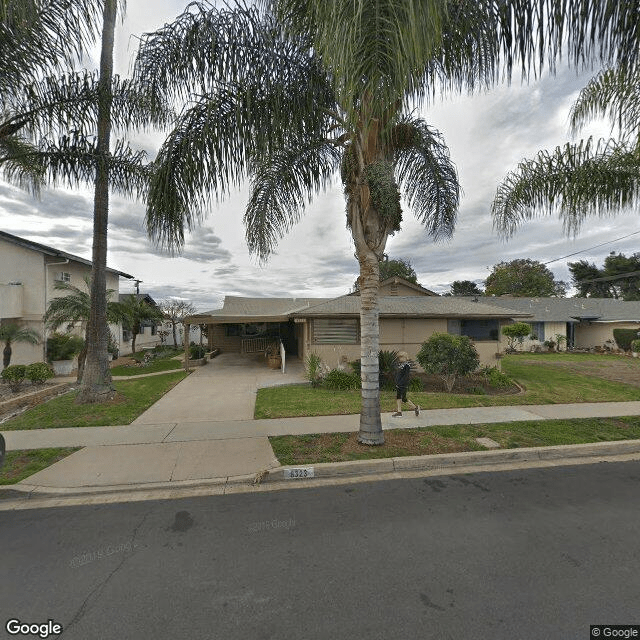
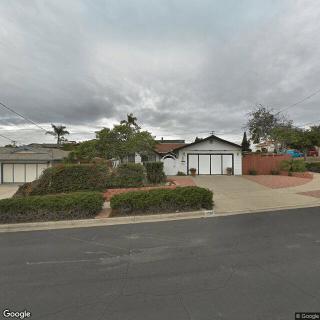
8323 Lake Gaby Ave, San Diego, CA 92119
To contact a resident: (619) 928-8263
For more information about senior living options: (866) 208-4318
Miss Emma's #2 Costs & Pricing
Miss Emma's #2 offers competitive pricing for its accommodations compared to the broader market in San Diego County and the state of California. For semi-private rooms, residents will find a cost of $3,200, which is notably lower than the county average of $3,518 and significantly more affordable than the state average of $3,333. The pricing remains consistent with studio accommodations at $3,500, well below the county's rate of $4,217 and slightly under the state figure of $4,145. Additionally, private rooms are available for the same price of $3,500 - this stands out as equal to California's average but less than San Diego County's average of $3,939. Overall, Miss Emma's #2 presents a remarkably reasonable option for individuals seeking quality care without overstretching their budgets in this region.
| Floor plans | Miss Emma's #2 | San Diego County | California |
|---|---|---|---|
| Semi-Private | $3,200 | $3,518 | $3,333 |
| Studio | $3,500 | $4,217 | $4,145 |
| Private | $3,500 | $3,939 | $3,939 |
Memory care communities with a similar price nearby
-
from -$350 / mo

Alpine View Lodge
$2,850 to $3,550 / month13.1 miles away -
About the same

Wellspring Assisted Living
$3,200 to $4,000 / month0.6 miles away -
from +$300 / mo

Ramona Senior Lodge Assisted Living
$3,500 to $5,500 / month15.1 miles away -
from -$400 / mo
Carecenter at Home for Elderly
$2,800 to $3,500 / month7.7 miles away -
About the same
Baron's Residential Care Inc. - Lodi Gardens
$3,200 to $4,000 / month11.0 miles away
Overall Review of Miss Emma's #2
Pros
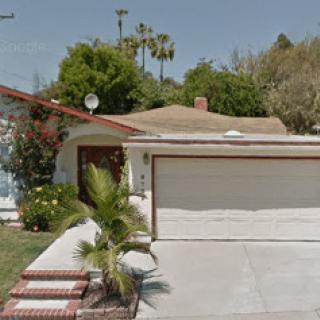
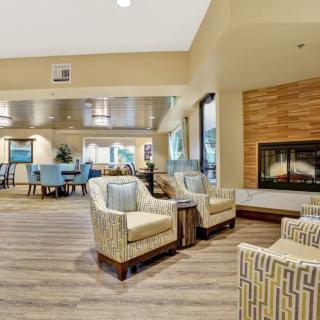
 The facility looked very nice.
- The staff were very friendly.
Review
Miss Emma’s #2 in San Diego is best suited for seniors and families who prize a clean, attractive setting paired with warm, approachable staff over flashy programming or high-visibility leadership. The clearest takeaway from the observed visit is that the environment is pleasant and the team treats residents with friendliness and respect. For families seeking a straightforward, no-nonsense placement where daily interactions feel comfortable and social energy is present, this community checks important boxes without demanding elaborate care plans or premium amenities. It is especially appealing to those who want solid atmosphere and reliable, pleasant daytime interactions as a foundation for daily living.
Those considering alternatives should note a potential caveat: leadership visibility. The visits reviewed indicate a strong preference for meeting or seeing the on-site director, and the impression left was that leadership access could be intermittent when the director is out of town. For families who insist on a consistently visible administrator, or who want decisive, hands-on problem resolution from leadership during the decision phase and after move-in, other communities with more demonstrable on-site leadership may feel more comforting. In short, this is a place where day-to-day warmth and polish matter more than dramatic leadership presence.
The main pros, an appealing physical setting and genuinely friendly staff, do a good job of offsetting the noted leadership absence for many families. A beautifully kept campus conveys safety, pride, and a sense of home, which reduces anxiety about the daily experience. Friendly staff translate into smoother check-ins, clearer communication, and a sense of personal attention that can matter as much as formal care plans. When a tour leaves visitors feeling “this would work,” it’s often because these interpersonal dynamics align with the resident’s preferences and routine.
On the downside, the lack of guaranteed Director-on-site access can be a meaningful constraint for households prioritizing proactive oversight. Even if the daily care staff appear capable and the ambiance is positive, questions about escalation paths, policy decisions, and immediate accountability can persist without a consistently present administrator. The reviews do not reveal problems with operations on the ground, but the absence of a director during a visit can leave some decision-makers wondering about long-term responsiveness and strategic alignment with resident needs.
Practical next steps for families are clear. Schedule a follow-up visit or a longer tour at a time when leadership is available to meet the director or an on-site administrator. Ask specific questions about staffing ratios, care coordination, and how concerns are handled when the director isn’t present. Request to see activity calendars, dining options, and room options to confirm that the day-to-day rhythm aligns with the resident’s desired pattern. Inquire about trial stays or short-term placements to truly test the atmosphere before committing.
Overall, Miss Emma’s #2 stands out as a credible choice for San Diego families seeking a well-kept, welcoming environment with genuinely friendly staff. The standout positives create real value in daily living, social interaction, and comfort, making it easy to picture a resident settling in with ease. The primary discernment point remains leadership visibility: if consistent, proactive on-site leadership is non-negotiable, this may steer some toward communities with more continuous director access. For those prioritizing warmth, neat surroundings, and dependable staff, this is a compelling option worth serious consideration.
 Board and Care Home
 Memory Care
 Private
 San Diego International-Lindbergh (11 miles away)


 Five Subtle Dementia Indicators to Observe: An In-Depth Guide to Understanding “Does My Mom Have Dementia?”
 Dementia, Paranoia, and Caregiver Guidance: Understanding the Connection
 Engaging Memory Care Activities That Enhance Quality of Life