
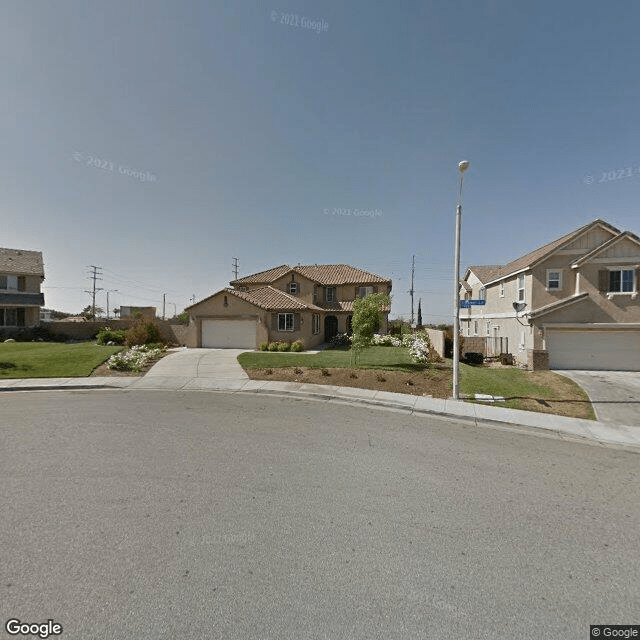
6913 Miramar, Palmdale, CA 93551
To contact a resident: (818) 994-3289
For more information about senior living options: (866) 208-4318
Miramar Costs & Pricing
Miramar offers competitive pricing for its accommodations, particularly when compared to both Los Angeles County and the broader California market. For a semi-private room, Miramar charges $2,000 per month, significantly lower than the county average of $3,349 and the state average of $3,333. This trend continues with private rooms priced at $3,000 in Miramar, which is notably less than Los Angeles County's $4,197 and even undercuts the state's average of $3,939. Studio units also reflect this cost-effective approach; at $3,000 per month in Miramar, they remain more affordable compared to the county's rate of $4,172 and California's average of $4,145. Overall, Miramar provides an attractive option for residents seeking quality living spaces without the elevated financial burden often associated with similar facilities in the area.
| Floor plans | Miramar | Los Angeles County | California |
|---|---|---|---|
| Semi-Private | $2,000 | $3,349 | $3,333 |
| Studio | $3,000 | $4,172 | $4,145 |
| Private | $3,000 | $4,197 | $3,939 |
Memory care communities with a similar price nearby
-
from +$295 / mo

Casa Amore West
$2,295 to $3,600 / month6.7 miles away -
About the same

El Vista Residential Care
$2,000 to $3,000 / month7.9 miles away -
from +$200 / mo
Victoria's Place #1
$2,200 to $3,600 / month24.3 miles away -
from +$200 / mo

J.R. Retirement Home for Elderly
$2,200 to $3,500 / month5.3 miles away -
About the same

TLC Room and Board II
$2,000 to $4,300 / month11.7 miles away
Overall Review of Miramar
Pros
 They provide outstanding, attentive care for residents.
- They are tender and caring in their interactions with residents.
- They ensure residents get out for fresh air.
- They learn each resident's dietary needs and preferences.
- They welcome family visits at any time.
Cons
 There is no BBB membership.
- There are no certifications for caregivers and no medication training for administering medications.
- Transportation has no determined schedule.
Review
Miramar in Palmdale is best suited for seniors who want a warm, intimate setting where care feels personal and family involvement is actively welcomed. The community earns its strongest recommendations from staff who are described as tender and genuinely caring, with residents getting regular outdoor time, meals tailored to individual preferences, and frequent family access. This is a small-community feel delivered with a hands-on, attentive approach rather than a polished, institutional cadence.
Those who may want to explore alternatives are clear: Miramar is less ideal for residents needing intensive medical supervision or formal, licensed medication administration on site. The available reviews imply a largely independent to lightly assisted resident mix, with care practices that emphasize daily living support and social engagement over clinical care management. The transportation model is described as “no determined schedule,” and there is no mention of on-site nursing certs or medication administration training. For families prioritizing guaranteed med management, routine RN oversight, or a memory-care oriented program, other communities may be a better fit.
On the positive side, the most consistent strengths lie in the human touch and the daily rhythms that foster connection. Caregivers are praised for their warmth and patience; residents receive meaningful outdoor time, attentive meal planning, and a welcoming atmosphere for visits from family at any hour. The operation’s longevity, roughly a decade in business in this context, suggests a degree of stability and evolving practice that families can count on. Group activities and a stated emphasis on knowing individual dietary needs further reinforce a culture of personal attention rather than routine, impersonal care.
However, the practical drawbacks temper the glow. The listing elements indicate shared room configurations and limited detail on clinical supports, with an explicit mention that there are no formal certifications or training specific to administering medications. While background checks and health screenings for staff are noted, the absence of licensed medication training can be a decisive factor for residents with complex medication regimens or those requiring strict, on-site oversight. The combination of a non-dedicated transportation schedule and modestly structured clinical capabilities means Miramar functions best as a home-like environment for those who do not require round-the-clock medical intervention.
The two strongest, consistent reviews reveal a care culture that resonates with families seeking freedom from a sterile, impersonal facility. The warmth, the willingness to accommodate family visits, and the daily practices that prioritize outdoor activity and social interaction create a compelling case for choosing Miramar when human connection is the top criterion. Yet the mixed signals in the more cautious notes, especially around medical oversight and transport logistics, signal that some experiences may feel uneven or incomplete for residents who need robust, predictable clinical support or reliable appointment transportation.
In making a decision, families should ask pointed questions before committing: How are medications handled on a daily basis, and which staff members are qualified to administer them? Is there a licensed nurse on site for specific hours, and how are changes in a resident’s regimen managed? What is the exact transportation framework, scheduled pickups and drop-offs, or ad-hoc arrangements, and how are medical appointments accommodated? How are private versus shared rooms allocated, and what are the costs and space implications? Finally, assess whether the resident’s abilities and needs align with a setting that prioritizes personalized attention and social engagement over formal clinical services. Miramar offers a genuinely caring, home-like environment with evident strengths in daily life quality; for families prioritizing intimate, compassionate care and open family access, it can be an excellent match. For those requiring stronger medical oversight, defined transport schedules, and more formal med-management capabilities, exploring alternatives will likely yield a better fit.
 Board and Care Home
 Memory Care
 Activities off-site
 Indoor common areas
 Outdoor common areas
 Private
 Respite or short term stays offered
 Wheelchair accessible showers
 Ambulatory care
 High acuity care
 Incontinence care
 Kosher


 How and When Medicaid May Cover Assisted Living Costs
 A Detailed Exploration of Assisted Living Medicaid Waivers Across the United States
 Exploring the Contrasts Between Assisted Living and Skilled Nursing