
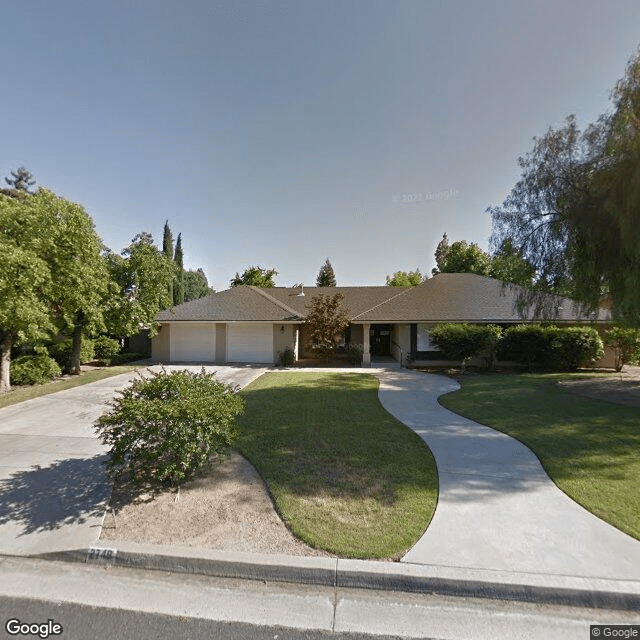
2749 W. San Carlos Ave., Fresno, CA 93711
To contact a resident: (559) 449-0410
For more information about senior living options: (866) 208-4318
Shining Light Residential Care Facility for the Elderly Costs & Pricing
Shining Light Residential Care Facility for the Elderly offers competitive pricing within the context of Fresno County and the broader California market. For semi-private accommodations, residents can expect a monthly cost of $3,500, which is notably higher than the county average of $2,991 but remains slightly below the state average of $3,333. When considering private room options, Shining Light's rate is set at $3,800; this is somewhat above both the county's average of $3,589 and California's statewide figure of $3,939. Additionally, their 1-bedroom units are priced at $4,000 per month - this cost exceeds Fresno County's average of $3,398 but comes in lower than California's state average of $4,340. Overall, while Shining Light may be pricier compared to county averages in some categories, it offers valuable services and amenities that cater to those seeking enhanced care and comfort for their loved ones.
| Floor plans | Shining Light Residential Care Facility for the Elderly | Fresno County | California |
|---|---|---|---|
| Semi-Private | $3,500 | $2,991 | $3,333 |
| Private | $3,800 | $3,589 | $3,939 |
| 1 Bedroom | $4,000 | $3,398 | $4,340 |
Memory care communities with a similar price nearby
-
from +$500 / mo
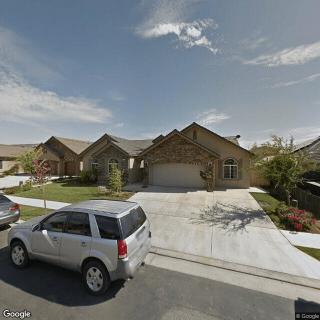
A Place Called Home II
$4,000 / month10.2 miles away -
from -$300 / mo
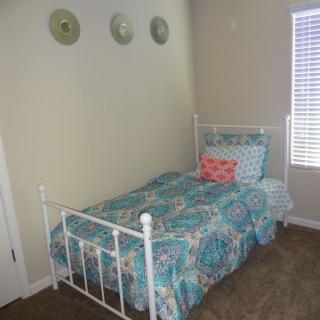
Blossom Creeks Assisted Living
$3,200 to $3,800 / month11.2 miles away -
About the same
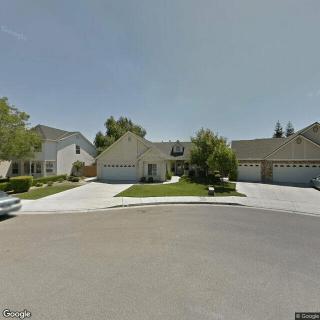
Pryor Falls
$3,600 to $3,900 / month7.8 miles away -
from -$200 / mo
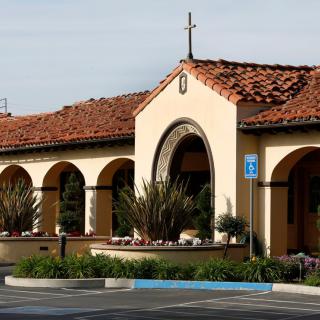
Nazareth House
$3,300 / month4.9 miles away -
from -$300 / mo
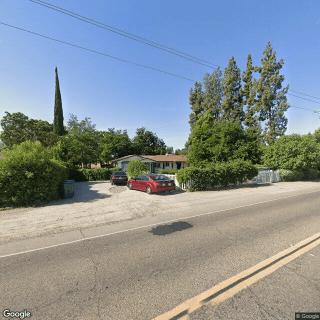
Clovis Guest Home
$3,200 / month10.9 miles away
Overall Review of Shining Light Residential Care Facility for the Elderly
Pros
 The facility appeared to be clean.
- The tour guide was great and provided good information.
- The community was clean and the staff were nice.
- Elva was very helpful and informative.
- The home was clean and the staff were friendly.
- The facilities offer a hospice waiver and end-of-life care, allowing residents to stay in the facility as their needs evolve.
Cons
 They were not happy with the care at this facility.
- The staff were not trained properly and were unable to perform basic medical care or even the simplest tasks needed to care for a family member with Alzheimer's.
- The staff had to be directed by family members and Hospice personnel on how to administer basic medications, turn him over in bed, and transfer non-ambulatory patients.
- Communication with staff was incredibly difficult because they were not able to speak or understand basic English.
- The menu was very limited.
- The community would not be able to help with the mother's special needs.
Review
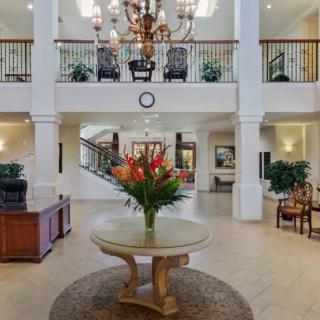
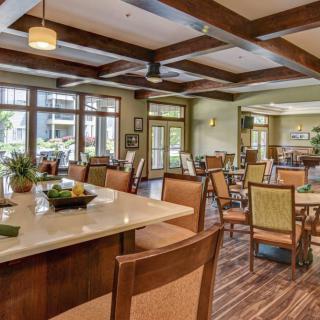
Shining Light Residential Care Facility for the Elderly in Fresno is best suited for families seeking a small, home-like setting where attention to daily living tasks and comfort can be managed with moderate medical support, and where end-of-life planning can be conducted without abrupt moves. The property presents a tidy, well-maintained interior that feels more like a private residence than a large campus, appealing to residents who value intimate routines and steady, predictable day-to-day life. The staff’s accessibility in tours and the facility’s networked relationships with nearby homes offer a sense of continuity and potential future options. For caregivers prioritizing a warm, low-key environment with a built-in path to stay if nursing-level care becomes necessary, this community checks several important boxes.
Yet potential residents should be clear about who may want to explore alternatives. The most serious red flags revolve around the ability to deliver consistent clinical care. One review describes staff as undertrained, unable to perform basic medical tasks, and requiring family or Hospice personnel to supervise medication administration, turning, and transfers. Language barriers compound communication challenges, making day-to-day care and rapid problem-solving more difficult. While a pleasant setting and courteous staff can hide gaps, a resident with Alzheimer’s or other conditions demanding reliable, skilled nursing will likely outgrow what this home can sustainably provide. A limited menu also signals constraints that matter as needs evolve. In short, this is not the right place for high-acuity or highly specialized medical support.
On the upside, the positives exist in meaningful ways. The facility is repeatedly described as clean and the staff as friendly, with tours that are informative and helpful. The small, home-like environment can deliver steady routines and a sense of stability that families value, especially for residents who thrive on predictability. Importantly, the hospice waiver means a resident can remain on site even if a nursing-home level recommendation arises, reducing disruptive moves during transitions. End-of-life care can be managed in place, which is a substantial convenience for families prioritizing continuity and comfort. The ability to tap into a broader network for possible bed availability provides practical flexibility when care needs shift.
Those advantages, however, do not erase the core concerns. The most critical issue is the lack of robust clinical training and oversight, translating into reliance on families and hospice personnel for dosing, repositioning, transfers, and basic hygiene tasks. This reality undermines resident safety and can create delays or confusion in care. A limited menu compounds nutritional risk and reduces options for dietary needs or preferences. The combination of limited medical capability and language hurdles means that when complexity rises, whether due to dementia progression, comorbidities, or acute events, the home may struggle to respond promptly and effectively. Families should weigh these gaps against the potential for end-of-life flexibility when evaluating this option.
A parallel positive thread comes from the tour experience and staff interactions. A representative named Elva stood out as helpful and informative, and the overall impression of cleanliness and warmth strengthens confidence in the environment. The staff’s courtesy and the home’s hospitable tone make it a comfortable setting for residents who do not require intensive medical intervention. The practical considerations, potential admission within a broader network, the hospice waiver reducing transition stress, and the assurance that end-of-life preferences can be honored in place, give genuine weight to the decision for families prioritizing peace of mind and a gentle, predictable rhythm. These factors support a favorable impression for suitable cases.
Decision guidance: this community excels for a modest, home-like setting with a clear path to stay in place as care needs evolve, especially when end-of-life planning and comfort are primary goals. It is not the right fit for residents demanding robust medical oversight, complex dementia care, or rapid responses to acute changes in condition. Prospective families should press for concrete assurances: current nursing staff qualifications, ongoing training plans, and language capabilities; a transparent menu with dietary options; staffing ratios across shifts; and a clearly staged plan for transitions if care needs intensify. If those assurances exist and align with expectations, Shining Light can be a strong, compassionate home. If not, alternatives with stronger clinical support should be prioritized.
 Board and Care Home
 Memory Care
 Activities off-site
 Devotional services off-site
 Indoor common areas
 Outdoor common areas
 Private
 Private bathrooms
 Respite or short term stays offered
 Wheelchair accessible showers
 Fresno Yosemite International (7 miles away)
 Ambulatory care
 Diabetic care
 High acuity care
 Medication management
 Meals provided

 Memory Care Pathways: A Holistic Guide to Dementia Support
 Comprehending Evening Confusion in Dementia: Causes, Manifestations, and Support
 Delirium and Dementia: Unraveling the Key Differences