
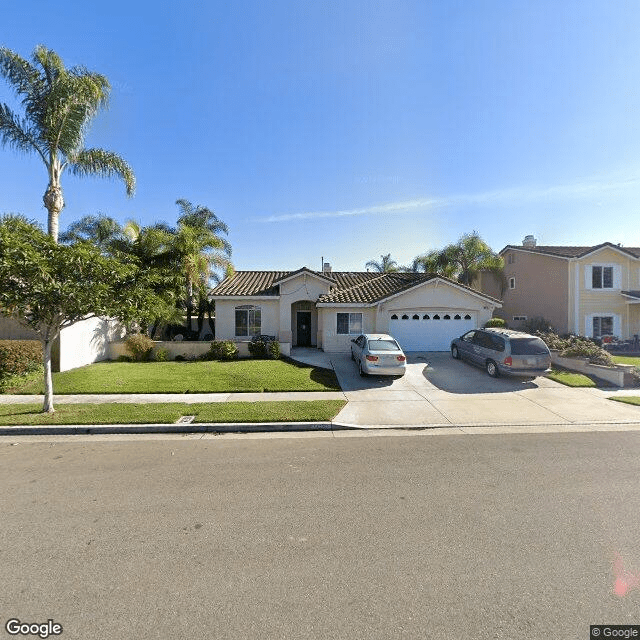
18676 Santa Mariana St, Fountain Valley, CA 92708
To contact a resident: (949) 933-5938
For more information about senior living options: (866) 208-4318
Assured Horizons III Costs & Pricing
Assured Horizons III offers competitive pricing for its accommodations, with monthly costs for room types that reflect the local market in both Orange County and California. For a semi-private room, residents can expect to pay $3,800, which is higher than the average cost in Orange County at $3,431 but slightly above the state average of $3,333. The private rooms at Assured Horizons III are priced at $4,000, aligning closely with the Orange County average of $4,104 while remaining lower than California's statewide average of $3,939. Additionally, studio apartments are available for $4,300 - just below the county's figure of $4,313 and surpassing the state average of $4,145. Overall, these rates position Assured Horizons III as a desirable option that balances quality and affordability within its regional context.
| Floor plans | Assured Horizons III | Orange County | California |
|---|---|---|---|
| Semi-Private | $3,800 | $3,431 | $3,333 |
| Private | $4,000 | $4,104 | $3,939 |
| Studio | $4,300 | $4,313 | $4,145 |
Memory care communities with a similar price nearby
-
from +$195 / mo
Cadence Brea
$3,995 to $5,500 / month16.2 miles away -
from -$300 / mo
Kind Heart Home Care VI
$3,500 to $5,000 / month21.2 miles away -
from -$300 / mo
Comfort Keepers Home Care
$3,500 to $6,500 / month17.3 miles away -
from +$700 / mo
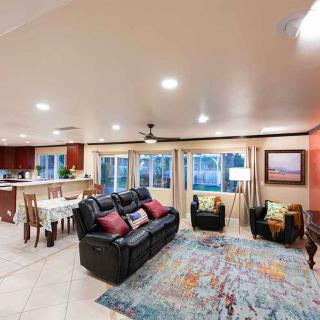
Casa Bella
$4,500 / month13.0 miles away -
from +$200 / mo
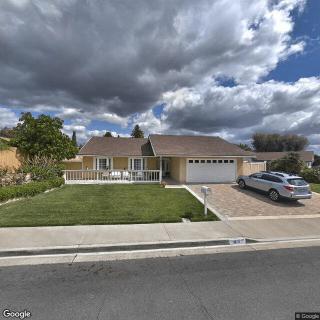
Active Senior Home Care
$4,000 to $5,000 / month18.7 miles away
Overall Review of Assured Horizons III
Pros
 They are now much happier after moving to another facility in Fountain Valley.
- They experienced much better treatment at the new facility compared to the previous one.
Cons
 They would never recommend any Assured Horizons location to anyone.
- They claim the owner cares more about money than the residents or their loved ones.
- They say the facility advertises many programs, but there is very little beyond watching TV.
- They report the food was disliked, with the same meals every other day and no customization to preferences.
- They allege much food was purchased at the 99 Cents store.
- They claim clothes were ruined because the facility does not use fabric softener and uses detergent from the 99 cents store.
- They express serious safety concerns: lack of supervision and lack of alarms on all doors for those with dementia.
- They note high staff turnover leads to little continuity of care, with at least four different nurses in a year.
- They state concerns raised with the owner were met with excuses and an arrogant attitude, with no real listening or changes.
- They mention other families had similar experiences.
- They moved to another facility in Fountain Valley and are now much happier.
Review
Assured Horizons III in Fountain Valley is best suited for seniors who require only light assistance and whose families are prepared to provide vigilant advocacy and oversight. The facility does not function as a genuine memory-care environment, and expectations for specialized dementia supervision should be tempered. It is a fit for residents who can participate in basic activities and do not need highly trained, English-speaking staff delivered with consistent, professional supervision. In short, this community works as a hands-on option for families able to supervise and coordinate care rather than a turnkey solution for cognitive decline.
Those considering alternatives should look toward communities with proven dementia capabilities, steadier staffing, and clearer communication. Families with a loved one who has dementia or serious cognitive needs will want a setting where alarms, supervision, and individualized care plans are reliably in place. Also worth evaluating are facilities with stable, English-speaking caregiving teams, consistent nurse coverage, and robust meal and activity programs. If continuity of care, predictable routines, and a resident-centered care philosphy matter, this is a signal to explore other options in Fountain Valley and surrounding neighborhoods.
The review paints a stark picture of several core failures. The owner’s focus on money is cited as a driving force behind a supposed abundance of programs that never materialize in practice. Meal service is described as monotonous and improvised to the point of sameness, with little effort to accommodate personal preferences. Laundry and clothing care suffer due to the use of low-grade supplies and the absence of basic care practices like fabric softener, leading to damaged clothes. Most troubling are safety and dementia-related concerns: insufficient door alarms, inadequate supervision, and a staff cohort with limited English proficiency and insufficient dementia training. High turnover means residents encounter multiple nurses and caregivers, eroding continuity of care and exacerbating confusion for those with memory challenges.
Given these pervasive drawbacks, the scarce positives fail to offset the substantial risks. The few advertised programs do not translate into meaningful daily experiences, and the lack of consistent, language-appropriate training undermines any potential benefit for residents with cognitive needs. The combined impact, safety gaps, care discontinuity, poor nutrition experiences, and inadequate responses to concerns, creates a care environment that cannot be trusted to protect vulnerable residents or respond effectively to evolving needs. In practical terms, the cons simply overwhelm any nominal advantages implied by the facility’s footprint or location.
Families evaluating this community should insist on concrete assurances before any commitment. Demand evidence of current, dementia-specific staff training, English-language competency benchmarks, and a stable caregiving team with low turnover. Require a formal, written safety plan, including monitored doors and alarm systems appropriate for residents with memory impairments. Request sample menus and a process for tailoring meals to personal preferences, along with a clear laundry protocol and guaranteed quality of clothing care. Finally, observe a live care interaction: how staff communicate, how aides respond to concerns, and whether there is any genuine listening and accountability from leadership.
The bottom line is clear: if memory-care needs, consistent supervision, or a robust program of activities and nourishment are priorities, this community does not meet those expectations. For families confronting dementia, safety gaps, language barriers, and turnover, alternatives with proven dementia training and staff stability are the prudent route. The decision hinges on balancing cost with quality of care; in this case, the quality gaps dominate. A careful comparison with other Fountain Valley options will usually reveal more reliable oversight, stronger programming, and a more respectful, resident-centered approach.
 Board and Care Home
 Memory Care
 Activities off-site
 Bath tubs
 Beautician on-site
 Devotional services on-site
 Private
 Respite or short term stays offered
 Wheelchair accessible showers
 John Wayne Orange Co (6 miles away)
 Diabetic care
 High acuity care
 Incontinence care
 Medication management
 How and When Medicaid May Cover Assisted Living Costs
 A Detailed Exploration of Assisted Living Medicaid Waivers Across the United States
 Exploring the Contrasts Between Assisted Living and Skilled Nursing