
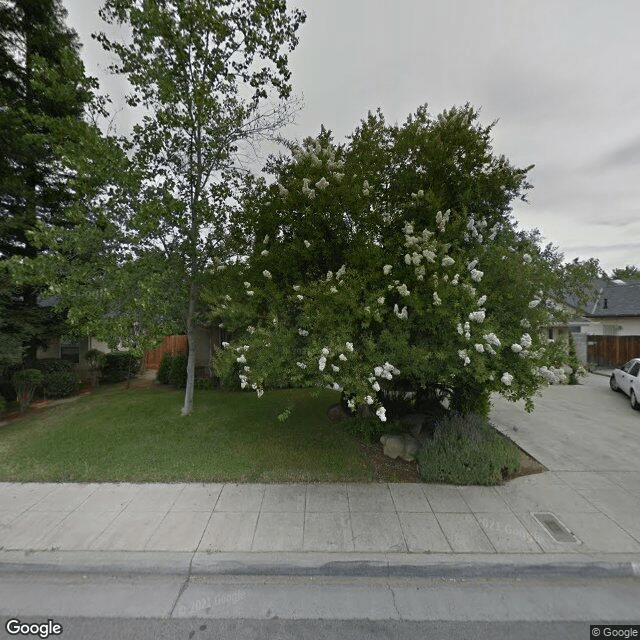
385 West Vartikian Avenue, Clovis, CA 93611
To contact a resident: (559) 307-0950
For more information about senior living options: (866) 208-4318
Green Gables Care Home IV Costs & Pricing
Green Gables Care Home IV offers competitive pricing in the context of Fresno County and California as a whole. For semi-private accommodations, the monthly cost is $3,200, which is notably lower than the county average of $2,991 but slightly below the state average of $3,333. When it comes to private rooms, Green Gables charges $3,500 per month; this figure is more economical compared to Fresno County's $3,589 but still trails behind California's average of $3,939. Overall, Green Gables provides a balance of affordability and quality care that makes it an appealing option for families considering long-term residential support for their loved ones.
| Floor plans | Green Gables Care Home IV | Fresno County | California |
|---|---|---|---|
| Semi-Private | $3,200 | $2,991 | $3,333 |
| Private | $3,500 | $3,589 | $3,939 |
Memory care communities with a similar price nearby
-
from -$400 / mo

Chateau Jesadean
$2,800 / month4.6 miles away -
from -$600 / mo
Northwest Villa
$2,600 / month4.7 miles away -
About the same
Blossom Creeks Assisted Living
$3,200 to $3,800 / month7.3 miles away -
from +$400 / mo
Pryor Falls
$3,600 to $3,900 / month2.3 miles away -
from +$100 / mo

Nazareth House
$3,300 / month5.1 miles away
Overall Review of Green Gables Care Home IV
Pros
 The mother is thriving and loving every minute of her life there.
- She enjoys three meals a day with snacks in between.
- Daily exercises and activities keep residents engaged.
- The mother loves her life there.
- There are two caregivers for six ladies in the house, with a third who comes and goes, 24/7.
- Green Gables has eight locations, indicating they are doing something right.
- The home has a dog named Sebastian, whom the mother loves.
- Robert, Lorik's son and owner, is described as sweet and charming and can assist with tours.
Cons
 This was a situation where the staff slept there.
- There was no availability at the first choice, which could have led them to consider Green Gables.
Review
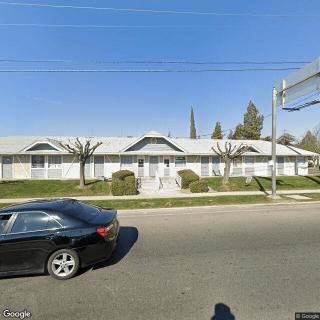
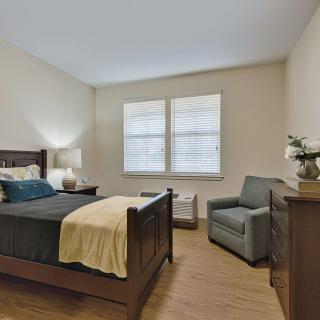
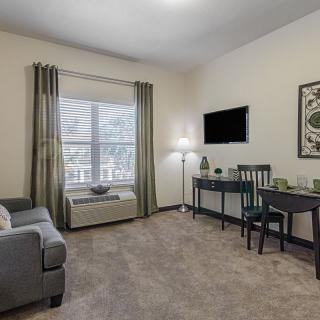
Green Gables Care Home IV in Clovis is best suited for families seeking a warm, home-like setting where a senior can stay engaged, well fed, and emotionally supported through daily routines. The community reads as a small-house model, approximately six residents per home, with a staffing pattern that prioritizes visibility and steady touchpoints. Residents enjoy three meals a day with snacks in between, and a calendar that actively builds movement and social contact through daily exercises and activities. The presence of a resident-friendly dog adds emotional comfort and social warmth that often stabilizes mood and participation. A clear signal of the model’s appeal is the intimate staff-to-resident dynamic: two caregivers on site for six residents around the clock, with a third caregiver rotating in and out. The eight-location footprint signals a tested model and the reputational incentives to maintain quality across campuses.
Who may want alternatives? Those requiring robust memory care, higher medical oversight, or continuous skilled nursing 24/7 may find this setting too modest. While current staffing appears sufficient for daily living tasks, overnight coverage and consistency can be a concern for families that rely on constant monitoring or anticipate escalating medical needs. The smaller campus footprint means fewer on-site specialists, so residents with complex health conditions or aggressive care plans may benefit from a larger memory-care or skilled-nursing environment. The eight-location brand also raises the possibility of variability in quality or operations from one house to another, so site-specific diligence is essential before committing.
On the positive side, the day-to-day experience reported by families centers on real, tangible benefits. Residents thrive with dependable meals, regular activity, and social engagement that gives structure to the day. The dog on site provides a comforting, familiar presence that many seniors come to rely on for mood regulation and social interaction. The intimate staff-to-resident ratio facilitates personalized attention and quicker recognition of subtle changes in condition or mood. Prospective residents often find the tour process straightforward, and family involvement appears encouraged; when a parent’s family has direct contact with leadership, such as a responsive owner-family liaison, this translates into a transparent, approachable environment that eases decision-making.
That said, the data available are limited, and a cautious eye is warranted. A notable caveat concerns overnight staffing and safety practices, raised by a family member moving another resident out and noting that staff slept on site in a specific situation. While not necessarily universal, this prompts legitimate questions about vigilance after hours and how emergent needs are addressed when the campus is quieter. The small sample size means outcomes may vary by house, and a site-specific tour combined with a written outline of after-hours procedures, including who handles med management and urgent calls, is wise. The presence of a dog and a homelike atmosphere are meaningful strengths, but they do not replace the need for robust medical coverage or a clear protocol for emergencies.
In practical terms, decision-makers should map needs to the environment. If the priority is a comfortable, social, pet-friendly home with reliable meals and activity schedules, Green Gables stands out as a strong match. If high-acuity medical oversight, constant nursing presence, or secured memory care are non-negotiables, serious consideration of alternatives is warranted, ideally with a direct comparison to larger campuses that specialize in those services. The prudent path is to schedule a visit to the specific house of interest, ask pointed questions about daytime and nighttime staffing, request a written care escalation plan for after-hours, and confirm how medication management and emergencies are handled. Clarify resident-to-staff ratios during peak times and whether two caregivers can be fully attentive when multiple residents require assistance.
Bottom line: Green Gables Care Home IV offers a practical, reassuring option for seniors who value a home-like setting, consistent meals, routine activity, and a pet-friendly, engaged staff. The strongest fit is for families who want intimacy, steady daily structure, and a warm, less impersonal atmosphere. It may not be the best choice for those with high-acuity needs or who require guaranteed, 24/7 supervised care, or for families seeking uniform quality across all eight campuses without house-level verification. A focused tour, a candid discussion of staffing and after-hours procedures, and a side-by-side comparison with higher-acuity options will reveal whether this community is the right long-term home or if another pathway should take priority.
 Board and Care Home
 Memory Care
 Cats allowed
 Dogs allowed
 Private
 Fresno Yosemite International (4 miles away)



 A Detailed Exploration of Assisted Living Medicaid Waivers Across the United States
 Exploring the Contrasts Between Assisted Living and Skilled Nursing
 Vibrant Senior Living: A Comprehensive Guide for Active Older Adults