
11527 West Peoria Avenue, Peoria, AZ 85363
For more information about senior living options: (866) 208-4318
Overall Review of Lifestream At Cook Health Care
Pros
 They are a big fan of the ASU community and its amenities.
- They love that the location is right on campus.
Cons
 The provided review contains only positive statements.
Review
Lifestream At Cook Health Care in Peoria is best suited for seniors who want an assisted living setting that actively complements a campus lifestyle. The community sits in an environment tied to the ASU ecosystem, delivering more than routine care by embedding residents in a lively, amenity-rich atmosphere. This is not a quiet cul-de-sac vibe; it is a hub where social opportunities, cultural programming, and convenient services echo from the campus. For residents who appreciate routine access to student events, libraries, fitness facilities, and neighborhood shops, the location offers a daily menu of engagement without leaving the community. The on-campus footprint translates into practical conveniences that can reduce driving, simplify errands, and expand social networks.
Alternatives should be considered for individuals who crave a quieter, more traditional senior-living atmosphere or who require medical care beyond standard assisted living. If the preference is a settled, low-traffic setting with fewer crowds and less campus activity, another community in a more residential area may feel calmer. Those who anticipate needing higher levels of medical attention, frequent on-site clinical services, or integrated memory care should also compare options to ensure the care continuum aligns with needs, since campus-adjacent environments can thrive on activity that may overwhelm residents seeking serene routines.
On the positive side, the biggest draws are the strongly social frame and the amenities that accompany a campus-adjacent location. The available review highlights a great location and appealing amenities, implying easy access to dining, recreation, and social programming. The proximity to ASU resources means residents can participate in a wide range of cultural events, lectures, and community activities that keep cognitively and socially engaged. In practical terms, this can translate into fewer days spent isolated and more opportunities for purposeful engagement, companionship, and familiar faces in a shared setting. For families, the campus tie can also facilitate visits that feel less disruptive to daily routines.
Even with those strengths, potential downsides warrant consideration. A campus-centric setting can bring busier days, more foot traffic, and irregular noise associated with student life and events. That environment may not suit those who prefer quiet evenings, predictable routines, or immediate access to medical care within the building. Cost is another axis to evaluate, as premium locations near universities can carry higher price points; and depending on care needs, on-site nursing support may have limits or scheduling quirks that require stepping outside the community for certain services. Weighing these factors against the energy and connectivity of campus life is essential.
Where the pros offset the cons is in the built-in social fabric and the convenience of campus-adjacent amenities. The daily rhythm can be more dynamic, reducing isolation and creating serendipitous interactions that keep residents mentally engaged. Family involvement can be streamlined by the campus setting, making it easier to coordinate visits, attend events together, or participate in campus activities as a group. The robust menu of amenities paired with nearby cultural offerings provides a value proposition that can justify premium pricing for the right resident. For those who thrive with ongoing stimulation and easy access to services, the positives are substantial enough to outweigh the drawbacks.
Decision-makers should verify several practical details before committing. Confirm the level of care offered, availability of on-site medical support, and whether memory care or higher-acuity options exist within or near the community. Schedule a visit to experience daily life during a typical week, note how noise, crowding, meal times, and staff responsiveness feel in real time. Request a clear breakdown of costs, what's included in the rate, and transportation options to campus events or off-site appointments. If engagement with campus life is a priority, ask about partnerships with ASU programs, guest access to events, and opportunities for family participation. With these checks, the choice becomes straightforward for families prioritizing social vitality, convenient amenities, and a campus-connected lifestyle.
 109 resident community capacity
 Memory Care
 Skilled Nursing Facility
 Air-conditioning
 Beauty salon
 Cable or satellite TV
 Computer center
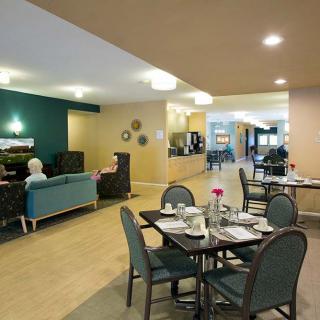
 Dining room
 Fitness room
 Fully furnished
 Gaming room
 Garden
 Housekeeping services
 Kitchenette
 Move-in coordination
 Outdoor space
 Private bathrooms
 Restaurant-style dining
 Small library
 Telephone
 Wellness center
 Wi-Fi/high-speed internet available
 Phoenix Sky Harbor International (20 miles away)
 Community operated transportation
 24-hour call system
 Activities of daily living assistance
 Assistance with bathing
 Assistance with dressing
 Assistance with transfers
 Diabetes diet
 Medication management
 Mental wellness program
 Special dietary restrictions
 Concierge services
 Planned day trips


 How and When Medicaid May Cover Assisted Living Costs
 A Detailed Exploration of Assisted Living Medicaid Waivers Across the United States
 Exploring the Contrasts Between Assisted Living and Skilled Nursing