
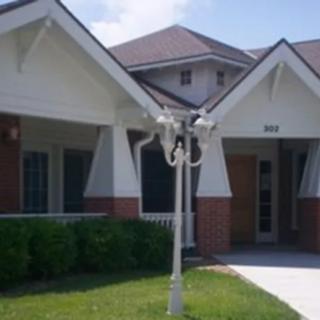
201 West Crane Street, Norton, KS 67654
For more information about senior living options: (866) 208-4318
Overall Review of Andbe Home
Pros
 The people are great.
- The Andbe home is loved by residents.
- The staff loves the residents.
- The friendly and helpful staff make residents' stays the best possible.
- The staff are friendly and the residents are well cared for.
- The environment is clean.
Cons
 The administrator filed to be the executor of the estate without notifying any family that the relatives had died.
- A nurse was told not to use the father's phone to call the family, leaving them unaware for 1.5 years.
- The reviewer living in another state received no responses to texts, calls, or emails and did not know when or where the relative had died for 1.5 years.
- There were no obituaries or public notices published about the deaths.
- The reviewer suggested that an audit be conducted to see how many other families had experienced the same issue.
Review
Andbe Home in Norton, Kansas is best suited for families seeking a small, resident-centered setting where care feels personal, ongoing, and anchored by a steady, affectionate staff. The community's strength lies in relationships: staff who know residents well, a clean and orderly environment, and a culture that children, grandchildren, and other kin repeatedly describe as warm and genuinely caring. For seniors who prioritize daily kindness, reliable social interaction, and hands-on attention from caregivers who treat residents like family, Andbe delivers a tangible, home-like experience.
This is not the place for families that require airtight governance, flawless administrative communication, or immediate, orchestral responsiveness to every family concern. A notable portion of input highlights serious concerns about how administration handles sensitive matters, including documentation and notices around a loved one’s passing. When administrative processes falter or communications feel opaque, trust in the facility’s day-to-day care can become frayed. Potential residents should weigh the value of a highly personable care team against the risk of governance gaps that can undermine peace of mind for families facing difficult moments.
The strongest pro is the staff culture itself. Across multiple accounts, the caregivers are described as friendly, attentive, and consistently engaged with residents. The residents appear well taken care of, with daily routines that emphasize companionship and respectful treatment. The environment tends to show care in practice: cleanliness, order, and a setting that supports social interaction, privacy when needed, and a sense of belonging. The generational loyalty, stories of great-grandparents, grandparents, and parents who spent years there, speaks to a durable, family-oriented atmosphere that provides continuity and familiarity for long-time residents and their families.
On the downside, the most consequential drawbacks center on governance and communication. Allegations that an administrator acted as executor without informing family members, coupled with a long lag in conveying sad news, cast a shadow over otherwise positive experiences. These issues are not isolated to a single gripe but point to a pattern where administrative transparency and timely family updates are perceived as inconsistent. For families evaluating long-term residence or memory-care transitions, such concerns can erode confidence in the institution’s ability to navigate sensitive legal and emotional terrain with care and discretion.
The key question becomes whether the proven warmth and daily care outweigh the governance uncertainties. The pros, genuine staff devotion, a clean, friendly environment, and a culture that treats residents like extended family, do offset many day-to-day quality-of-life benefits. Yet the cons are not trivial: when critical administrative communications fail or occur late, they can’t easily be brushed aside, especially for families managing estates, guardianships, or urgent care decisions. For families that prioritize transparent governance, regular, proactive updates, and a consistently responsive administration, these red flags argue for caution or a deeper due diligence before committing.
In practical terms, families considering Andbe should pursue a disciplined due-diligence process. Schedule conversations with the administrator about communication protocols, who handles updates to families, and how difficult events are publicly and personally communicated. Request clear explanations of how estates or executor matters are handled, and ask for recent examples of family outreach during challenging times. Talk with current residents and their families about everyday responsiveness and any perceived gaps in administration. If these governance questions cannot be satisfactorily resolved, alternatives with more robust oversight and standardized family communication may better align with expectations for peace of mind. When governance is aligned with the strong, compassionate daily care Andbe is known for, the community becomes a compelling option for seniors seeking a homelike, supportive living environment.
 68 resident community capacity
 Independent Living
 Air-conditioning
 Beauty salon
 Cable or satellite TV
 Computer center
 Dining room
 Fitness room
 Fully furnished
 Gaming room
 Garden
 Housekeeping services
 Kitchenette
 Move-in coordination
 Outdoor space
 Private bathrooms
 Restaurant-style dining
 Small library
 Telephone
 Wellness center
 Wi-Fi/high-speed internet available
 Community operated transportation
 12-16 hour nursing
 24-hour call system
 Assistance with dressing
 Medication management
 Mental wellness program
 Diabetes diet
 Special dietary restrictions
 Community-sponsored activities
 Concierge services
 Planned day trips

 Skilled Nursing Facilities vs. Nursing Homes: Making Sense of the Differences
 A Detailed Examination of Nursing Home Costs Across the U.S.
 Exploring Nonmedical Home Care: Understanding Services, Costs, and Financial Approaches