









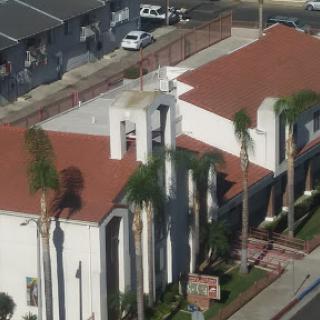

340 S Mesa St, San Pedro, CA 90731
To contact a resident: (310) 831-8981
For more information about senior living options: (866) 208-4318


Overall Review of Harbor Tower
Pros
 It is a great place for elders and feels very safe with cameras and bright lights at night.
- The place is viewed as good for elderly residents and their families.
- It is a nice apartment building for 62+.
- The gates and locked entrances give a sense of safety, and the higher-level views are great.
- The elevators are reported to be reliable and working.
- The tenants have marvelous views from all directions, and the staff are friendly and helpful.
- It is a quiet place that makes residents feel at home.
Cons
 Poor management
- The building has a long waiting list
Review
Harbor Tower in San Pedro is best suited for aging adults who want a safe, quiet, maintenance-light residence with a peer-focused atmosphere and impressive views. The building operates as a 62+ community with a notable security presence, gated entrances, locked doors, and abundant cameras, paired with reliable, well-lit common spaces and working elevators. Testimonials from long-term residents’ families point to stability: aunts, grandmothers, and friends who have settled in for years, enjoying a home-like feeling, easy visits, and the sense of continuity that comes with a predictable, low-stress environment. For anyone prioritizing personal autonomy, clear boundaries, and a residence that feels like home rather than a hospital, Harbor Tower delivers a reassuring baseline.
Yet, it is essential to acknowledge who may want to consider alternatives. Harbor Tower is not a full-service assisted living campus; it leans toward independence with light support rather than comprehensive daily-care coverage. Those who require substantial on-site medical oversight, 24/7 staffing, or specialized memory care will likely outgrow its offerings. The 62+ designation already narrows the resident age range, and the “semi-retirement” feel may not satisfy individuals seeking a robust program of social activities, extensive caregiver assistance, or rapid responsiveness to escalating care needs. Several reviews flag management as a potential drawback, suggesting that stability and ongoing communication are worth verifying before commitment.
The strongest positives are practical and tangible. Safety features are a clear edge: cameras, visible gates, bright lighting, and controlled entry contribute to a sense that residents can move through their day with confidence. Elevator reliability matters greatly for seniors, and Harbor Tower reports smoothly functioning lifts across its 12-story footprint. The views from higher floors are repeatedly highlighted as a standout amenity, delivering a daily, uplifting dividend of nature and cityscape for minimal cost. Inside, the apartments are described as nice and efficient, with a quiet, homey atmosphere that makes daily life feel uncomplicated and comfortable. Staff are frequently characterized as friendly and helpful, contributing to a culture of courtesy and neighborliness that many families value when choosing where to age.
On the downside, the cons carry enough weight to influence a decision. The most persistent concern is management quality; phrases like “poor management” appear in reviews, signaling potential inconsistency in responsiveness or operations. The long waiting list for units is another double-edged sword: it signals strong demand and desirability, yet it also delays entry and forces families to plan far in advance. The community’s core identity as a quiet, independent setting can feel limiting for those who crave more on-site programming, social events, or immediate escalation of duties as needs change. In short, Harbor Tower excels at providing a secure, serene, and aesthetically pleasing home, but it may fall short for residents who require intensive care coordination or a bustling living environment.
These strengths and weaknesses together create a clear framework for decision-making. The security, views, cleanliness, and courtesy of staff deliver a meaningful uplift to daily life, offsetting the potential downside of limited care options. The long waitlist, while an indicator of value, should be treated as a planning factor rather than a barrier; it requires proactive scheduling and real-time conversations with management about current availability and any possible accommodations. Prospective residents should also weigh the quiet, self-contained nature of Harbor Tower against the need for more robust programming or crisis-level support as health needs evolve. For families, the calculus is pragmatic: Harbor Tower offers a safe, home-like, independent lifestyle with undeniable charm and comfort; it is not a substitute for a full-service assisted living arrangement when comprehensive daily help becomes essential.
In practical terms, Harbor Tower is a strong fit for seniors who prize safety, autonomy, and serene surroundings, along with reliable amenities and the credibility of a well-regarded, long-standing community. Those who value highly structured programming, rapid care escalation, or immediate on-site medical support should explore alternatives that deliver deeper care networks. The next steps should be targeted and disciplined: arrange a tour, request a candid discussion about current vacancies and the waitlist, ask for recent maintenance and management performance examples, and speak directly with current residents about daily routines and responsiveness. If the priorities align, safety, quiet comfort, and independent living, Harbor Tower warrants serious consideration; if not, there are other communities that can better meet escalating care needs or more dynamic social desires.
 Independent Living
 Long Beach (Daugherty) (9 miles away)


 Understanding the Full Cost of 24/7 In-Home Care: A Detailed Overview
 Exploring the World of Home Health Nurses: Qualifications, Roles, and Hiring Tips
 Navigating Medicare Coverage for In-Home Care Services