
914 State Highway 73 South, Wisconsin Rapids, WI 54494
For more information about senior living options: (866) 208-4318
Hilltop Estates Costs & Pricing
Hilltop Estates offers competitive pricing for its room types when compared to both Wood County and the wider state of Wisconsin. For a semi-private room, residents benefit from a cost of $2,800 per month, significantly lower than the county average of $4,174 and the state average of $3,977. Private rooms at Hilltop Estates are priced at $3,500, which remains competitive against Wood County's average of $3,970 and Wisconsin's higher standard of $4,339. Additionally, the two-bedroom accommodations are available at $4,500; while this is above both Wood County's average ($3,275) and Wisconsin's average ($3,111), it reflects the unique amenities and services provided by Hilltop Estates. Overall, Hilltop Estates presents an appealing option for those seeking affordable yet quality living arrangements in a supportive environment.
| Floor plans | Hilltop Estates | Wood County | Wisconsin |
|---|---|---|---|
| Semi-Private | $2,800 | $4,174 | $3,977 |
| Private | $3,500 | $3,970 | $4,339 |
| 2 Bedrooms | $4,500 | $3,275 | $3,111 |
Assisted Living communities with a similar price nearby
-
from +$500 / mo
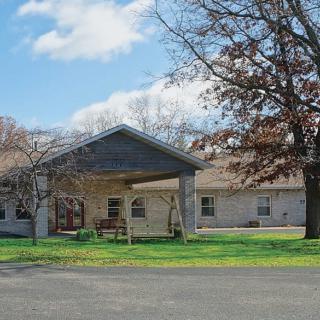
Our House Senior Living - Wisconsin Rapids Assisted Care
$3,300 / month4.5 miles away -
from -$500 / mo
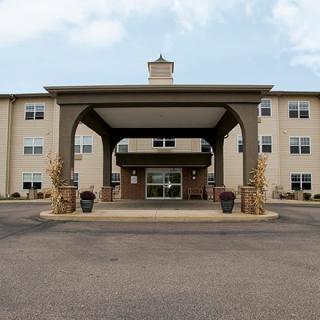
Dimensions Living Stevens Point
$2,300 to $4,400 / month22.2 miles away -
from +$385 / mo

River View Lodge Assisted Living
$3,185 to $3,825 / month17.8 miles away -
from -$230 / mo
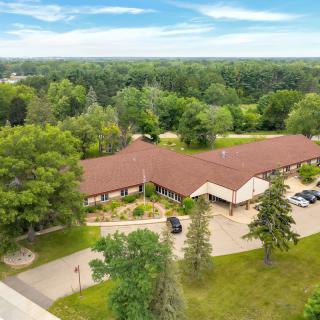
Wellington Place at Whiting
$2,570 to $3,750 / month18.9 miles away -
from +$120 / mo
Wellington Place Biron
$2,920 to $3,900 / month7.4 miles away
Overall Review of Hilltop Estates
Pros
 The team at Hilltop did an outstanding job caring for residents, with a great facility and caring people.
- Hilltop offers great local memory care.
- A majority of Hilltop's staff are friendly and have positive attitudes, delivering excellent care for Alzheimer's patients.
- Hilltop is a small, family-owned company, and that shows through in the care.
- Families fully trust Hilltop's care for their loved ones.
Review
Hilltop Estates in Wisconsin Rapids is best suited for families seeking a small, intimate memory-care setting where care teams stay closely connected to residents. The community stands out when the priority is dementia-specific attention delivered by a hands-on, family-owned operator that emphasizes warmth, continuity, and trust. It is especially well-matched for loved ones with Alzheimer’s or related dementias who respond to caregivers who know their routines, preferences, and histories, and for families that want transparent, local care that feels accountable rather than distant.
Those weighing alternatives should recognize that Hilltop’s strengths come with corresponding trade-offs. If a resident requires a larger campus, a broader menu of specialized therapies, on-site registered nursing coverage around the clock, or a more diversified slate of activities and outings, bigger operators may deliver more breadth and scheduling flexibility. For families prioritizing aggressive clinical oversight, expansive programming across multiple communities, or highly structured QA processes, Hilltop Estates may feel limited by its smaller footprint.
The core advantages, caring, friendly staff and a dementia-centered focus, tend to offset the potential drawbacks through personalized, relationship-driven care. Staff members are described as consistently positive and dedicated, with a strong emphasis on Alzheimer’s-specific caregiving. The small, family-owned model tends to translate into higher accessibility to leadership, clearer lines of communication, and a willingness to tailor routines and care plans. In practice, this translates to residents who are known by name, routines that feel stable, and families who can participate in decision-making with less bureaucratic friction than larger chains.
From the qualitative feedback available, Hilltop Estates earns high marks for its local, memory-care orientation. One reviewer commends the team for an outstanding job with their mother, noting the facility as a place “with nice and caring people.” Another highlights the strength of local memory care and the staff’s positive attitudes, while a third underscores the facility’s capacity to specialize in caring for dementia patients. Taken together, these points create a portrait of a community that delivers dependable day-to-day caregiving, anticipates needs, and builds a sense of trust that many families seek in memory care.
However, the mix of ratings suggests there are moments when expectations diverge. A 3-star review hints at occasional gaps, likely in areas such as consistency, responsiveness, or available programming, common considerations in smaller, family-operated operations where resources are more finite and staffing can fluctuate. Prospective families should proactively explore this by asking about shift-by-shift staffing levels, access to experienced dementia caregivers during evenings and weekends, and the cadence of activity programming. Touring during different times of day and on different days can reveal whether the care environment remains calm, engaged, and well-supervised outside typical peak hours.
In practical terms, families evaluating Hilltop Estates should arrive prepared to gauge several specifics. Inquire about staff-to-resident ratios across day and night, the training trajectory for dementia care, and how care plans are developed and updated with family input. Request a transparent breakdown of daily programming for memory-care residents, including how social, cognitive, and physical activities are structured, and how mobility or behavioral challenges are managed in real time. Also probe the environment for safety features, such as secure wandering controls, as well as meal quality and overall nutritional planning, since these factors directly influence daily well-being. A direct, on-site conversation with frontline caregivers and the administrator can reveal how approachable leadership remains when concerns arise.
Bottom line: Hilltop Estates is a compelling choice for families prioritizing dementia-focused, intimate care delivered by a trustworthy, hands-on operator. Its strengths, committed, personable staff; a clear emphasis on Alzheimer’s-specific needs; and the advantages of a small, locally owned operation, create a care environment where residents are known, plans are personalized, and family involvement feels meaningful. For families needing expansive clinical services, a broader activity calendar, or the scale of a larger campus, alternatives may deliver more breadth, but with a trade-off in personal touch and direct oversight. Hilltop Estates excels where continuity, trust, and individualized dementia care are the top criteria, and that clarity of purpose should drive the decision for those families.
 6 resident community capacity
 Assisted Living
 Cable or satellite TV
 Dining room
 Fully furnished
 Garden
 Housekeeping services
 Move-in coordination
 Outdoor space
 Telephone
 Wi-Fi/high-speed internet available
 24-hour supervision
 Activities of daily living assistance
 Assistance with bathing
 Assistance with dressing
 Assistance with transfers
 Diabetes diet
 Meal preparation and service
 Medication management
 Special dietary restrictions
 Transportation arrangement (medical)
 Transportation to doctors appointments


 Assisted Living Expenses and Long-Term Care Insurance: A Comprehensive Exploration
 Securing Financial Support for Assisted Living: A Comprehensive Overview
 Social Security Benefits and Assisted Living: Navigating Options Across the U.S.