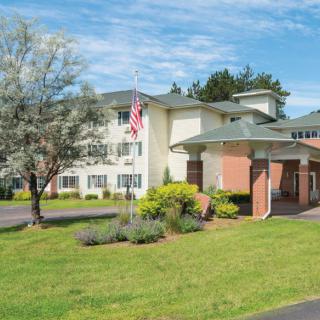
Townline Road Residence is an assisted living community in Wautoma, WI.
Information last verified:
130 South Townline Road, Wautoma, WI 54982
For more information about senior living options: (866) 208-4318
3.1 from 99 reviews
5 stars
45
4 stars
6
3 stars
3
2 stars
8
1 stars
37
Overall Review of Townline Road Residence
common20 reviews mention this
Staff kindness shows up repeatedly
Many residents describe staff as friendly, kind, and respectful.
Across multiple reviews, residents describe staff who treat them with respect and take the time to explain or listen. Several people also mention politeness at the front desk and a professional, caring approach during appointments. A few reviews do include sharp negative experiences, so the pattern of kindness isn’t universal, but it comes through often.
caveat12 reviews mention this
Getting appointments can be difficult
A recurring concern is trouble scheduling and reaching the clinic.
Several reviews complain about not being able to get through by phone, difficulty scheduling, or having long waits for openings. Others describe canceled or delayed visits, including instances where people arrived on time but were seen much later. A few reviews also point to frustration with how appointment logistics are handled, including call-backs not happening.
caveat10 reviews mention this
Care quality feels inconsistent
Reviews describe a wide range of experiences with the quality of care.
Some residents praise care as gentle and thorough, saying providers explain things clearly and listen to concerns. Others report experiences they consider harmful or poorly handled, including claims of inadequate preparation, miscommunication, or needing major follow-up elsewhere. Taken together, reviews suggest outcomes and experiences vary from person to person.
common6 reviews mention this
Care teams are described as professional
Multiple residents mention professionalism and clean, organized spaces.
Some reviews specifically call out professionalism, cleanliness, and attention to health and safety. Others describe staff working in a well-run way during visits, including being on top of what’s happening in the appointment. While not every review is positive, a noticeable subset focuses on organization and professional conduct.
differentiator2 reviews mention this
Meal and diet help are offered
The community offers diabetes- and special-diet support.
Even in the set of reviews provided, the structured care plan includes diet-related support such as diabetes diet and special dietary restrictions. That aligns with residents being able to receive meal preparation and service tied to specific needs and restrictions. This isn’t a theme residents discuss heavily in the reviews, but it is part of what the community supports.
How we summarize
Counts show how many written reviews mention each theme; a review can touch several themes, and only frequently mentioned themes are displayed.
Features
Housing
8 resident community capacity
Types of Care
Assisted Living
Amenities
Cable or satellite TV
Dining room
Fully furnished
Garden
Housekeeping services
Move-in coordination
Outdoor space
Telephone
Wi-Fi/high-speed internet available
Care Services
24-hour supervision
Activities of daily living assistance
Assistance with bathing
Assistance with dressing
Assistance with transfers
Coordination with health care providers
Diabetes diet
Meal preparation and service
Medication management
Special dietary restrictions
Transportation arrangement (medical)
Transportation to doctors appointments
Dining
Diabetes diet
Special dietary restrictions
Activities
Community-sponsored activities
Scheduled daily activities
Nearby Places of Interest
Restaurants
Subway (0.1 miles)
Billy B's Bar (0.1 miles)
A&W Restaurant (0.3 miles)
Christianos Pizza (0.6 miles)
Taco John's (0.6 miles)
La Playita (0.9 miles)
The Silvercryst Supper Club and Resort (2.5 miles)
Places of Worship
Hope Lutheran Church (0.3 miles)
Trinity Lutheran Church (0.5 miles)
Faith Baptist Church (0.9 miles)
St Joseph Catholic Church (1 miles)
Church of Christ of Wautoma (1.3 miles)
Providence Bible Church (4.6 miles)
Evanglcal Lthern Church (4.9 miles)
Physicians
Dermatology Associates of Wisconsin, S.C. (0.3 miles)
Family Health La Clinica - Wic (0.4 miles)
Family Health La Clinica (0.4 miles)
Sawyer Creek Orthodontics (0.8 miles)
Trochinski, Amber M-Chn Medical Center (1 miles)
Community Health Network (1 miles)
Waushara Family Physicians (7.9 miles)
Pharmacies
Aurora Pharmacy (0.3 miles)
Atrium (0.5 miles)
Bentley Pharmacy (16.8 miles)
Health Mart Pharmacy (16.8 miles)
Bentley Pharmacy (17 miles)
Parks
Waushara County Parks Department (0.3 miles)
Bird Creek Park (1.4 miles)
Redgranite Quarry Park (9.1 miles)
Chaffee Creek State Fishery (12.4 miles)
Pioneer Splash Park (16.3 miles)
Forsyth Park (17.3 miles)
Cafes
Milty-Wilty Drive Inn (1.4 miles)
Mt Morris Mill Coffee Shop (5.1 miles)
Rock Coffee House And (9.1 miles)
Crossroads Cafe (10.9 miles)
Royal Cafe (12.3 miles)
Red Hill Royal Cafe (12.5 miles)
Renards European Bakeshop (17 miles)
Transportation
Wautoma Municipal Airport (Y50) (2.2 miles)
Wautoma Airport (2.2 miles)
U-Haul Neighborhood Dealer (8.8 miles)
Wild Rose Airport Association (10.1 miles)
Four Corners Sportsman's Pride Taxidermy (14.6 miles)
Townline Road Residence is located at 130 South Townline Road, Wautoma, WI 54982 in Waushara County, Wisconsin
Nearby Communities
Silver Lake Haven
Wautoma, WI
3 from 2 reviews
Small, intimate setting with memory care and full services.
Horizon House
Wautoma, WI
4.3 from 4 reviews
Comprehensive care and amenities (24-hour supervision, medication management, diabetes-friendly dining, housekeeping, transportation) in a fully furnished setting with outdoor space.
The guide highlights the importance of assisted living facilities for aging veterans needing daily support, discusses unique challenges they face, and outlines available financial assistance from the VA, including the Aid and Attendance program. It emphasizes understanding eligibility criteria and navigating the VA system to access necessary benefits effectively.
The article compares assisted living and skilled nursing facilities, detailing their differing levels of assistance, medical support, cost structures, and day-to-day experiences. It emphasizes that assisted living is for those needing help with daily activities while maintaining independence, whereas skilled nursing facilities provide intensive medical care with 24-hour staff supervision.
The transition from assisted living to skilled nursing care is often prompted by complex medical needs that assisted living cannot meet, with key indicators including frequent health declines, increased falls, severe memory issues, and caregiver burnout. Families should recognize these signs early to discuss options with healthcare providers and prepare for the emotional and logistical aspects of moving to a facility that offers comprehensive medical support.
Get PricingAsk A QuestionSchedule A TourContact Senior Advisor
By clicking submit, you agree to our Partner's Terms of Use. You
also consent to receive calls and texts, which may be autodialed, from our Partner. Your consent is not a condition to
using our Partner's service. Please visit our Partner's Privacy Policy for information about their privacy practices.

 8 resident community capacity
 Assisted Living
 Cable or satellite TV
 Dining room
 Fully furnished
 Garden
 Housekeeping services
 Move-in coordination
 Outdoor space
 Telephone
 Wi-Fi/high-speed internet available
 24-hour supervision
 Activities of daily living assistance
 Assistance with bathing
 Assistance with dressing
 Assistance with transfers
 Diabetes diet
 Meal preparation and service
 Medication management
 Special dietary restrictions
 Transportation arrangement (medical)
 Transportation to doctors appointments
 Small, intimate setting with memory care and full services.
 Assisted Living Support for Veterans: A Complete and Detailed Overview
 Exploring the Contrasts Between Assisted Living and Skilled Nursing
 8 Key Indicators That Suggest It May Be Time to Transition from Assisted Living to Skilled Nursing Care