

2830 26th Ave W, Seattle, WA 98199
To contact a resident: (206) 465-9441
For more information about senior living options: (866) 208-4318
Pearly Jones Home Costs & Pricing
At Pearly Jones Home, the monthly cost for a private room is $6,300, which positions it above both the average rates in King County and the broader state of Washington. In comparison, King County's average for private rooms stands at $5,034, while the state level reflects a lower average of $4,772. This suggests that Pearly Jones Home offers premium services or amenities that justify its higher price point. For families considering long-term care options, understanding these costs in relation to regional averages can be crucial in making informed decisions about their loved ones' care and living arrangements.
| Floor plans | Pearly Jones Home | King County | Washington |
|---|---|---|---|
| Private | $6,300 | $5,034 | $4,774 |
Senior living communities with a similar price nearby
-
from +$200 / mo

The Promised Land
$6,500 / month11.7 miles away -
from -$300 / mo

Home Away From Home LLC
$6,000 to $7,000 / month15.3 miles away -
About the same

The Park at Belle Harbour
$6,400 to $15,500 / month9.6 miles away -
from -$300 / mo

Elderly Home Care
$6,000 to $8,000 / month10.1 miles away -
from -$550 / mo

Fieldstone Rolling Bay and Fieldstone Memory Care
$5,750 to $8,895 / month5.3 miles away
Overall Review of Pearly Jones Home
Pros
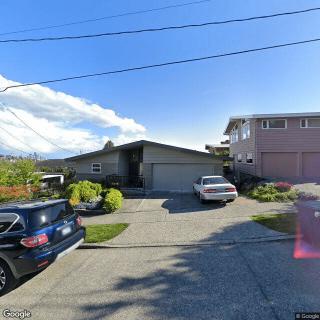
 The area around Grace Caring Home is very nice and offers a beautiful view.
- The new owner has hired wonderful, caring people who treat residents with respect.
- The home is always spotlessly clean and has a beautiful view of downtown Seattle, plus an outside patio for visiting.
- Its six-resident size makes it feel like a home full of family.
- The new owner enhances this feeling with holiday meals for all family members.
- The facility is lovely, and the caregivers are caring; the owners are wonderful, loving people.
- Visitors are welcome daily and can share meals with their loved ones.
- The home truly lives up to its name, offering fabulous views, a nearly new facility in a great location, vans for outside getaways, and experienced staff.
Cons
 The family had a very disappointing and frustrating experience with the home, which led to the mother being hospitalized for severe dehydration and being over-medicated.
- At arrival, there was only one caregiver who was busy with other residents, leaving inadequate supervision during the transition.
- The home obtained a prescription for Lorazepam without the father's consent and administered it in a high dose around the clock.
- The mother became barely responsive and was hospitalized the following day.
- A formal complaint was filed with WA State Adult Protective Services.
Review
Pearly Jones Home is best suited for families seeking a genuinely intimate, home-like atmosphere in Seattle where a small number of residents allows for highly personalized care. The strongest fit is for seniors who value regular family involvement, visible caregiver continuity, and a setting that feels less like a facility and more like a residence with a built-in support network. Reviewers repeatedly highlight a six-resident model, spotlessly clean surroundings, a beautiful view of downtown Seattle, and an inviting outdoor patio that makes visits feel natural and unforced. The combination of a calm location, a strong emphasis on hospitality, and staff who are accessible and invested tends to translate into meaningful daily interactions and predictable routines.
Those who should consider alternatives are families managing complex medical needs or dementia at a higher level than what a small, intimate home typically provides. The most cautionary notes in the paired reviews involve safety and medical oversight: incidents suggesting insufficient on-site coverage or lapses in care can have serious consequences, including dehydration, medication missteps, and injurious falls. For a resident whose care plan requires constant clinical monitoring, strict medication governance, or a robust, formalized incident-response protocol, a larger community with more structured nursing support and compliance processes may offer greater peace of mind. In short, there is a legitimate reason to compare options that feature stronger regulatory oversight and more comprehensive levels of memory care.
The primary pros, personalized attention, clean and welcoming spaces, and a homelike culture, offer meaningful offsets to the main concerns when leadership and staffing are solid. A small resident group naturally fosters closer relationships, easier family communication, and the ability for care teams to tailor routines to individual preferences. Positive indicators include strong staff warmth, ongoing collaboration with residents’ physicians, opportunities for family meals, and the availability of practical conveniences like outings, transportation, and assistive devices such as Hoyer lifts. When a home demonstrates genuine pride in its environment and a transparent, collaborative approach with families, the upside of a small-scale setting can outweigh the potential downsides, provided oversight remains steady and proactive.
That said, prospective families should verify several practical details before deciding. Observe staff presence during tours and how quickly questions are answered; ask who remains on site during peak hours and how responsible parties are notified if a medical issue arises. Inquire about medication protocols, how decisions are documented, and what safeguards are in place to prevent improper prescriptions or dosing. Confirm the continuity of leadership, whether the owner or a dedicated manager is consistently available, and request current references from families with residents who have stayed beyond a few months. Check for tangible safety features (grabs rails, accessible exits, appropriate lifting equipment) and confirm the facility’s process for evaluating and updating care plans with the resident’s PCP.
In comparing Pearly Jones Home to other Seattle options, the decision hinges on fit versus risk tolerance. If the priority is an intimate, family-style setting with high staff engagement, frequent family meals, and a scenic, homelike daily rhythm, this market segment can deliver substantial value. If the senior requires more predictable, clinical oversight, or has dementia or complex medical needs that demand rigorous medication management and rapid crisis response, a larger community with dedicated memory-care programming and a stronger regulatory footprint may be the safer bet. The most prudent path is a thorough, symptom-to-care conversation during tours, with concrete questions about current staffing ratios, owner involvement, incident history, and the facility’s most recent quality measures.
Ultimately, Pearly Jones Home can be a compelling choice for families who prize warmth, accessibility, and a genuinely homey feel, coupled with attentive caregivers who can integrate daily life with medical care. The credible caveat, rooted in recent mixed experiences, is to demand transparent, ongoing proof of safety and accountability from the leadership and care teams. When current management demonstrates consistent attentiveness, rigorous safety protocols, and a proven track record of listening and improving after concerns arise, the decision is straightforward: this community can be a strong match for seniors who thrive in a small, connected environment. If not, exploring alternatives with deeper clinical resources is a wise, responsible course.
 Board and Care Home
 Cats allowed
 Dogs allowed
 Activities off-site
 Beautician on-site
 Devotional services off-site
 Indoor common areas
 Outdoor common areas
 Private
 Private bathrooms
 Respite or short term stays offered
 Swimming pool / hot tub
 Wheelchair accessible showers
 Seattle-Tacoma International (14 miles away)
 Diabetic care
 High acuity care
 Incontinence care
 Medication management
 Meals provided






 8 Essential Assistive Devices for Older Adults
 Navigating the Financial Road to Nursing Home Care: In-Depth Guidance and Resources
 Supportive Employee Benefits That Help Caregivers Attain Better Work-Life Harmony