
114 W Magnolia St #109, Bellingham, WA 98225
To contact a resident: (360) 392-3934
For more information about senior living options: (866) 208-4318
Right at Home Costs & Pricing
Right at Home offers a range of service options that reflect competitive pricing in the context of Whatcom County and the broader Washington state. For private rooms, Right at Home charges $3,795 per month, significantly more affordable than the local average of $10,700 but still below the state-wide figure of $4,772. The studio option is priced at $4,795, which exceeds both Whatcom County's average of $3,604 and Washington state's average of $4,126. Meanwhile, the one-bedroom accommodation stands out with a cost of $7,295 - a sharp contrast to Whatcom County's lower rate of $3,801 and Washington's statewide average of $4,632. This pricing structure highlights both affordability and value within specific room types while reflecting regional market dynamics.
| Floor plans | Right at Home | Whatcom County | Washington |
|---|---|---|---|
| Private | $3,795 | $10,700 | $4,774 |
| Studio | $4,795 | $3,604 | $4,128 |
| 1 Bedroom | $7,295 | $3,801 | $4,634 |
Senior living communities with a similar price nearby
-
from -$745 / mo

The Willows Bellingham
$3,050 to $6,100 / month1.6 miles away -
from -$595 / mo
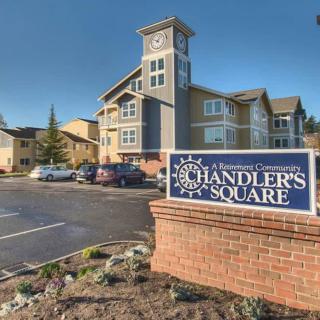
Chandler's Square
$3,200 to $4,600 / month17.7 miles away -
About the same

Rosewood Villa
$3,780 to $4,410 / month1.7 miles away -
from -$295 / mo

Among Friends
$3,500 to $4,000 / month13.5 miles away -
from -$420 / mo

La Conner Retirement Inn
$3,375 to $4,065 / month24.8 miles away
Overall Review of Right at Home
Pros
 Right at Home Northwest is life-saving for families, helping loved ones stay safely at home.
 - The caregivers are compassionate, professional, and respectful, often becoming like family.
- The office and scheduling teams are friendly, responsive, and dedicated to matching caregivers with clients’ needs.
- The owners, Sharon and Steve Morris, are incredible community-minded leaders delivering client-centered care.
- The agency is known for reliable, consistent caregiving and for listening to clients and families with sensitivity.
- Right at Home Northwest ensures safety and quality of life, even during emergencies and health crises.
- Caregivers assist with practical tasks and become trusted companions for their clients.
- Families report peace of mind knowing their loved ones receive dignified, at-home care.
Cons
 The agency was described as negligent and incompetent, with a reviewer willing to rate it below one star.
- Caregivers allegedly fell asleep on night shifts, forcing the father to repeatedly call out to wake them.
- There were reports of caregivers arriving late, being inconsistent, and lacking clear expectations and policies, including eating the father’s food.
- Instances of caregivers leaving mid-shift or not showing up at all, and not cleaning up after themselves, were noted.
- Employees smoked on the premises and left cigarette butts on the porch.
- A caregiver repeatedly asked for smoke breaks and made a disconcerting comment about most of her clients having dementia; the agency still sent the smoker back.
- A caregiver dropped the father during a restroom assist, causing bleeding and bruises, and afterward smoked during breaks while ignoring him; there was no adequate follow-up or apology from the owner.
Review
This community is best suited for families who want to keep a loved one safely at home in Bellingham and who value a highly relational, caregiver-matching approach backed by a proactive office team. Right at Home Northwest tends to work best for seniors who can thrive with long-running caregiver relationships, predictable scheduling, and help with a broad range of daily tasks, housekeeping, transportation to appointments, and companionship included, without a sudden move to a facility. It is especially appealing to families who appreciate a hands-on, community-oriented leadership style and who want a provider that treats at-home care as a long-term partnership rather than a one-off service.
Those who may want to consider alternatives are primarily families with critical, high-acuity medical needs that require constant, clinician-level oversight or near-perfect reliability in staffing. If the elder’s safety hinges on absolute consistency in coverage, or if past experiences with caregiver turnover and unplanned gaps are non-negotiable concerns, it is prudent to scrutinize other options. Questions to prioritize include whether ROM or other specialized therapies can be performed as needed, how aggressively the agency enforces on-call coverage and back-up staffing, and how leadership responds when problems arise. A few reviews flag serious lapses that could be unacceptable for someone with complex needs or a prior history of falls, poor shift coverage, or questionable staff behavior; these readers should press for concrete safeguards or alternatives with a cleaner safety record.
The core strengths of Right at Home Northwest lie in its people-first approach and the ability to deliver consistent, hands-on assistance across multiple domains. Families repeatedly praise the office staff for being accessible, friendly, and motivated to place the right caregiver with the right client. The agency’s capacity to scale care, ranging from a few hours daily to a five-day-a-week schedule with multiple caregivers, offers real flexibility for changing needs and life events. Caregivers are described as competent, compassionate, and respectful, with many families noting that their loved ones respond well to the companionship and practical support provided. In emergencies, the provider has demonstrated the ability to pivot quickly, arranging live-in coverage or mobile support as needed, a crucial feature for aging in place. The sense that the team becomes a reliable extension of the family, one reviewer even calling a caregiver “another member of the family”, is a powerful offset to the routine tasks of daily living.
However, the most alarming counterpoint comes from accounts of neglectful or unsafe care. Allegations range from caregivers falling asleep on night shifts and arriving late or leaving mid-shift, to problems with supervision, accountability, and basic respect for the elder’s space and belongings. There are also explicit concerns about caregiver behavior, smoking on the premises, taking food, or making disconcerting comments about dementia, plus a troubling incident in which a fall occurred, followed by a perceived lack of accountability from leadership. A recurring theme is inconsistent follow-through and perceived indifference from the owner in response to written concerns. Taken alone, many of these issues could be manageable with tighter policies and stronger oversight; taken together, they illuminate real risk factors, especially for a client with frailty, dementia, or a history of falls. The pros of care continuity and responsive office support do not fully counterbalance these red flags for families prioritizing safety and flawless reliability.
Practically, families should bring a discerning lens to the evaluation. Investigate the agency’s caregiver‑matching process and demand a written care plan with clearly defined tasks, supervision levels, and back‑up arrangements. Ask for real-world safeguards: explicit shift coverage policies, documented consequences for noncompliance, and a predictable escalation path when concerns arise. Request to meet multiple caregivers during a trial period, review recent references beyond the marketing material, and verify each caregiver’s training, background checks, and alignment with the specific needs of the elder, including any memory-care or mobility requirements. Direct conversations with leadership about how on-call gaps are handled, how incidents are investigated, and how families are kept informed can reveal whether the agency’s claimed client-centered philosophy translates into reliable day-to-day practice.
In the end, Right at Home Northwest stands as a robust option for families who prize long-term, home-based care with strong caregiver matching and a supportive office structure. It is a compelling choice for those who want to stay in the familiar surroundings of home, who value flexibility, and who trust in a relationship-driven provider to navigate day-to-day needs with warmth and competence. Yet the caution is real: when safety, consistent staffing, and thorough accountability are non-negotiables, this agency requires a rigorous due diligence process. For some, the positives will clearly outweigh any concerns, and the “right caregivers, right way, right reasons” ethos will shine through; for others, especially where prior red flags persist or where steady, flawless oversight is essential, exploring alternatives with a proven safety track record may be the wiser path. The decision should hinge on the elder’s specific medical complexity, the family’s tolerance for risk, and the agency’s demonstrated ability to translate its people-first promises into unwavering daily reliability.
 Bellingham International (4 miles away)



 Recognizing the Journey: Understanding and Navigating Anticipatory Grief
 Encouraging Participation in Adult Day Care: A Guide to Supporting a Hesitant Parent
 Comprehensive Exploration of Living Wills and Other Advance Directives