
3350 West 7800 South, West Jordan, UT 84088
For more information about senior living options: (866) 208-4318
Overall Review of West Jordan Care Center
Pros
 West Jordan Care Center is an amazing facility for individuals with disability.
- The staff is extremely knowledgeable and caring.
- They all seem to really love their job and show up every day going the extra mile to make residents' days better.
- For those with intellectual disabilities, this place is more than a care facility, it’s a home.
- The staff are amazing and friendly, and it’s clear that their work is more than a job to them—it’s a passion.
- Highly recommended facility for individuals with disabilities; staff do a fantastic job with the residents.
- The care center staff are amazing, constantly growing and changing to meet clients' needs.
- West Jordan Care Center is the best facility for the disabled we have found among the many we have toured.
Cons
 The front desk staff have no customer service skills and respond to questions in a very bad mood.
- A reviewer notes it is very difficult to visit because the head staff limit visits to one hour per week and do not allow checking on him by phone, expressing disappointment in his care.
Review
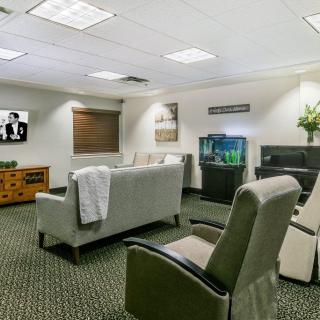
West Jordan Care Center is best suited for adults with intellectual or developmental disabilities who want a home-like residential setting where compassionate, long-tenured staff provide daily support, structured activities, and a sense of belonging. Family members repeatedly describe the community as more than a facility, a place where residents are treated with kindness, patience, and genuine care. The atmosphere is anchored by staff who seem to love their work, which translates into residents who appear happy and engaged. The environment supports social interaction and personal growth, with daily activities designed to keep residents involved and connected. The grounds reinforce this impression: a fresh, well-kept campus with a secure, fenced grassy area and a walking path that invites residents to move and explore safely. For families seeking consistent, attentive care in a setting that feels like home, this community stands out as a practical, dependable option.
That said, there are clear reasons some families might want to consider alternatives. The reviews reveal uneven experiences around administration and access. While many families praise the care and the warmth of the staff, there are notable concerns about front-desk demeanor and responsiveness, with at least one account describing the front desk as unfriendly or unhelpful. More consequential for some families are visitation and privacy realities: a few accounts describe limited visiting time and restrictions that can make private check-ins or sensitive conversations challenging. For those who prioritize open, easily accessible communication with leadership and unfettered family involvement, these patterns can be meaningful enough to explore other options before committing. The center’s strength is real, but it is not universally aligned with every family’s operating preferences.
The strongest pros, staff expertise, devotion, and a genuine sense of community, tend to offset many practical drawbacks. Staff are described as highly knowledgeable, caring, and devoted, with a palpable passion for helping residents learn and reach their potential. This is not a generic caregiving environment; it is characterized by residents who stay active and feel supported, with leaders and caregivers who stay involved over time. The care team’s reliability translates into stable routines, predictable support, and meaningful social engagement for residents. Families note solid nursing care, collaborative problem-solving, and a culture where employees stay long enough to know individual residents well. In short, the infectious positivity of the staff and the steady, respectful approach to daily life can make even challenging days feel manageable for residents and reassuring for families.
The main cons, when they surface, are practical and situational rather than philosophical. The most cited drawback is a perception of uneven administrative accessibility. On occasion, administrative and front-desk interactions can feel transactional or less responsive than desired, and one family experienced significant frustration with visitation rules that limited private check-ins. These experiences underscore an important reality: even in a strong care environment, how well families are able to connect with leadership and how visitation is managed can color the perceived quality of care. It is precisely these operational aspects, clarity, consistency, and a sense of partnership with families, that determine whether the care feels seamless or slightly disjointed in day-to-day life. For families evaluating West Jordan Care Center, it is wise to appraise these processes during tours and ask pointed questions about access, communication, and how concerns are escalated.
On balance, the community is a solid fit for those prioritizing compassionate, disability-focused care in a home-like milieu with active daily life and stable management. The pros, attentive, loving staff; a culture that treats residents with dignity; active social programming; and a setting that feels welcoming, usually outweigh the cons, which tend to involve administrative touchpoints rather than the core caregiving itself. Prospective residents’ families should plan to verify visitation policies upfront, gauge how responsive leadership is to family inquiries, and observe how staff interact with residents in real time. If the need is for a place where caregivers instinctively go the extra mile, where residents consistently appear engaged and cared for, and where the environment supports social connection and personal growth, West Jordan Care Center delivers.
Ultimately, the decision comes down to values and priorities. For families who value a warm, person-centered atmosphere, where staff continuity and resident engagement are tangible daily strengths, this community represents a compelling choice. It is important, however, to enter with clear expectations about administrative accessibility and visitation norms. If privacy, flexible visiting hours, and direct, proactive communication with leadership are non-negotiable, those criteria should be verified with leadership before committing. For families prepared to embrace a home-like setting with remarkable frontline care and a robust activity calendar, and who are comfortable navigating occasional administrative quirks, the West Jordan Care Center offers a practical, trustworthy pathway to a stable, supportive life for a loved one with disabilities.
 82 resident community capacity
 Assisted Living
 Memory Care
 Air-conditioning
 Beauty salon
 Cable or satellite TV
 Computer center
 Dining room
 Fitness room
 Fully furnished
 Gaming room
 Garden
 Housekeeping services
 Kitchenette
 Move-in coordination
 Outdoor space
 Private bathrooms
 Restaurant-style dining
 Small library
 Telephone
 Wellness center
 Wi-Fi/high-speed internet available
 Salt Lake City International (12 miles away)
 Community operated transportation
 12-16 hour nursing
 24-hour call system
 Activities of daily living assistance
 Assistance with bathing
 Assistance with dressing
 Assistance with transfers
 Diabetes diet
 Medication management
 Mental wellness program
 Special dietary restrictions
 Concierge services
 Planned day trips






 How to Communicate with a Loved One Living with Dementia: 10 Supportive Strategies
 Comprehensive Guide to VA Nursing Homes: A Crucial Long-Term Care Resource for Veterans
 Estimating the Expenses of At-Home Dementia Care: A Detailed Exploration