

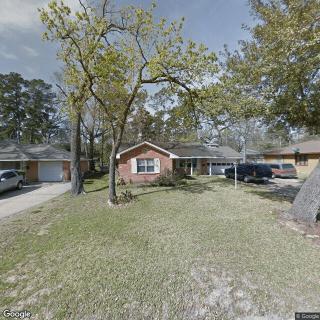
25914 Oak Ridge Drive, Spring, TX 77380
To contact a resident: (832) 677-2901
For more information about senior living options: (866) 208-4318
Grace Memory Care Costs & Pricing
Grace Memory Care offers competitive pricing for its memory care services compared to the broader market in Montgomery County and across Texas. For a semi-private room, residents pay $2,500 per month, which is significantly lower than the county average of $3,664 and the state average of $3,680. Similarly, for private rooms, Grace's fee of $3,000 is more affordable than both the county's average of $4,177 and the state's average of $4,096. This thoughtful pricing structure positions Grace Memory Care as a cost-effective option without compromising on quality care for individuals with memory-related challenges.
| Floor plans | Grace Memory Care | Montgomery County | Texas |
|---|---|---|---|
| Semi-Private | $2,500 | $3,664 | $3,680 |
| Private | $3,000 | $4,177 | $4,096 |
Senior living communities with a similar price nearby
-
About the same
Pattie Duke's Personal Care
$2,500 / month13.0 miles away -
About the same

Gina's Angels Private Care
$2,500 to $3,500 / month11.7 miles away -
from +$300 / mo

Atascocita Seniors Care Home
$2,800 to $3,300 / month18.1 miles away -
from +$300 / mo

Atascocita Senior Care Home, Inc
$2,800 to $3,450 / month18.1 miles away -
About the same

Northgate Assisted Living
$2,500 to $3,000 / month10.0 miles away
Overall Review of Grace Memory Care
Pros
 Grace Residential Care Home is a wonderful blessing for families seeking quality care.
- The staff are loyal, professional, and there is almost no turnover.
- Lidia and the team bring extensive experience and thorough care in all activities.
- Meals are prepared fresh daily and meet residents’ dietary needs.
- Families experience peace of mind thanks to excellent communication and attentive care.
- Residents are treated like family, with individualized attention and a home-like atmosphere.
- The facility is clean, well-kept, and feels warm and welcoming.
- Lidia’s hands-on leadership and genuine care consistently go above and beyond.
Cons
 They had terrible experiences at other assisted living places.
- Their experiences at the past two memory care facilities were disappointing at best.
- They had a bad experience at a different house, which made Grace stand out.
- Before Grace, they were receiving daily calls about problems from the facility or their loved one.
Review
Grace Residential Care Home in Spring, Texas is best suited for families seeking a small, intimate memory-care oriented setting where residents are treated like family. This community shines when a care plan relies on daily consistency, deep relational caregiving, and steady, transparent family communication. It is a standout choice for loved ones with dementia or cognitive decline who benefit from a tightly controlled, home-like environment and routines crafted by experienced, dedicated caregivers who know each resident by name, history, and preferences. The model favors stability and continuity, with a hands-on owner and a team built to stay with residents through the long arc of memory care.
If the priority is scale, breadth of medical services, or a formal campus feel, alternatives deserve consideration. Those requiring around-the-clock RN coverage, advanced wound care, or a wide array of on-site therapies may find Grace’s footprint too intimate to meet every medical or rehabilitative need. Families looking for a facility with dozens of residents, expansive common areas, or a comprehensive memory-care unit with structured, hospital-like programming may prefer larger operators. Grace’s strength lies in warmth and attentiveness, not in sheer size or clinical breadth.
The most compelling advantages are practical and consistently evident. Staff loyalty and remarkably low turnover mean familiar faces deliver reliable, personalized care day after day. Leadership is visibly involved; Lidia’s hands-on approach drives meticulous planning, clear family updates, and responsive problem-solving. Food quality stands out, meals prepared fresh each day, and activities are thoughtfully chosen to align with residents’ histories and preferences. The home-like atmosphere, cleanliness, and a garden that invites quiet moments with a loved one amplify the sense of safety and belonging. Across reviews, these elements coalesce into a reliable, emotionally supported living experience.
That said, the principal trade-off is scale. The residence operates with about a dozen rooms, which translates into a quieter, less caffeinated pace and fewer on-site conveniences typical of larger facilities. Yet the pros, consistency, personalized attention, and proactive communication, more than compensate for this limitation. The staff’s patience and adaptability are repeatedly highlighted, especially when residents go through mood shifts or cognitive challenges; families repeatedly note that care plans are adjusted with care and that updates arrive regularly, reducing uncertainty and stress.
Grace is a clear recommendation for families who want dignity, stability, and a deeply personal touch in memory care. It suits residents who thrive on regular engagement, intimate daily oversight, and a community that treats each person as an individual with a unique history. For those whose loved ones require higher-acuity medical management, frequent hospital transfers, or more expansive rehabilitative services, alternatives that offer broader clinical resources will likely be the prudent path. The decision hinges on whether the priority is “home away from home” intimacy or broader medical capacity.
To move forward, arrange an in-person evaluation focused on real-world daily life. Observe caregiver interactions, ask about staff-to-resident ratios, daily schedules, and how care plans are updated as needs evolve. Inquire about dietary accommodations, end-of-life support, and the mechanisms for keeping family informed. Request a sample activity calendar and opportunities for family participation to gauge how engagement aligns with personal history and interests. If the fit feels right, warmth, continuity, and tailored attention respond to the resident’s rhythm, Grace becomes not just a placement but a trusted home. If not, a larger setting with more clinical depth remains the prudent alternative.
 Board and Care Home
 Private
 George Bush Intercontinental (13 miles away)
 Ambulatory care
 Diabetic care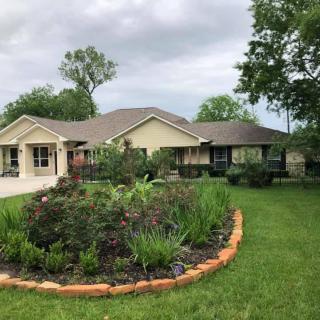







 Understanding Hospice Care at Home: Comprehensive Services, Key Benefits, and Eligibility
 Understanding the Full Cost of 24/7 In-Home Care: A Detailed Overview
 Exploring the World of Home Health Nurses: Qualifications, Roles, and Hiring Tips