

13622 Stern Creek Lane, Houston, TX 77044
For more information about senior living options: (866) 208-4318
Lakeshore Personal Care Homes Costs & Pricing
Lakeshore Personal Care Homes offers competitive pricing for its residents, with monthly costs that are notably lower than both the average rates in Harris County and across Texas. For a semi-private room, Lakeshore charges $3,000, which is approximately 15% less than the Harris County average of $3,518 and about 19% lower than the state average of $3,680. Similarly, the cost for a private room at Lakeshore is set at $3,500, providing savings of nearly 7% compared to the Harris County rate of $3,784 and around 14.5% less than the Texas average of $4,096. This makes Lakeshore an attractive option for families seeking quality personal care while managing their budget effectively.
| Floor plans | Lakeshore Personal Care Homes | Harris County | Texas |
|---|---|---|---|
| Semi-Private | $3,000 | $3,518 | $3,680 |
| Private | $3,500 | $3,784 | $4,096 |
Assisted Living communities with a similar price nearby
-
About the same

Plantation Assisted living B
$3,000 to $4,910 / month10.6 miles away -
from -$200 / mo

Atascocita Seniors Care Home
$2,800 to $3,300 / month2.9 miles away -
from +$500 / mo
Bahia Personal Care Home
$3,500 to $4,000 / month24.4 miles away -
from -$500 / mo

Northgate Assisted Living
$2,500 to $3,000 / month18.4 miles away -
from -$150 / mo

The Gardens of Bellaire
$2,850 to $3,211 / month24.6 miles away
Overall Review of Lakeshore Personal Care Homes
Pros
 The facility offers personalized care for loved ones.
- It has a loving, caring home atmosphere.
- Safety is the first concern.
- The owners and staff are wonderful.
- The house is warm and inviting.
- The care provided to residents is described as phenomenal.
- Reviewers would recommend this place for a loved one’s care.
Cons
 Some employees just didn’t cut it.
- They get over on too many people.
- The manager is money hungry.
- The manager is rude and careless.
- Caregivers were administering medications without proper certification.
- Her nursing credentials expired in 2018 according to the Texas Board of Nursing.
Review
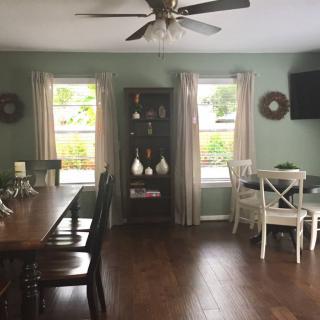
Lakeshore Personal Care Homes in Houston is best suited for families seeking a small, home-like setting where daily living assistance is personalized and safety comes first. The community emphasizes a warm, inviting atmosphere and hands-on attention from owners and caregivers. Residents who thrive in predictable routines, close relationships with staff, and a sense of being part of a family will likely feel comfortable and cared for here. The setup is intimate enough that staff can notice subtle changes quickly, which supports timely responses to needs. This is not a high-rise, clinical environment; it is a true personal-care home where the personal touch is central.
That said, Lakeshore is not the right fit for every situation. Families facing higher medical acuity or requiring consistent, licensed nursing on every shift may want more traditional, larger facilities with formal oversight. The core questions about management style and staffing reliability matter here. Some reviewers allege concerns about credentials and leadership, including accusations about staffing practices and the owner’s conduct. While those views are contested by supporters, they signal a need for careful verification before committing, especially for residents with complex medication needs or significant safety risks.
On the upside, the strongest advantages are the personalized care and the safety-first approach. Multiple accounts describe a loving, home-like environment where caregivers know residents well, the owners are engaged, and the house feels warm and welcoming. When a resident requires help with routines, safety checks, and compassionate responses, Lakeshore appears to deliver with attentiveness and consistency. Family members report peace of mind knowing someone is watching daily for changes and communicating them promptly, which can be priceless for families balancing work, travel, and caregiving from afar.
However, the chorus of concerns cannot be ignored. Several reviews target the manager directly, labeling her as rude or money-driven, and some allege that caregivers administer medications without appropriate certification. Even as some comments push back against negative feedback, the volume and specificity of these claims introduce a real risk signal about governance and compliance. For families with a loved one who relies on tightly regulated medication administration or who values transparent credentialing, these red flags deserve rigorous scrutiny before making a move.
Yet the positive attributes can offset the drawbacks if approached with disciplined due diligence. The small-scale, relational setting can yield strong oversight when there is clear, documented policy on staff qualifications, medication procedures, and licensing status, plus proactive communication between owners, staff, and families. Prospective residents should request current staff credentials, the facility’s medication administration policies, a copy of the license, and any recent regulatory inspections. A site visit should include meeting the owner in person, walking through daily routines, and asking for references from current families to gauge consistency and reliability.
In the end, Lakeshore Personal Care Homes can be a sound choice for the right senior, one who benefits from a warm, caring, home environment and whose medical needs fit a small-team model with strong safety nets. It is wise to separate personal affinity for a home from its governance realities, and to verify licensing and medication practices before selecting. If the checks align, the staff are qualified, the manager demonstrates transparent, respectful leadership, and the care plan is clearly documented, this community offers genuine peace of mind. If not, alternatives with broader nursing coverage and tighter regulatory assurances should be pursued without hesitation.
 6 resident community capacity
 Assisted Living
 Board and Care Home
 Activities on-site
 Beautician on-site
 Cable or satellite TV
 Dining room
 Fully furnished
 Garden
 Housekeeping services
 Move-in coordination
 Outdoor space
 Private
 Telephone
 Wi-Fi/high-speed internet available
 George Bush Intercontinental (11 miles away)
 24-hour supervision
 Ambulatory care
 Assistance with bathing
 Assistance with dressing
 Assistance with transfers
 Diabetes diet
 Diabetic care
 Incontinence care
 Meal preparation and service
 Medication management
 Special dietary restrictions
 Transportation arrangement (medical)
 Transportation to doctors appointments







 An Extensive Exploration of the VA Aid and Attendance Benefit
 Senior Transition Services: Understanding Their Role, Cost, and Importance
 Exploring the Path to Senior Living: A Comprehensive Look at Independent Living and Assisted Living