
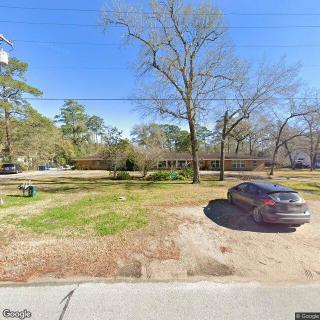
1816 Gill Road, Dickinson, TX 77539
For more information about senior living options: (866) 208-4318
Overall Review of Serenity Gardens
Pros
 The caregivers went above and beyond in nurturing the family through the final stages of life, discovering the resident’s favorite foods, music, and activities, and creating a gentle, loving environment they even shared tears in the end.
- The staff knew each patient’s habits, history, and likes and dislikes, ensuring that every loved one is well cared for there.
- Serenity Gardens provides home-cooked meals daily, group activities, a friendly resident dog, and a setting that feels like a home rather than a hospital, with staff encouraging everyone to dine together.
- The memory care setting is smaller, enabling more personal care, with caring staff and residents who become like family.
- The memory care program offers ongoing activities such as dancing, crafts, and one-on-one engagement in a fun, safe, and active atmosphere.
- The executive director and staff are dedicated, loving, and communicative, treating residents like family and providing fresh, well-balanced meals in a well-maintained home.
- The team handled emergencies with care and kept families updated, and residents were warmly welcomed back home after events.
Cons
 One reviewer described the staff as the rudest they’ve ever encountered and said they would never trust them with a family member.
 - They felt the care level at the other facility was insufficient for their parents’ needs.
- They noted that the food at that facility was not great.
- They reported being verbally assaulted by a nurse, which made them hesitant to trust the staff.
- They described the big corporate memory care facility as having horrible care and a horrible facility.
Review
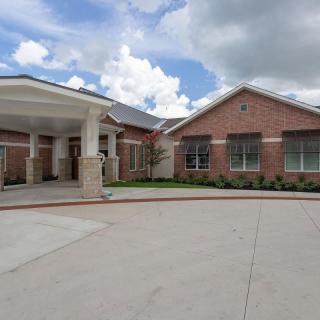
Serenity Gardens in Dickinson is best suited for families seeking an intimate, memory-care focused community where residents are treated like individuals and care teams work hard to know them personally. This is a small, home-like setting, roughly 16 residents, where daily routines, meals cooked from scratch, and regular activities create a strong sense of belonging. It is particularly well-suited for residents who benefit from one-on-one attention, meaningful engagement, and a caregiving team that communicates closely with families. For families prioritizing warmth, consistency, and a living-room atmosphere over a clinical campus vibe, Serenity Gardens is a compelling match.
There are clear reasons some families should consider alternatives. The facility’s intimate size and high-touch model come with a cost premium that may not fit every budget, especially for long-term care where costs compound. For those who require a larger campus with more extensive clinical programming, or who want a facility with broader medical resources on site, Serenity Gardens might feel limiting. Additionally, while the vast majority of experiences are positive, any small-team setting can produce outliers, pricing unease and occasional concerns about staff interactions remind prospective residents to verify team consistency, supervisory oversight, and policies up front.
The strongest positives, personalized care, family engagement, and authentic home-life qualities, often offset the most common drawbacks. Residents benefit from staff who know their routines, preferences, and histories, which translates into meals that please, activities that feel purposeful, and a dining experience that feels communal rather than transactional. The home-cooked meals, the encouragement to join meals in the dining room, and hands-on daily activities (from crafts to music and movement) foster a sense of vitality that many families find lacking in larger facilities. The small scale also enables staff to respond quickly to changing needs, which is especially important for memory care residents in transition.
Leadership and continuity underpin Serenity Gardens’ strengths. The executive director, Rusty, and other leaders are repeatedly cited for transparent, frequent communication with families, while Melia, the owner, has earned trust for deliberate staffing choices and consistent care philosophies. The team’s willingness to collaborate with families, hospice professionals, and community partners is evident in practice, whether guiding a family through a move, coordinating end-of-life care with compassion, or coordinating during emergencies, as one family noted during a hurricane evacuation where staff ensured a smooth, reassuring return. The result is a care culture that feels like a promise kept: residents are treated with dignity, and families gain steady, reliable updates.
Yet, no review set is without caveats. One troubling anecdote cautions about rude interactions and disrespectful conduct, emphasizing that experiences can diverge in any small operation. While such reports are far from the norm in the broader feedback, they serve as a practical reminder to prospective buyers: visit unannounced, observe how staff relate to residents, and meet the leadership team to gauge daily culture. Another implicit trade-off of the intimate model is the potential variability that comes with smaller teams, so families should inquire about staff-to-resident ratios, turnover rates, and the facility’s process for handling conflicts or complaints. And while price is a stated con for some, the consensus is that the quality of care and peace of mind may justify the premium.
In the end, Serenity Gardens stands out for families who want a genuinely home-like memory care environment with a dedicated, caring staff and active family involvement. It is a strong option for residents who thrive on routine, engaged programming, and one-to-one attention, all delivered in a setting that feels like home rather than a hospital. Prospective families weighing alternatives should consider their budget, desired scale, and need for clinical depth beyond memory care. A thorough on-site tour, conversations with Rusty and Melia, and a candid review of care plans and meal programming will confirm whether Serenity Gardens truly aligns with the loved one’s goals and the family’s comfort level.
If choosing Serenity Gardens, approach it as a partnership: seek a clear care plan, ask to meet the care partners who would be assigned to the resident, request a sample schedule of meals and activities, and verify how progress notes are shared. For families with the priority of a warm, engaging environment and highly personalized memory care, Serenity Gardens is a decisive, practical choice. For others, especially those prioritizing lower cost, campus size, or broader clinical services, alternatives should be explored with the same disciplined scrutiny that defines good elder-care decision-making.
 16 resident community capacity
 Assisted Living
 Board and Care Home
 Cable or satellite TV
 Dining room
 Fully furnished
 Garden
 Housekeeping services
 Move-in coordination
 Outdoor space
 Telephone
 Wi-Fi/high-speed internet available
 William P X (17 miles away)
 24-hour supervision
 Activities of daily living assistance
 Assistance with bathing
 Assistance with dressing
 Assistance with transfers
 Diabetes diet
 Meal preparation and service
 Medication management
 Special dietary restrictions
 Transportation arrangement (medical)
 Transportation to doctors appointments




 Assisted Living Support for Veterans: A Complete and Detailed Overview
 Exploring the Contrasts Between Assisted Living and Skilled Nursing
 8 Key Indicators That Suggest It May Be Time to Transition from Assisted Living to Skilled Nursing Care