
4073 Belle Terre Boulevard, Myrtle, SC 29579
For more information about senior living options: (866) 208-4318
Overall Review of Carillon at Tuscany
Cons
 The community is advertised as age restricted, but it is not.
- All amenities are shared with the rest of the development, which is not age restricted.
- The marketing mentions Carolina Forest, but the property is actually located in Forestbrook.
- The claim of a 55+ community contradicts the actual lack of age restrictions.
- Buyers are told to look for cheaper options elsewhere.
Review
This community is best suited for buyers who want Myrtle Beach area living without insisting on a strict 55+ environment and who are comfortable sharing amenities with a broader, mixed-age population. The marketing promises of an age-restricted lifestyle collide with the reality that the development’s amenities are not exclusive to seniors and that the surrounding area is not age-restricted either. For families or younger retirees who value proximity to Carolina Forest-adjacent amenities and a lower price point relative to true 55+ enclaves, Carillon at Tuscany may appear attractive on paper. The key gauge is whether the buyer can tolerate a social setting that is not purposefully tailored to an older demographic.
Those who might want to consider alternatives include buyers who specifically seek a genuine 55+ community complete with age-restricted access, events designed for older adults, and an orderly social ecosystem that minimizes younger families or working-age residents. If certainty about age rules and a clearly delineated senior-focused environment matters, other nearby communities with verified 55+ status are a safer bet. For anyone whose primary priority is plain access to nearby Myrtle Beach amenities without the obligation of a strict age floor, alternatives that promise transparent age policies should be weighed heavily.
The few tangible advantages, namely, access to a broad set of shared amenities within the larger development and potential cost efficiencies from not operating a separate age-restricted module, do little to offset the most substantive drawbacks. The obvious con is the misalignment between the branding and the lived reality: marketing touts an age-restricted experience, but the actual environment is mixed-age, with no guarantee of an elder-centered social fabric. In practice, this undermines expectations of safety, peer companionship, and activity planning that many buyers associate with a 55+ lifestyle. The location narrative, advertising Carolina Forest while the community sits in Forestbrook, adds another layer of confusion that can complicate resale and long-term satisfaction.
From a practical decision-making standpoint, buyers should seek explicit disclosures before committing. The most critical checks involve verifying the exact age restrictions in the HOA documents and deed restrictions, confirming which facilities, if any, remain restricted to a certain age, and obtaining a clear listing of all fees tied to the community. Ask for a precise map of what is shared versus what is gated or separate, and insist on current resident demographics to gauge the real social environment. If marketing materials imply a pristine, quiet, seniors-first setting, demand a side-by-side comparison with certified 55+ neighborhoods to quantify the difference in experience and cost.
Another practical factor: the risk of misaligned expectations can impact resale value. A buyer who discovers that the “age-restricted” label is marketing-driven may face disappointment, frustration, and even a longer search for a viable alternative. The surrounding development’s mix can also influence day-to-day life, traffic patterns, and access to age-appropriate activities. For families or prospective residents who prioritize a tranquil, senior-focused atmosphere, these dynamics translate into ongoing compromises that erode perceived value. In short, the pros do not meaningfully compensate for the core misrepresentation and the resultant uncertainty.
The bottom line is clear: Carillon at Tuscany does not deliver an authentic 55+ experience, and that misalignment makes it a poor fit for buyers whose primary criteria are age-restricted living and a purpose-built senior community. For those who can accept a mixed-age environment and want to capitalize on a potentially lower price point plus broad shared amenities, it remains a viable option, but only with rigorous due diligence and explicit, binding confirmations on age policies. Otherwise, pursuing true 55+ communities or nearby developments with transparent age restrictions offers a more reliable path to a predictable social setting, stronger community alignment, and fewer marketing headaches.
 6 resident community capacity
 Active Adult Communities (55+)
 Housekeeping services
 Telephone
 Wi-Fi/high-speed internet available
 Myrtle Beach International (4 miles away)
 Assistance with dressing
 Meal preparation and service
 Medication management
 Diabetes diet
 Special dietary restrictions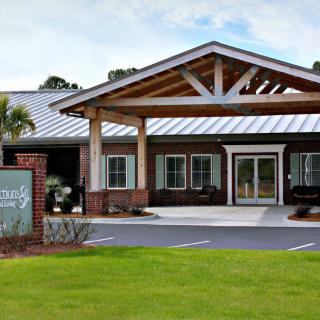
 Small, well-maintained community with personalized care and friendly staff.


 9 Stimulating Memory Activities for Seniors: Puzzles, Cards, and Much More
 Managing Nursing Home Expenses After Medicare Coverage Ends
 Is a Geriatric Care Manager the Right Choice for Your Family?