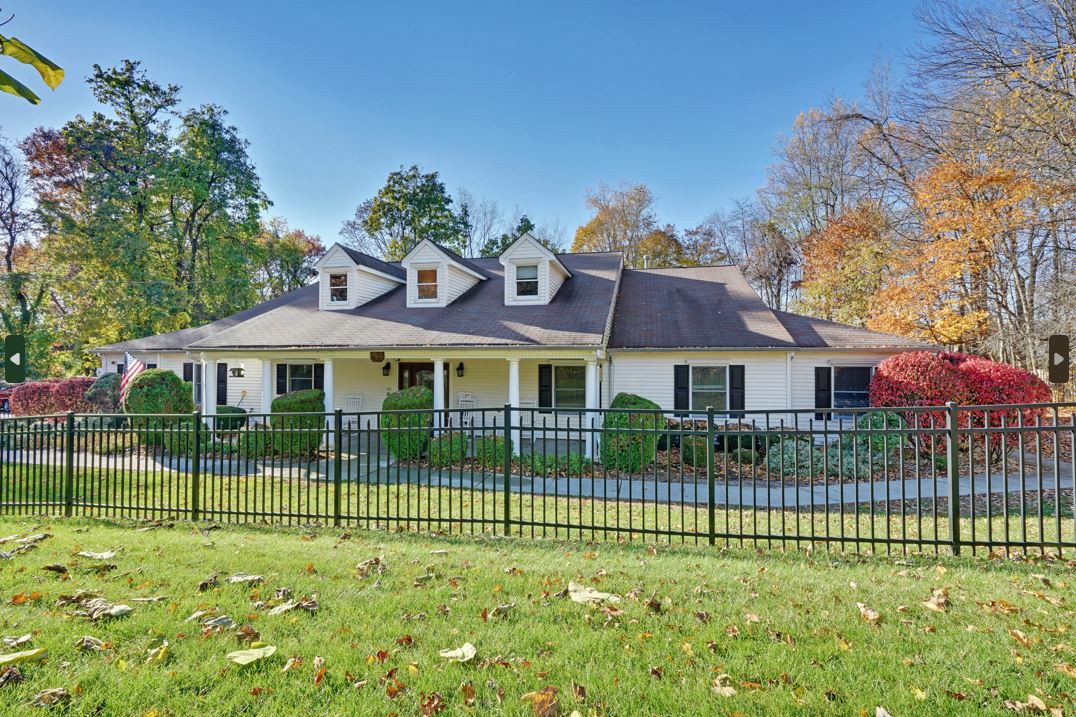
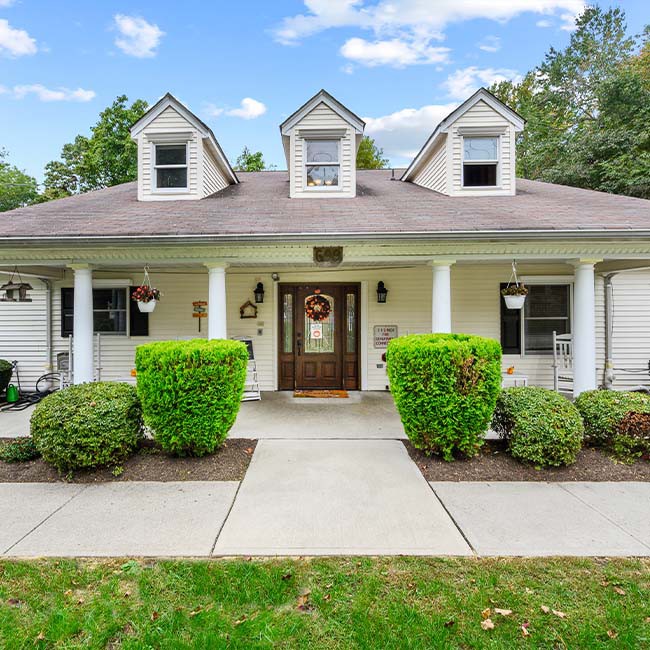

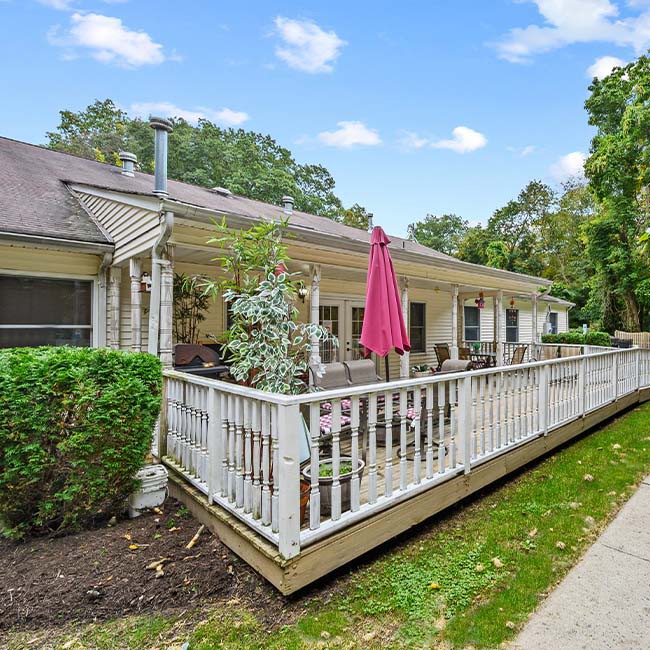

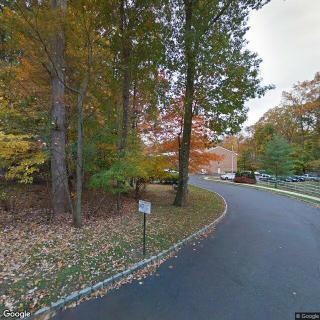
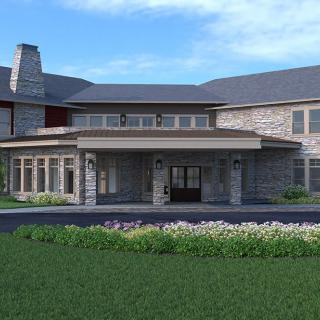
699 Wyckoff Avenue, Mahwah, NJ 07430
For more information about senior living options: (866) 208-4318
Overall Review of Fox Trail Memory Care Living at Mahwah
Pros
 The mother is very happy at Fox Trail in Mahwah.
- She has many friends and plenty to keep her busy.
- She loves the food at Fox Trail.
- The people in charge are wonderful.
- Beritta and her team at Fox Trail were an answer to prayers.
- The mother has not been this happy in a long time.
- They know how to bring out the best in people with dementia.
- Fox Trail provided a video tour of the facility for distant families.
Cons
 They lost the reviewer’s elderly mother for days.
- They let her leave with a stranger and go to McDonald’s.
- They didn’t know who took her there, despite hours of calls.
- They’re clueless.
Review
Fox Trail Memory Care Living at Mahwah is best suited for families seeking a dementia-focused environment where a resident can build real social connections, stay engaged with structured activities, and receive attentive, compassionate care from a team that understands memory impairment. The community appears to excel at helping residents form friendships, participate in meaningful programming, and enjoy meals in a setting that feels approachable rather than institutional. It is especially appealing to households remote from Mahwah, given the streamlined admissions and the willingness to accommodate quick evaluations and virtual tours to keep families informed from afar.
Those considering alternatives should weigh safety and reliability as non-negotiables. One review highlights a significant safety lapse: a resident was reportedly missing for several days and left with a stranger, with unclear accountability and communication about who took her there. That kind of incident, if current, points to gaps in supervision and incident reporting that can overshadow otherwise strong social and personal-care elements. Families with a low tolerance for wandering risk or with loved ones who require especially tight monitoring may want to explore communities with more robust safety protocols, higher staff-to-resident ratios, and clearer, verifiable safety practices.
The most compelling positives center on engagement and warmth. Families consistently praise the staff for their responsiveness, kindness, and ability to “bring out the best” in residents with dementia. The testimony about social connections, friends formed, activities kept up, and a sense of happiness, suggests a living environment where routine and companionship translate into noticeable quality-of-life gains. A mother’s own happiness and expressed gratitude, alongside specific praise for Beritta and the local team, reinforces that the staff culture can be a decisive differentiator when memory care is the goal.
On the other hand, the downside cannot be dismissed. The primary drawback appears to be safety and accountability in the wake of the missing-resident incident. Even if that episode is not representative of the current operations, it raises legitimate questions about staff supervision, identification procedures, and clear lines of responsibility. Prospective families should insist on transparent incident history, current safety protocols, and quantifiable safeguards, such as wander-management strategies, secure entry/exit controls, and dependable handoff procedures, to ensure that the warmth and activity level do not come at the expense of resident security.
When evaluating whether Fox Trail offsets its risks, the balance tilts in favor of the positives for families who prioritize social enrichment, meaningful programming, and a caregiver team that appears genuinely invested in residents’ well-being. The offset only holds if safety measures are explicitly addressed and demonstrated in practice. If a family can verify robust wandering precautions, effective supervision, and reliable communication pathways, the combination of engaged living and compassionate care becomes a compelling package. Without that assurance, the meaningful benefits may be overshadowed by safety concerns.
The practical takeaway is concrete: visit with a critical eye, and request current data on safety protocols, staff coverage, and incident reporting. Meet the direct supervisor and frontline caregivers to observe how interactions unfold, how meals and activities are organized, and how emergencies are handled. Ask for recent references from families with residents at similar stages of dementia. If the safety framework feels solid and the staff’s warmth is consistently evident, Fox Trail Mahwah can be a strong fit for a resident who thrives on relationship-driven care. If not, there are alternatives with clearer wander-management protocols and more conservative safety histories that may better align with a family’s risk tolerance and long-term care goals.
 Assisted Living
 Memory Care
 Cable or satellite TV
 Fully furnished
 Garden
 Housekeeping services
 Move-in coordination
 Outdoor space
 LaGuardia (23 miles away)
 24-hour supervision
 Activities of daily living assistance
 Assistance with bathing
 Assistance with dressing
 Assistance with transfers
 Diabetes diet
 Meal preparation and service
 Medication management
 Mental wellness program
 Special dietary restrictions



 Dementia, Paranoia, and Caregiver Guidance: Understanding the Connection
 Engaging Memory Care Activities That Enhance Quality of Life
 When to Transition from Assisted Living to Memory Care: Key Indicators, Steps, and Finding the Right Community