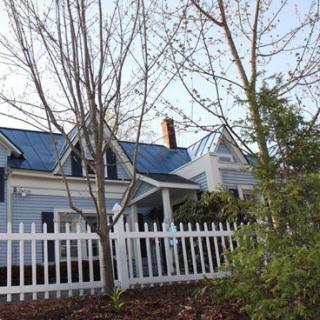
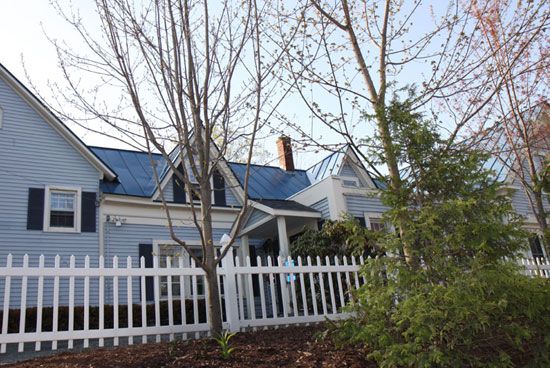
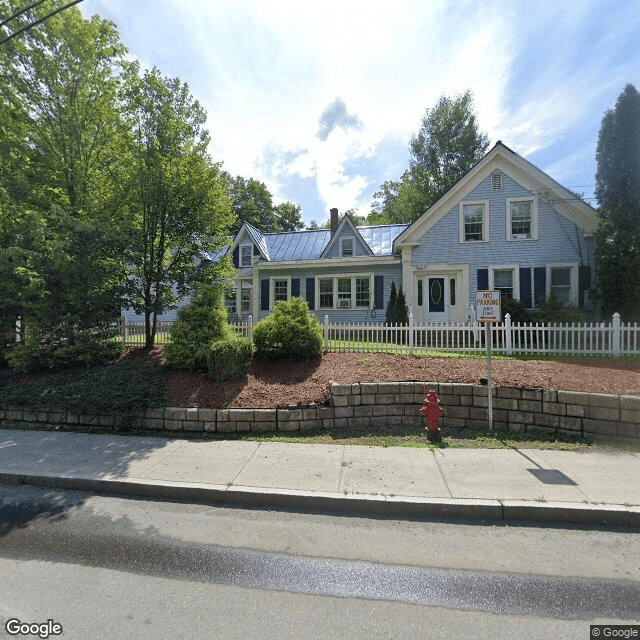
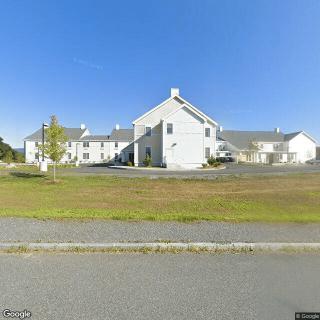
11 Elm Street West, West Lebanon, NH 03784
For more information about senior living options: (866) 208-4318
Westboro House Costs & Pricing
Westboro House offers competitive pricing for its residents when compared to the average costs in Grafton County and across New Hampshire. For instance, studio apartments at Westboro range from $1,775 to $4,300, which significantly undercuts the county's average of $4,412 and the state's higher benchmark of $5,346. Similarly, one-bedroom units are priced at $2,455 - offering excellent value compared to Grafton County's average of $2,682 and New Hampshire's typical cost of $4,444. The two-bedroom option at Westboro is listed at $3,090, lower than both the county and state averages. Even semi-private and private rooms maintain a reasonable standard; while semi-private accommodations are offered for $3,800 compared to Grafton County's average of $3,178 (albeit still higher than state averages), private rooms can be accessed for $4,300 - slightly above the county but below the state average. Overall, Westboro House presents a cost-effective choice for individuals seeking quality living arrangements in a supportive environment.
| Floor plans | Westboro House | Grafton County | New Hampshire |
|---|---|---|---|
| Studio | $1,775 to $4,300 | $4,412 | $5,346 |
| 1 Bedroom | $2,455 | $2,682 | $4,444 |
| 2 Bedrooms | $3,090 | $3,695 | $4,901 |
| Semi-Private | $3,800 | $3,178 | $4,881 |
| Private | $4,300 | $3,931 | $5,170 |
Memory care communities with a similar price nearby
-
About the same
Woodcrest Retirement
$1,800 to $6,000 / month22.4 miles away -
About the same
Woodcrest Village
$1,800 to $6,000 / month22.8 miles away -
from +$225 / mo

Cedar Hill Health Care Center
$2,000 to $4,200 / month15.1 miles away
Overall Review of Westboro House
Pros
 The staff are kind and helpful.
- The home feels very homey and welcoming.
- Everyone is super nice.
- It is a great place and reasonably priced.
- They have activities for residents at all levels of care.
- They go out on outings with residents.
- Daily exercise is offered every morning.
- Each resident has a private bathroom in their room.
- The meals are good, with restaurant-quality desserts and lunches.
- The cook loves older people and does a really good job cooking.
- The atmosphere is warm and inviting.
- It is within walking distance of the town library.
Cons
 They are really only interested in residents that are mostly self-sufficient now.
- Their biggest problem is the lack of communication.
- There isn’t much for supervision or activities anymore.
- They are not good at communicating with the family.
- They would benefit from more activities to keep residents active rather than just sitting and watching TV.
Review
Westboro House in West Lebanon, NH is best suited for seniors who want a small, home-like environment where staff know residents by name, meals feel like a kitchen-table affair, and daily life includes light activity and social outings. It works particularly well for residents who are mostly independent or need minimal daily supervision, and for families seeking affordable, personable care without the bustle of a large campus. The warmly lived-in atmosphere, the option of a private room with a half-bath, and the sense that caregivers are approachable and available make it a compelling choice for those prioritizing comfort, dignity, and a neighborhood feel over high-end amenities. For couples who value proximity to town resources and a quiet rhythm, Westboro House can be a strong match.
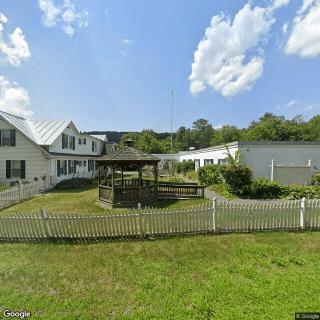
On the upside, the community earns its reputation for a welcoming staff and a genuinely homey vibe. Reviewers consistently highlight kindness, patience, and a culture of warmth, described as a place where residents participate in everyday routines, outings, and art-like activities. The dining experience stands out: the kitchen staff prepare meals with evident care, and the inclusion of restaurant-quality desserts and fresh-baked items helps maintain appetite and enjoyment. Residents typically have access to organized activities and daily exercise, with some outings enabling social connections beyond the building. The physical footprint reinforces the appeal: a small, manageable setting with a living room, a tidy dining area, a library, and outdoor decks that encourage fresh air and conversation.
Yet shareable concerns center on communication gaps and the balance between independence and supervision. The most pointed drawback is inconsistent communication with families, with several reviews noting that the staff appear most attentive to residents who are self-sufficient. For families seeking regular, proactive updates or a clearly structured plan for residents who need more hands-on supervision or recovery support, these gaps can be a real concern. The small size, while spiritually congenial, also translates into limited capacity for highly specialized programming or intensive supervision. Some residents may find the rooms, described as modest in size, less suited to those who require more space or advanced equipment for daily living.
Those pros and cons do not cancel each other out; they inform a practical calculus for decision-making. The intimate staff-to-resident ratio and the emphasis on a warm, restaurant-like dining experience help offset the potential downsides of limited supervision by fostering familiarity, responsiveness, and person-centered care. For residents able to participate in activities and outdoor outings without heavy daytime help, the environment supports engagement and social connection without the stress of a larger, more clinical setting. The affordability, roughly in the mid-three-thousands per month in one review, adds another compelling layer for families balancing budget with quality of life. In short, strong interpersonal care, good meals, and a village feel mitigate some drawbacks, but not all.
For families weighing options, Westboro House is a clear best-fit when the priority is serenity, personal attention, and cost-effectiveness in a compact, welcoming setting. It may feel less suitable for residents needing ongoing medical supervision, comprehensive memory care, or a robust slate of structured activities designed for higher-need populations. If the care plan calls for more consistent family communication, more intensive programming, or larger-scale social opportunities, alternatives with broader staffing, bigger campuses, or formal care levels should be explored. The decision hinges on whether the resident’s needs align with a small community that prioritizes daily life, companionship, and autonomy over expansive activity schedules and highly supervised routines.
To move forward, conduct a focused tour with questions tailored to these priorities: how is family communication handled, what cadence and formats are used for updates? what supervision levels are available during evenings and weekends? how are activities tailored to varying mobility levels, and what is the spectrum of outings offered? request details on room sizes, privacy, and in-room amenities, plus who is responsible for coordinating outside services. If independence is the guiding criterion and the family values a warm, economical home base with accessible staff, Westboro House deserves serious consideration. If medical needs expand or if a more dynamic, highly supervised program is non-negotiable, agency-rated alternatives with larger campuses will stand out as the more prudent path.
 22 resident community capacity
 Assisted Living
 Board and Care Home
 Memory Care
 Activities off-site
 Beauty salon
 Cable or satellite TV
 Devotional services off-site
 Dining room
 Fully furnished
 Garden
 Housekeeping services
 Indoor common areas
 Kitchenette
 Move-in coordination
 Outdoor common areas
 Private
 Respite or short term stays offered
 Telephone
 Wheelchair accessible showers
 Wi-Fi/high-speed internet available
 24-hour call system
 Ambulatory care
 Assistance with bathing
 Assistance with dressing
 Assistance with transfers
 Diabetes diet
 Diabetic care
 Incontinence care
 Meal preparation and service
 Medication management
 Mental wellness program
 Special dietary restrictions
 Transportation arrangement (medical)
 Transportation to doctors appointments


 Dementia, Paranoia, and Caregiver Guidance: Understanding the Connection
 Engaging Memory Care Activities That Enhance Quality of Life
 When to Transition from Assisted Living to Memory Care: Key Indicators, Steps, and Finding the Right Community