
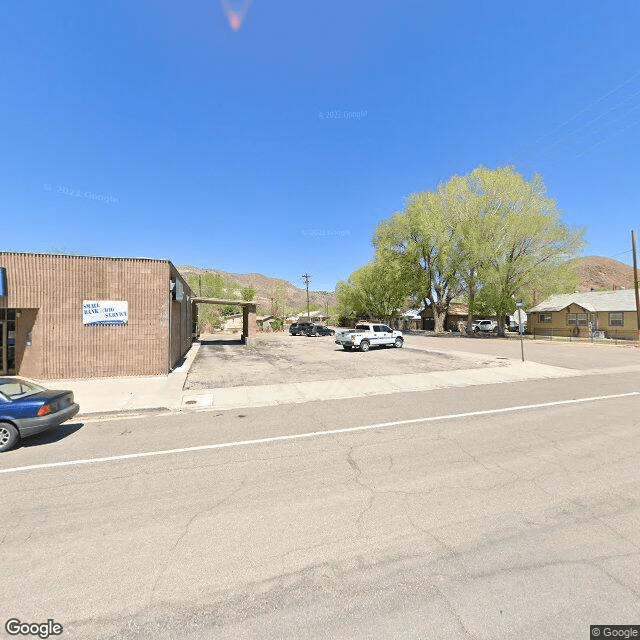
Highway 93 N, Caliente, NV 89008
To contact a resident: (775) 726-3171
For more information about senior living options: (866) 208-4318
Overall Review of Grover C. Dils Medical Center
Pros
 The staff and doctors provided superb attention.
- The hospital was a lifesaver, delivering unbelievable care from nurses to housekeeping.
- Dr. William Katschke offered professional, compassionate, and top-notch case management; he was thorough, patient, and knowledgeable.
- The facility is the best place to receive treatment and comes highly recommended.
- The care team delivered thorough and attentive care during the six-day hospital stay, with continued follow-up afterward.
Cons
 The reviewer claims the hospital is garbage and so are the staff, and that the doctor should be ashamed of himself.
- A reviewer states that a friend was billed $8,000 for an emergency visit with no tests, no x-rays, and no bandages.
- They describe the incident as a case of ripping off a Hispanic lady because they can get away with it.
- They say the doctor is garbage and a terrible human.
Review
Grover C. Dils Medical Center in Caliente, NV is best suited for families and individuals who prioritize dependable emergency care and steady post-acute follow-up within a small-town medical ecosystem. The facility earns its strength from an exceptionally capable ER team and physician leadership, with care that tends to be thorough, calm under pressure, and aimed at keeping patients stable long enough to transition to ongoing management. In recent experiences, patients needing acute intervention, such as puncture injuries or injuries that require rapid triage and then clinic follow-up, found the hospital a reliable anchor in a rural setting. The continuity of care after discharge, often with the same physician overseeing post-acute steps, reinforces a practical, outcome-focused approach that families value when time and clarity matter.
That said, explicit consideration should be given to who may want alternatives. For families that require extensive subspecialty services, broad pharmaceutical options, or highly transparent, predictable pricing, a larger regional center or urban hospital might be a better fit. A single review documents a troubling billing experience, an $8,000 bill with minimal testing, that raises red flags for cost transparency and fairness. While this appears to be an isolated account, it underscores the importance of requesting itemized estimates up front and confirming what is actually necessary before procedures. For those who are especially price-sensitive or who must navigate complex billing, exploring other options or insisting on clear cost communication before care becomes a prudent precaution.
The primary positives are concrete and meaningful in urgent scenarios. Staff across roles, nurses, support personnel, and clinicians, are consistently described as attentive, professional, and genuinely caring. The standout clinician in multiple accounts is Dr. William Katschke, whose thoroughness, patience, and clear guidance during stressful episodes create a sense of trustworthy leadership at the bedside. Families emphasize the depth of case management, with adherent follow-through that extends into outpatient care. The ability to transition from hospital care to a familiar medical clinic for continued oversight reduces uncertainty and supports practical recovery timelines, particularly for injuries that require careful monitoring and rehabilitation.
Against those strengths, the most discussed risk centers on billing and perceived billing ethics. One guest’s harsh critique frames the experience as a costly and insufficient encounter, which, if accurate in any portion, cannot be dismissed. While the overwhelmingly positive stories emphasize high-quality clinical care and compassionate staff, this single negative voice reminds that administrative transparency can shape overall satisfaction as much as bedside competence. In addition, rural settings sometimes bring constraints on test availability, specialists, and rapid access to ancillary services; those constraints are not the norm in every case, but they are a reality that may influence decisions for ongoing, complex medical needs.
The way the strong clinical team offsets the main cons rests on predictable, decisive outcomes and dependable aftercare. When urgent problems arise, the combination of thorough assessment, skilled intervention, and hands-on case management provides tangible value that often justifies a local stay. Families should tactically use the post-discharge pathway: request a written plan that outlines follow-up appointments, medications, and red flags, and confirm the clinic will maintain liaison with the ER for any early warning signs. Proactive cost conversations, asking for itemized bills and pre-approval for anticipated tests, can protect against surprise charges while preserving the very continuity that patients rely on after an emergency.
In the final assessment, Grover C. Dils Medical Center serves as a pragmatic choice for urgent care needs in a rural Nevada context, especially for those who prize skilled clinicians, compassionate bedside manner, and a coherent aftercare loop. It is less compelling for families where cost predictability and billing practices are non-negotiable or where access to a broad network of subspecialists is required. For travelers or locals facing acute injuries or rapid-to-stabilize conditions, this center often delivers lifesaving competence with a reassuring path back to home-based care. When the emphasis is on high-quality acute treatment and a clear, continuous care plan, the decision favors Grover C. Dils; when the priority is airtight pricing transparency and extensive subspecialty access, consider alternatives and proceed with explicit cost negotiations before proceeding.
 Assisted Living
 Activities on-site
 Devotional services off-site
 Indoor common areas
 Ambulatory care
 Diabetic care
 Meals provided
 Understanding Medicaid Coverage for Assisted Living: A Comprehensive Guide
 How and When Medicaid May Cover Assisted Living Costs
 A Detailed Exploration of Assisted Living Medicaid Waivers Across the United States